Category: VA Disability Claims

  • VA Direct Service Connection vs. Service Connection by Aggravation

    VA Direct Service Connection vs. Service Connection by Aggravation

    Direct service connection applies when a condition began during your military service or was caused by an in-service event, injury, illness, or exposure. 

    Service connection by aggravation applies when military service permanently worsened a preexisting condition beyond its natural progression.  

    Understanding which pathway fits your situation can help you gather the right evidence to strengthen your VA disability claim and potentially avoid claim decision delays. 

    Key Takeaways

    • For VA disability claims, direct service connection refers to a condition that began during service or was caused by an in-service event, injury, illness, or exposure. 
    • Service connection by aggravation applies when your military service permanently worsened a preexisting condition. 
    • Both direct service connection and service connection by aggravation can lead to VA disability compensation if the evidence supports your claim. 
    • Medical records, service records, and a strong nexus opinion may help establish either type of service connection for your VA disability claim. 

    Table of Contents

    What is Direct Service Connection?

    Direct service connection is the most common path to VA disability benefits. 

    To establish direct service connection, you generally need evidence of: 

    • A current diagnosed disability, and 
    • An in-service event, injury, illness, or exposure, and 
    • A medical nexus linking the current condition to your service (e.g., a Nexus Letter)

    For example: You injured your knee during a training exercise and continue to experience chronic knee pain years after discharge. If medical evidence shows your current condition is related to that in-service injury, you may qualify for direct service connection. 

    Other common examples include: 

    • Hearing loss caused by military noise exposure 
    • Chronic back pain resulting from an in-service injury 
    • Respiratory conditions linked to toxic exposures 
    • Mental health conditions related to traumatic events during service 

    If the connection between your current condition and military service is not clearly documented, a nexus letter may help explain the medical relationship. 

    Did you know? Service connection for presumptive conditions is actually a unique type of Direct Service Connection.

    What is Service Connection by Aggravation?

    Service connection by aggravation applies when a condition existed before military service but became permanently worse because of service. 

    The key word is “permanently.” 

    Temporary flare-ups or short-term symptom increases are generally not enough. The evidence must show that military service caused a lasting worsening beyond the condition’s natural progression. 

    For example, a service member may have entered the military with mild asthma. If military exposures, environmental conditions, or physical demands caused the asthma to permanently worsen, the veteran may be eligible for service connection based on aggravation. 

    Other examples might include a pre-existing knee condition or back injury that was worsened by military training or duties. 

    In these cases, medical evidence often plays a critical role in distinguishing natural progression from service-related aggravation. 

    Direct Service Connection vs. Service Connection by Aggravation

    VA Direct Service Connection vs Aggravation.

    While both pathways can result in VA disability compensation, they focus on different questions. 

    Direct Service Connection Service Connection by Aggravation 
    Condition began during service or was caused by service Condition existed before service 
    Focuses on establishing a link between service and the disability Focuses on proving service permanently worsened the condition 
    Requires evidence of an in-service event, illness, injury, or exposure Requires evidence showing worsening beyond natural progression 
    Common for injuries, exposures, and conditions first diagnosed during service Common for conditions noted before military service 

    The evidence required may overlap, but the medical opinion must address the correct type of service connection. 

    Which Type of Service Connection Applies to My VA Claim?

    A simple question can help you identify the type of service connection that applies to your VA claim: Did my current condition exist before military service? 

    If the answer is no, you’ll likely need to prove a direct service connection. 

    If the answer is yes, service connection by aggravation may be the stronger pathway. 

    However, some claims are more complex. Veterans sometimes have multiple conditions, multiple periods of service, or incomplete records that make the analysis less straightforward. 

    Reviewing your medical history and service records can help determine which path to service connection you should pursue. 

    Why Medical Evidence Matters for Service Connection

    Whether you pursue direct service connection or service connection by aggravation, the VA relies heavily on medical evidence. 

    Helpful evidence may include: 

    • Service treatment records 
    • VA treatment records 
    • Diagnostic testing 
    • Independent medical opinions 

    A strong medical opinion can help explain how service caused a condition or how service permanently worsened a pre-existing issue. 

    For many veterans, this is where obtaining professional medical evidence becomes especially important. 

    What About Secondary Service Connection?

    Many veterans confuse service connection by aggravation with secondary service connection. 

    But they aren’t the same. 

    Service connection by aggravation involves a condition that existed before military service and worsened because of service. 

    Secondary service connection involves a service-connected condition causing or aggravating another condition after service. 

    For example, a service-connected knee condition may lead to hip pain or back problems years later. Those additional conditions may qualify as secondary conditions. 

    Conclusion

    Direct service connection and service connection by aggravation are two different paths to VA disability benefits, but both can lead to compensation when supported by the right evidence. 

    If your condition began during service, direct service connection may apply; if military service permanently worsened a preexisting condition, service connection by aggravation may be the stronger approach. 

    Understanding the difference can help you focus on the most relevant evidence and ensure your claim is built on the correct type of service connection from the start. 

    Medical Evidence Wins VA Claims

    Insufficient medical evidence is one of the most common reasons VA disability claims are denied. 

    Medical evidence is a crucial piece of the puzzle that VA raters consider when reviewing a disability claim. Telemedica provides solutions for veterans looking to bolster their claims through high-quality medical evidence (such as DBQs and nexus letters) that win claims! 

    Schedule your 20-minute consultation call and learn how to get the supporting medical evidence you need to strengthen your claim. 


    FAQs | Frequently Asked Questions

    Can I receive VA disability benefits for a condition I had before joining the military?

    Yes. If military service permanently worsened the condition beyond its natural progression, you may qualify for service connection by aggravation. 

    What evidence is needed for service connection by aggravation?

    Evidence to establish service connection by aggravation typically includes medical records showing the condition existed before service and medical evidence demonstrating that military service permanently worsened the condition. 

    Is service connection by aggravation the same as secondary service connection?

    No. Service connection by aggravation involves a preexisting condition that worsened during service. Secondary service connection involves a service-connected disability causing or aggravating another condition. 

    Do I need a nexus letter for direct service connection?

    Not always. However, if the connection between your current disability and your military service is unclear, a nexus letter may help provide the medical explanation needed to support your claim. 

    How can I determine which type of service connection applies to my claim?

    You can figure out the type of service connection that applies to your claim by reviewing your service records, medical records, and the history of your condition. In complex cases, a medical records review or professional medical opinion may provide additional clarity. 


  • How Veterans Can Still Win a VA Claim Without Service Records 

    How Veterans Can Still Win a VA Claim Without Service Records 

    If you can’t find your service treatment records, never went to sick call, or lost your military paperwork, your VA disability claim is not automatically dead.

    Missing records make a claim harder to prove, but the VA can still grant service connection using lay evidence, buddy statements, personnel records, post-service medical records, and a strong medical nexus letter.

    The key is replacing what’s missing with the strongest evidence you can still gather. 

    Key Takeaways

    • Missing service treatment records make a claim more challenging, not automatically impossible. 
    • Direct service connection generally requires three things: a current diagnosis, an in-service event or injury, and a medical nexus connecting the two. Missing records affect how you prove the second and third elements, not whether they’re required. 
    • You can request records from the National Personnel Records Center (NPRC), and in some cases your full VA claims file (C-file), to fill in gaps. 
    • Lay statements, buddy statements, post-service medical records, and a well-supported nexus letter can help build a claim even without complete service records. 

    Table of Contents

    Why Missing Service Records Feel Like a Dead End

    VA claim without service records.

    When veterans are told they need their service treatment records to prove a claim, and those records don’t exist or can’t be located, it can feel like the door just closed. This happens more than people realize. Records were lost in fires, never transferred correctly, misfiled, or simply never generated because a veteran toughed out an injury instead of reporting to sick call. 

    The VA’s process is document-heavy, so it’s understandable to assume no records means no claim. That assumption is wrong often enough that it’s worth slowing down before giving up. The absence of a document is not the same as the absence of evidence. 

    A missing record is not the same thing as a missing event.  

    What The VA Generally Looks for in a Disability Claim

    To grant service connection for a condition, the VA generally looks for three things: 

    1. A current diagnosed disability. You need medical evidence to show you have the condition now. 
    1. An in-service event, injury, illness, exposure, or aggravation. Something happened during your service that could have caused or worsened the condition. * 
    1. A medical nexus. A link connecting your current condition back to that in-service event. 

    Service treatment records are one common way to prove the second element. They are not the only way. When those records are missing, the goal shifts to proving the same facts through other credible evidence. 

    * Note on secondary service connection: Instead of an in-service event, a secondary condition may be serviced connected if it was caused by another service-connected disability (e.g., depression secondary to service-connected tinnitus) 

    How to Request Missing Military Records (NPRC)

    Before assuming records don’t exist, request them. The National Personnel Records Center (NPRC), part of the National Archives, holds military personnel and medical records for millions of veterans. You can request records through the NPRC’s online eVetRecs system or by submitting Standard Form 180 by mail or fax. 

    A few things worth knowing: 

    • Personnel and medical record requests are generally free for veterans, next of kin, and authorized representatives. 
    • Some records were damaged or destroyed in a 1973 fire at the NPRC’s St. Louis facility, primarily affecting Army records (1912–1960) and Air Force records (1947–1964). If your records were affected, NPRC can often help reconstruct partial information from alternate sources. 
    • Processing takes time. NPRC handles thousands of requests a day, so plan ahead rather than requesting records the week before a filing deadline. 

    Separately, you may also be able to request your VA claims file, sometimes called a C-file, through a Privacy Act or Freedom of Information Act (FOIA) request. Your C-file contains everything VA has already collected on your case, which can reveal what’s actually missing versus what the VA already has on hand. 

    How Lay Evidence Can Help

    Lay evidence is a firsthand account from you or someone else describing what happened, based on personal observation. It cannot substitute for a medical diagnosis or a medical opinion when medical expertise is required, but it can help establish facts that don’t require a medical background, such as what you experienced, witnessed, or noticed changing over time. 

    For example, a veteran’s own statement can describe an injury that happened during a field exercise, or symptoms that started shortly after a specific incident, even if no one wrote it down at the time. VA Form 21-4138 (Statement in Support of Claim) is one common way to submit this kind of statement. 

    Lay evidence works best alongside other evidence, not alone. It fills in the “what happened” part of the story. The “what condition do I have” and “what caused it” parts still generally need medical support. 

    How Buddy Statements Can Help

    A buddy statement is a lay statement from someone else, such as a fellow service member, who witnessed the same event or noticed the same symptoms. The VA has a dedicated form for this, VA Form 21-10210 (Lay/Witness Statement). 

    Buddy statements can be useful if they corroborate your account from an independent source. If your service treatment records don’t document an incident, a witness who remembers it happening can help establish that it occurred. This is especially useful for events that were minor at the time, handled informally, or never taken to sick call. 

    Like lay evidence generally, a buddy statement supports the factual, non-medical side of a claim. It does not diagnose a condition or establish a medical nexus. 

    Why Post-Service Medical Records Still Matter

    If your in-service treatment wasn’t documented, your post-service medical history becomes more important. Records from VA medical centers, private doctors, and other treatment you received after discharge can show a pattern: when symptoms started, how they progressed, and how they connect back to service. 

    A condition that shows up in medical records shortly after discharge, and continues consistently from there, tells a more complete story than a diagnosis that appears decades later with no documented history in between. Gathering every relevant post-service medical record you can, even from providers you no longer see, strengthens the overall evidence package. 

    Why a Medical Nexus Letter Can Be Important

    The nexus element, the medical link between your current condition and your time in service, is often the hardest part of a claim to prove, and it’s usually where claims without complete service records run into trouble. This is where a medical nexus letter can matter. 

    A nexus letter is a written medical opinion, generally from a qualified healthcare provider, that addresses whether your current condition is connected to service. The VA commonly uses the standard “at least as likely as not,” meaning there’s a 50% or greater probability of a connection. In plain terms: does the evidence make it at least as likely that service caused or contributed to the condition, as it is that something else did? 

    A strong nexus letter does more than state a conclusion. It should include medical reasoning: what evidence was reviewed, what medical principles support the opinion, and why the provider reached that conclusion. A one-line statement that simply says “this is related to service” without explaining why generally carries far less weight than an opinion that walks through the medical reasoning. 

    Keep in mind that while a nexus letter can help explain the medical connection, it cannot invent an in-service event or replace evidence that the condition exists. 

    Missing Records Do Not Mean the VA Has to Deny Your Claim

    The VA has what’s known as a duty to assist. This means the VA is required to make reasonable efforts to help you gather evidence, including requesting records from military, VA, and federal sources, and in some cases scheduling a medical exam to help evaluate your claim. 

    This duty to assist is real, but it has limits. It does not guarantee the VA will find records that no longer exist, and it does not remove your responsibility to help build your case. If the VA’s efforts fall short, and needed evidence was never actually requested, that can be raised as a duty-to-assist error. But the practical reality is this: veterans who build the strongest possible evidence package themselves, rather than relying solely on the VA to fill every gap, tend to be in a better position. 

    Missing records make a claim harder. They do not mean the VA is required to deny it, and they do not mean approval is guaranteed either. What matters is whether the overall evidence, from whatever sources are available, is enough to support each of the three required elements. 

    Common Mistakes Veterans Make When Records Are Missing

    A few patterns show up again and again in claims with incomplete service records: 

    • Giving up before requesting records. Many veterans assume records are gone without ever submitting an NPRC request. 
    • Submitting a bare lay statement and stopping there. A personal account helps, but it rarely stands alone without post-service medical evidence or a nexus opinion. 
    • Using a nexus letter that only states a conclusion. A letter without medical reasoning is easy for the VA to give little weight. 
    • Waiting too long to gather post-service records. The longer treatment history goes undocumented, the harder it becomes to show a consistent pattern. 
    • Not requesting the C-file. Without knowing what the VA already has, it’s hard to know what’s actually still missing. 

    How Telemedica Can Help

    Telemedica works with veterans to strengthen the medical evidence side of a VA disability claim, which is often the piece that’s hardest to manage without missing service records. 

    Telemedica may review whatever records are available, including lay and buddy statements, post-service medical history, and VA treatment records, and evaluate your current condition. When it’s medically supportable, Telemedica may provide a nexus letter or other medical documentation that includes the reasoning the VA looks for, not just a conclusion. 

    The goal is to help make sure the medical evidence in your claim is as strong and well-supported as it can be. 

    What Veterans Should Do Next

    If missing records have you stuck, a reasonable next step looks like this: request your records from NPRC, request your VA claims file if you’ve filed before, gather every post-service medical record you can find, write out your own account of what happened, ask anyone who witnessed it to do the same, and get a medical evaluation of your current condition.

    From there, you and any qualified support you’re working with can assess whether the evidence adds up to a supportable claim.

    FAQs | Frequently Asked Questions

    Can I still win a VA claim without service treatment records?

    It’s possible. The VA can consider lay evidence, buddy statements, personnel records, post-service medical records, and medical opinions to help establish the required elements, but there’s no guarantee any specific claim will be approved. 

    Should I still file a claim if I never went to sick call?

    Yes, many veterans never went to sick call for injuries, mental health symptoms, headaches, tinnitus, pain, or other conditions during service. Not going to sick call can make the claim harder, but it does not automatically make it impossible. Lay evidence, buddy statements, medical records, and a strong nexus strategy may still help support the claim. 

    How do I request my military records if they were lost?

    Submit a request to the National Personnel Records Center (NPRC), either through the online eVetRecs system or by mailing/faxing Standard Form 180. 

    What is a C-file and should I request mine?

    A C-file is your complete VA claims file, containing everything VA has collected on your case. Requesting it can show you what evidence VA already has versus what’s still missing. 

    Can a buddy statement replace a doctor’s diagnosis?

    No. A buddy statement can help establish that an event or symptom occurred, but it cannot substitute for a medical diagnosis or a medical nexus opinion where medical expertise is required. 

    What does “at least as likely as not” mean?

    It means there’s at least a 50% probability that your condition is connected to service, based on the medical evidence. It’s the standard many nexus opinions are written to address. 

    Does VA’s duty to assist mean they’ll get my records for me?

    The VA is required to make reasonable efforts to help gather relevant records, but this does not guarantee missing records will be found, and it doesn’t replace the value of building your own strong evidence package.

  • VA Secondary Conditions to GERD

    VA Secondary Conditions to GERD

    If you have service-connected gastroesophageal reflux disease (GERD), you may be focused on the symptoms you experience every day: heartburn, regurgitation, chest discomfort, or difficulty sleeping. 

    However, GERD can affect far more than your digestive system. 

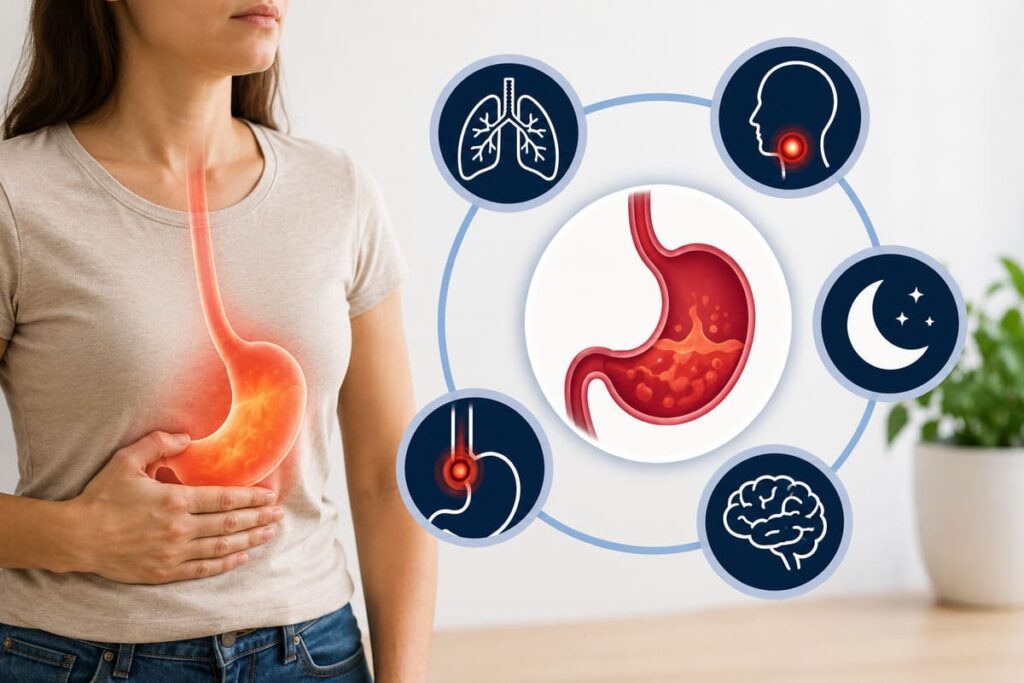
    Over time, chronic acid reflux may contribute to additional health conditions involving the esophagus, respiratory system, throat, sleep, and even mental health. In some cases, these conditions may qualify for VA secondary service connection, potentially increasing your overall disability compensation. 

    Understanding common VA secondary conditions to GERD and what evidence the VA requires for secondary service connection can help you increase your combined VA disability rating and benefits.

    Key Takeaways

    • GERD can contribute to secondary conditions affecting the esophagus, respiratory system, sleep, and mental health. 
    • To receive VA compensation for a secondary condition, you must show that your service-connected GERD caused or aggravated another diagnosed disability. 
    • Medical evidence, including treatment records and a well-supported nexus letter, is often critical to proving the connection. 
    • Symptoms alone typically are not enough to prove a secondary condition; the VA generally requires a separate medical diagnosis. 

    Table of Contents

    What Are VA Secondary Conditions to GERD?

    VA Secondary Conditions to GERD.

    A secondary service-connected condition is a disability that develops because of or is worsened by another service-connected disability.

    According to 38 CFR § 3.310, veterans may receive compensation when a service-connected condition causes or aggravates another disability. 

    For example, if you have service-connected GERD and chronic acid exposure causes Barrett’s esophagus or aggravates asthma, those conditions may qualify for secondary service connection if the medical evidence supports the relationship. 

    This differs from direct service connection, where a condition is linked directly to military service. In a secondary claim, the key question is whether the new condition resulted from an already service-connected disability. 

    For a deeper understanding of service connecting secondary conditions, see Telemedica’s guide on Understanding VA Secondary Conditions and How to Prove Service Connection. 

    How GERD Can Affect Other Parts of the Body

    GERD is often thought of as a digestive condition, but chronic reflux can affect multiple body systems. 

    Repeated exposure to stomach acid may damage the esophagus, irritate the throat and vocal cords, contribute to respiratory symptoms, disrupt sleep, and affect overall quality of life.  

    For some veterans, these complications become separate diagnosed conditions that may support secondary service connection.  

    The National Institute of Diabetes and Digestive and Kidney Diseases (NIDDK) notes that untreated GERD can lead to complications both inside and outside the esophagus, including respiratory and throat-related conditions. 

    Common VA Secondary Conditions to GERD

    Not every veteran with GERD develops secondary conditions. However, medical literature has identified several complications that may occur in some individuals with chronic reflux disease. 

    Barrett’s Esophagus

    One of the most well-known complications of GERD is Barrett’s esophagus, which, according to the NIDDK, is when long-term acid exposure causes changes in the cells lining the esophagus. 

    Medical evidence that may support a claim includes: 

    • Endoscopy reports 
    • Pathology findings 
    • Gastroenterology treatment records 
    • Specialist opinions linking the condition to GERD 

    Esophagitis

    Esophagitis is inflammation of the esophagus caused by repeated acid exposure. 

    Symptoms may include painful swallowing, chest discomfort, difficulty eating, and chronic irritation. 

    The American College of Gastroenterology notes that chronic reflux can damage the esophageal lining and contribute to inflammatory changes. 

    Relevant evidence may include endoscopy findings, treatment records, and gastroenterology evaluations. 

    Esophageal Strictures and Dysphagia

    Chronic inflammation can sometimes lead to scar tissue formation within the esophagus. 

    This scarring may narrow the esophagus and create what is known as an esophageal stricture. Veterans with strictures often experience dysphagia, or difficulty swallowing. 

    Evidence may include: 

    • Endoscopy reports 
    • Imaging studies 
    • Swallow studies 
    • Specialist diagnoses 

    Chronic Laryngitis and Voice Disorders

    GERD does not always stop at the esophagus. 

    When acid reaches the throat and vocal cords, it may contribute to laryngopharyngeal reflux, sometimes called “silent reflux.” 

    Reflux reaching the upper airway may cause hoarseness, chronic throat clearing, persistent cough, or voice changes. 

    Asthma and Respiratory Conditions

    Research has identified a relationship between GERD and certain respiratory disorders. 

    According to studies available through PubMed, GERD and asthma share genetic components, and reflux can contribute to airway irritation that may worsen asthma symptoms in some patients. 

    Sleep Disturbances and Insomnia

    Many veterans with GERD experience symptoms that worsen at night. 

    Nocturnal reflux can interrupt sleep repeatedly and contribute to: 

    • Frequent awakenings 
    • Daytime fatigue 
    • Difficulty maintaining sleep 
    • Reduced quality of life 

    A diagnosed insomnia disorder may potentially qualify for secondary service connection if medical evidence demonstrates that GERD caused or aggravated the condition. 

    Anxiety and Depression Secondary to GERD

    One area that is frequently overlooked is the relationship between chronic physical illness and mental health. 

    Living with severe GERD symptoms can affect nearly every aspect of daily life. Persistent discomfort, sleep disruption, dietary restrictions, social limitations, and chronic health concerns can contribute to psychological distress. 

    To support a mental health secondary claim, veterans typically need: 

    • A mental health diagnosis 
    • Treatment records 
    • Evidence showing how GERD contributed to or aggravated the condition 

    Can GERD Medications Cause Secondary Conditions?

    Veterans may manage GERD with proton pump inhibitors (PPIs) such as omeprazole, pantoprazole, and esomeprazole.  

    These medications are generally considered safe and effective, but researchers have studied whether long-term use may be associated with certain health concerns.  

    Because medication-related claims are highly fact-specific, veterans should not assume a side effect automatically qualifies as a secondary condition. A medical provider must be able to explain how the medication contributed to a diagnosed disability. 

    The U.S. Food and Drug Administration (FDA) has issued safety communications regarding several potential risks associated with long-term proton pump inhibitor (PPI) therapy, including low magnesium levels, certain fracture risks, and Clostridioides difficile-associated diarrhea.  

    These warnings do not mean PPIs are unsafe for most veterans, but they highlight the importance of individualized medical evaluation when considering medication-related secondary claims. 

    What Evidence Does the VA Need for a GERD Secondary Claim?

    Successful secondary claims generally require three elements: 

    1. A current diagnosis, and 
    1. Medical evidence and/or medical opinions (e.g., a nexus letter) connecting the condition to your service-connected GERD, and  
    1. Documentation showing the severity of the condition  

    Treatment records from gastroenterologists, pulmonologists, ear, nose, and throat specialists, or mental health providers may all be relevant depending on the disability being claimed.  

    Pro Tip: In many cases, a nexus letter becomes the key piece of evidence because it explains whether GERD caused or aggravated the secondary condition. 

    How a Nexus Letter Can Strengthen a GERD Secondary Claim

    Many secondary claims are denied because the VA does not see enough evidence connecting the two conditions. 

    Common reasons for denial include: 

    • No diagnosis 
    • Inadequate medical rationale 
    • Lack of supporting records 
    • Failure to address aggravation 

    A credible nexus letter can help bridge these gaps. 

    An effective nexus opinion typically: 

    • Reviews your complete medical history 
    • References relevant medical literature 
    • Explains the relationship between GERD and the secondary condition 
    • Uses VA-friendly language and standards 

    Learn more in Telemedica’s guide on How to Get a Nexus Letter. 

    Veterans may also benefit from an Independent Medical Opinion (IMO) when additional clarification is needed regarding causation or aggravation. 

    When Should You Consider a Medical Records Review?

    Many veterans focus exclusively on the condition for which they are already service connected. 

    However, a comprehensive medical records review may reveal additional complications that could support secondary service connection. 

    A medical records review may help identify: 

    • Previously diagnosed secondary conditions 
    • Missing evidence 
    • Potential nexus opportunities 
    • Documentation gaps that could affect your claim 

    >> What is a Medical Records Review and When Do You Need One Before Getting a Nexus Letter? 

    Conclusion

    GERD can be more than a digestive condition. Chronic reflux may contribute to esophageal disorders, respiratory complications, sleep disturbances, and mental health conditions that significantly affect your quality of life. 

    If you believe your service-connected GERD has caused or worsened another diagnosed condition, it may be worth exploring whether secondary service connection is appropriate. Strong medical evidence — including treatment records, specialist evaluations, and a well-supported nexus opinion — can play a critical role in helping the VA understand the connection. 

    Medical Evidence Wins VA Claims

    Insufficient medical evidence is one of the most common reasons VA disability claims are denied. 

    Medical evidence is a crucial piece of the puzzle that VA raters consider when reviewing a disability claim. Telemedica provides solutions for veterans looking to bolster their claims through high-quality medical evidence (such as DBQs and nexus letters) that win claims! 

    Schedule your 20-minute consultation call and learn how to get the supporting medical evidence you need to strengthen your claim. 


    FAQs | Frequently Asked Questions

    Can I receive VA disability benefits for conditions secondary to GERD?

    Yes. If a diagnosed condition was caused or aggravated by your service-connected GERD, it may qualify for secondary service connection. 

    What are the most common VA secondary conditions to GERD?

    Potential secondary conditions include Barrett’s esophagus, esophagitis, esophageal strictures, respiratory conditions, sleep disorders, and certain mental health conditions when supported by medical evidence. 

    Can anxiety be secondary to GERD for VA disability purposes?

    Potentially. If medical evidence demonstrates that GERD caused or aggravated an anxiety disorder, the VA may consider secondary service connection. 

    Can depression be caused by a service-connected GERD condition?

    It may be possible when a qualified medical provider determines that chronic GERD symptoms substantially contributed to or worsened depression. 

    Can sleep apnea be secondary to GERD?

    Research on the relationship between GERD and sleep apnea is ongoing. Each claim must be evaluated based on the veteran’s individual medical evidence. 

    Can asthma be secondary to GERD?

    Some medical research suggests GERD can worsen asthma symptoms. A nexus opinion is often important for establishing the connection. 

    What evidence do I need for a GERD secondary claim?

    Most successful claims include a diagnosis, medical records, and a nexus opinion explaining how GERD caused or aggravated the secondary condition. 

    Do GERD symptoms alone qualify as a secondary condition?

    Generally no. The VA typically requires a separate diagnosed disability rather than symptoms alone. 

    Can side effects from GERD medications support a VA claim?

    Potentially. If treatment for GERD causes a diagnosed condition, medical evidence may support a secondary claim. 

    Do I need a nexus letter for a secondary GERD claim?

    The VA doesn’t require a nexus letter, but it’s highly recommended for secondary service connection. A well-supported nexus letter is often one of the strongest forms of evidence in a secondary service connection claim. Learn more: When Do You Need a Nexus Letter for a VA Claim?

  • Why Was My Sleep Apnea VA Claim Denied Even Though I Have a CPAP Machine?

    Why Was My Sleep Apnea VA Claim Denied Even Though I Have a CPAP Machine?

    The VA may deny a sleep apnea claim despite CPAP use when the evidence doesn’t establish service connection.

    While a CPAP machine confirms a sleep apnea diagnosis, it doesn’t prove that military service caused the condition.

    To grant benefits, the VA must find evidence linking your sleep apnea to service or a service-connected disability.

    This guide explains the requirements for service connection, common reasons sleep apnea claims are denied, and what evidence may strengthen a claim.

    Key Takeaways

    • A CPAP machine confirms a sleep apnea diagnosis but doesn’t establish service connection.
    • The VA requires a current diagnosis, evidence of an in-service event, and a medical nexus connecting the two.
    • Sleep apnea claims are often denied when the evidence doesn’t adequately connect the condition to service.

    Table of Contents

    A CPAP Machine Doesn’t Establish Service Connection

    sleep apnea va claim denied with cpap

    The VA rating schedule for sleep apnea often causes confusion about the role of a CPAP machine in a disability claim.

    Under Diagnostic Code 6847, the use of a CPAP machine is associated with a 50% sleep apnea rating, but that rating only applies after service connection has been established.

    A CPAP machine may show the severity of your sleep apnea, but it doesn’t prove that military service caused the condition.

    As a result, the VA may deny the claim even if you use a CPAP machine.

    Related Post: What to Know if Your VA Claim Was Denied for Not Being Service Connected

    What the VA Needs to Approve a Sleep Apnea Claim

    A sleep study and CPAP machine can establish that you have sleep apnea, but the VA requires more than a current diagnosis to grant benefits.

    To establish service connection, the VA requires:

    • A current sleep apnea diagnosis
    • Evidence of an in-service event, illness, or injury
    • A medical nexus connecting your sleep apnea to service or a service-connected condition

    Many denied claims meet the first requirement but fall short on the second or third.

    Related Post: How Do You Prove Sleep Apnea is Service Connected?

    Understanding Why the VA Denied Your Claim

    The first step after a denial is reviewing the VA’s explanation. Your decision letter should explain what evidence is missing or why the VA found the existing evidence insufficient.

    Common reasons for denial include:

    • No link to military service
    • No nexus for direct or secondary service connection
    • An unfavorable C&P opinion
    • A delayed diagnosis with limited supporting evidence
    • No documented in-service symptoms
    • Insufficient evidence for service connection

    Secondary Sleep Apnea Claims Often Require Additional Medical Evidence

    Many sleep apnea claims are filed as secondary to another service-connected condition, such as PTSD, sinusitis, or rhinitis.

    However, the VA requires more than evidence showing that both conditions exist.

    To establish a secondary service connection, the evidence must explain how the service-connected condition caused or contributed to sleep apnea.

    Without that explanation, the VA may deny the claim even when sleep apnea has been diagnosed.

    What Evidence May Strengthen a Denied Sleep Apnea Claim?

    The most useful evidence depends on why your claim was denied.  For example, a claim denied for lack of nexus may require different evidence than a claim denied due to an unfavorable C&P opinion.

    Depending on the circumstances, evidence may include:

    • An Independent Medical Opinion (IMO)
    • Additional treatment records
    • Lay statements describing in-service symptoms
    • Evidence supporting a secondary service connection

    Need Additional Medical Evidence for a Denied Sleep Apnea Claim?

    A sleep apnea diagnosis and CPAP machine alone may not be enough to establish service connection.

    If your claim was denied, the decision letter can often identify the evidence needed to address the denial.

    Telemedica provides nexus letters, Independent Medical Opinions (IMOs), and other medical evidence services that may be appropriate when additional evidence is needed. 

    Schedule a 20-minute consultation to determine whether additional medical evidence may be appropriate for your situation.

    Conclusion

    Using a CPAP machine confirms that you have sleep apnea, but it doesn’t establish the service connection the VA requires to approve disability benefits.

    If your claim was denied, reviewing the reason for the denial is the first step toward determining what evidence may be missing. Depending on your circumstances, additional medical evidence — such as a well-supported nexus letter or Independent Medical Opinion (IMO) — may help address the issues identified by the VA.

    Understanding why your claim was denied can help you make more informed decisions about your next steps.

    FAQs | Frequently Asked Questions

    Can the VA deny sleep apnea if I use a CPAP machine?

    Yes. A CPAP machine helps show that you have diagnosed sleep apnea, but the VA must still find sufficient evidence connecting the condition to military service or a service-connected disability.

    Does a sleep study guarantee VA disability benefits?

    No. A sleep study can confirm a diagnosis, but a diagnosis alone doesn’t establish service connection.

    Why does the VA deny secondary sleep apnea claims?

    Many secondary claims are denied because the VA doesn’t find enough medical evidence explaining how the primary service-connected condition caused or contributed to sleep apnea.

    Can a nexus letter help a denied sleep apnea claim?

    A nexus letter may be useful if it addresses the specific service connection issues identified in the denial and provides a well-supported medical rationale.

    What evidence can support a sleep apnea nexus letter?

    Evidence may include service records, medical records, sleep studies, lay statements, and medical literature.

    The provider should explain how the evidence supports a connection between your sleep apnea and military service or a service-connected condition.

  • Why the VA Says Your Claim Lacks a Nexus and What to Do Next

    Why the VA Says Your Claim Lacks a Nexus and What to Do Next

    If the VA says your claim lacks a nexus, it’s because the evidence submitted didn’t adequately connect your condition to military service.

    Without this link, the VA can’t grant service connection. However, this isn’t necessarily the end stop.

    This guide explains what a lack-of-nexus denial means, why it happens, and what evidence can address it.

    Key Takeaways

    • A lack-of-nexus denial means the VA wasn’t convinced that your condition is connected to military service.
    • Claims may be denied for lack of nexus due to missing evidence, a negative C&P opinion, or a weak secondary connection.
    • The best way to address a lack-of-nexus denial is to identify what evidence was missing and address that gap.

    Table of Contents

    What Does “Lack of Nexus” Mean?

    VA claim lacks a nexus

    A nexus is the medical link between your current condition and military service.

    When the VA denies a claim for “lack of nexus,” it means the evidence didn’t find a connection between your condition and military service.

    While the VA may acknowledge your current diagnosis, it found the evidence insufficient to establish service connection.

    Why Claims are Denied for Lack of Nexus

    A lack-of-nexus denial can occur for several reasons, including:

    • No medical opinion linking the condition to service
    • Limited evidence of an in-service event, injury, or exposure
    • Long gaps in treatment records
    • Medical records suggesting another cause for the condition
    • A secondary condition claim that doesn’t explain causation or aggravation

    Addressing a Lack-of-Nexus Denial

    First, you want to identify why the VA found the nexus insufficient. Then, you’ll need to submit evidence to strengthen your claim, such as:

    • VA or private treatment records
    • Lay statements
    • Buddy statements
    • Evidence supporting an in-service event, injury, illness, or exposure
    • Evidence supporting a secondary service connection

    The evidence you need depends on what is missing. Reviewing the denial letter will reveal gaps and clarify what to submit.

    How to Appeal a Denied VA Claim

    You have three decision review options If you disagree with the VA and the decision was dated on or after February 19, 2019.

    You can:

    • File a Supplemental Claim
    • Request a Higher-Level Review
    • Appeal to the Veterans’ Board of Appeals

    When a denial is due to missing evidence, a Supplemental Claim is often most effective because it allows new and relevant evidence.

    When a Nexus Letter May Be Valuable

    Not every claim needs a nexus letter but consider one if current evidence doesn’t clearly tie your condition to military service.

    A nexus letter is a medical opinion that explains how a condition is related to service. Depending on the claim, it may address a negative C&P opinion, support a secondary service connection, or explain the relationship between an in-service event and a current condition.

    Whether a nexus letter is appropriate depends on the facts of your claim and the reason for the denial.

    >> Learn About How to Get a Nexus Letter

    A Lack-of-Nexus Denial Doesn’t Have to Be the End of the Story

    If your claim was denied for lack of nexus, the next step is identifying what evidence the VA found lacking.

    Telemedica providers can review your records, identify gaps, and determine whether a nexus opinion may be beneficial.

    Schedule a 20-minute consultation to discuss your claim and next steps.

    FAQs | Frequently Asked Questions

    Why did the VA say my claim lacks a nexus?

    A lack-of-nexus denial means the VA wasn’t convinced that your condition is connected to military service based on the evidence submitted with your claim.

    Can a nexus letter address a lack-of-nexus denial?

    Yes. A nexus letter may be appropriate when the denial was based on insufficient evidence linking your condition to military service.

    Can a negative C&P exam cause a lack-of-nexus denial?

    Yes. If the C&P examiner concludes that your condition is “less likely than not” related to service, the VA may rely on that opinion when deciding the claim.

    What evidence can establish a nexus?

    Depending on the claim, evidence may include medical opinions, treatment records, lay statements, buddy statements, service records, or evidence supporting a secondary service connection.

    Can I submit new evidence after a lack-of-nexus denial?

    Yes. You can submit additional evidence through a Supplemental Claim when attempting to address a lack-of-nexus denial.

  • One Nexus Letter or Multiple? How to Structure Evidence for Multi-Condition Claims 

    One Nexus Letter or Multiple? How to Structure Evidence for Multi-Condition Claims 

    Do you need separate nexus letters for each condition listed on a VA disability claim?

    Not necessarily.

    A single nexus letter can sometimes address multiple conditions if a provider gives a separate medical opinion and rationale for each one.

    However, unrelated conditions or claims involving different medical specialties may require separate nexus letters.

    Key Takeaways

    • When filing a VA disability claim, you don’t automatically need a nexus letter for each condition in your claim.
    • However, each claimed condition still requires its own medical rationale.
    • If you’re claiming related primary and secondary conditions, they can often be addressed in one nexus opinion.
    • If you’re claiming unrelated conditions, you may need separate evaluations and/or nexus opinions for each condition.
    • A medical records review can help determine the most effective evidence strategy for your VA disability claim before you purchase any nexus letters.

    Table of Contents

    The VA Cares About Medical Opinions, Not the Number of Letters

    multiple nexus letters

    Veterans might assume that submitting multiple nexus letters automatically strengthens a VA claim.

    But that’s not necessarily true. The VA evaluates the medical evidence supporting each condition individually.

    Whether your provider writes one letter or three, the important question is: Does each condition have a clear, well-supported medical opinion explaining the connection to service or to another service-connected disability?

    A single document can sometimes accomplish that just as effectively as multiple letters.

    For a complete explanation of what makes a nexus letter effective, read What is a Nexus Letter?

    When One Nexus Letter May Be Enough

    A single nexus letter may work well when multiple conditions are medically related.

    Common examples include:

    • Back pain with associated radiculopathy
    • PTSD with sleep disturbances
    • Knee conditions causing secondary hip pain
    • Chronic pain contributing to depression or anxiety

    In these situations, a provider can often explain the entire chain of causation within one comprehensive medical opinion.

    The key is that each condition receives its own discussion and supporting rationale.

    When Separate Nexus Letters May Make Sense

    Separate nexus letters may be appropriate when conditions have little or no medical relationship to one another.

    Examples include:

    • Sleep apnea and hearing loss
    • Migraines and knee arthritis
    • Mental health and unrelated orthopedic conditions

    You may also benefit from separate evaluations when different medical specialties are involved.

    A mental health provider, for example, may be best qualified to address depression, while an orthopedic specialist may be better suited to evaluate musculoskeletal conditions.

    What About Secondary Conditions?

    Secondary claims are often where veterans can avoid unnecessary duplication.

    If a provider can clearly explain how one condition caused or aggravated another, both conditions can frequently be addressed within the same nexus letter.

    For a more detailed discussion of secondary-service-connection evidence, read our guide on Nexus Letters for Secondary Conditions.

    A Medical Records Review Can Save Time and Money

    Before ordering multiple nexus letters, it may be worthwhile to determine which conditions actually need independent medical opinions (IMOs).

    A thorough medical records review can help identify:

    • Which conditions are medically connected
    • Which conditions may be addressed together
    • Whether secondary-service-connection theories exist
    • What evidence gaps need to be filled

    This can prevent you from paying for unnecessary evaluations while ensuring every condition receives the support it needs.

    Medical Evidence Wins VA Claims

    Insufficient medical evidence is one of the most common reasons VA disability claims are denied.

    Medical evidence is a crucial piece of the puzzle that VA raters consider when reviewing a disability claim. Telemedica provides solutions for veterans looking to bolster their claims through high-quality medical evidence (such as DBQs and nexus letters) that win claims!

    Schedule your 20-minute consultation call and learn how to get the supporting medical evidence you need to strengthen your claim.

    Conclusion

    While nexus letters can play an important role in determining service connection, you don’t necessarily need a separate letter for each condition in your VA claim.

    In many cases, one comprehensive opinion can address multiple related conditions, as long as the provider offers a distinct medical rationale for each diagnosis.

    The goal is not to collect the most nexus letters. The goal is to obtain the strongest medical evidence for each VA claimed condition. A medical records review can help determine whether a bundled approach or separate opinions make the most sense for your claim.

    FAQs | Frequently Asked Questions

    Can a doctor write one nexus letter for multiple disabilities?

    Yes. A doctor can address multiple disabilities in a single nexus letter if each condition receives its own medical opinion and supporting rationale. The provider should explain how each condition is connected to military service or to another service-connected disability.

    Do I need a nexus letter for every secondary condition?

    Not necessarily. In some cases, a provider can address a primary condition and multiple secondary conditions within the same nexus letter. The key is that each secondary condition must have its own medical explanation showing how it was caused or aggravated by the primary disability.

    Is one nexus letter stronger than multiple nexus letters?

    Neither approach is automatically stronger. The strength of a nexus letter depends on the quality of the medical evidence, the provider’s rationale, and how well the opinion addresses each claimed condition. One comprehensive letter may be just as persuasive as multiple separate letters.

    How do I know if I need multiple nexus letters?

    It depends on whether the conditions are medically related and whether different specialties are needed to support the claim.

    Can multiple conditions be linked in the same VA claim?

    Yes. Veterans frequently file claims involving multiple related conditions. For example, a veteran may claim a back condition along with associated radiculopathy and depression secondary to chronic pain. Medical evidence should explain how the conditions are connected.

    Should I get a medical records review before ordering nexus letters?

    A medical records review can help identify which conditions may require separate opinions and which conditions can potentially be addressed together. This can help you avoid unnecessary expenses while ensuring your claim has appropriate medical support.

  • What is a Medical Records Review and When Do You Need One Before Getting a Nexus Letter?

    What is a Medical Records Review and When Do You Need One Before Getting a Nexus Letter?

    If you’re considering a nexus letter for your VA disability claim, you may assume the next step is simply finding a provider willing to write one. 

    But not every veteran needs a nexus letter. 

    In some cases, your existing records already contain the evidence you need to support service connection. In other cases, a medical records review could reveal gaps that need to be addressed before seeking a nexus. 

    That’s why a medical records review can be a critical early step. 

    A medical records review helps determine whether a nexus letter is appropriate, whether additional evidence is needed, and whether your records already contain information that could strengthen your claim. 

    For veterans pursuing VA disability benefits, reviewing the evidence first can help you make informed decisions and avoid investing in services that may not be necessary, or helpful, based on the facts of your case. 

    Key Takeaways

    • A medical records review evaluates your service and medical records before pursuing a nexus letter. 
    • Not every veteran needs a nexus letter to establish service connection. 
    • A records review can identify evidence that already supports your claim. 
    • Reviewing records first may uncover missing documentation, secondary conditions, or weaknesses that should be addressed before obtaining a medical opinion. 

    Table of Contents

    What is a Medical Records Review?

    Medical records review before nexus letter.

    A medical records review (MRR) is a comprehensive evaluation of records related to your VA disability claim. 

    The purpose is to determine what evidence currently exists, whether that evidence supports service connection, and whether additional medical documentation may be beneficial. 

    A review may include: 

    • Service treatment records 
    • Military personnel records 
    • VA medical records 
    • Private treatment records 
    • Diagnostic testing and imaging 
    • Prior VA rating decisions 
    • Compensation and pension (C&P) examination reports 

    Unlike a nexus letter, a medical records review does not provide a medical opinion. 

    Instead, it evaluates the evidence and helps determine the next steps. 

    >> To read more about the process, see Can a Medical Evidence Review Identify Missing Claims and Support a Higher VA Rating? 

    Why Should a Medical Records Review Come Before a Nexus Letter?

    Many veterans believe a nexus letter is the solution whenever a claim is denied or receives a lower-than-expected rating. 

    However, a nexus letter is only as strong as the evidence supporting it. 

    A qualified provider should review the records before offering a medical opinion because the evidence must support the conclusions being made. 

    Without adequate supporting documentation, a nexus letter may carry less weight with the VA or may not be medically appropriate to write at all. 

    A medical records review helps answer important questions such as: 

    • Is there sufficient evidence to support a credible nexus letter? 
    • Are important treatment records missing? 
    • Is there evidence of an in-service event, illness, injury, aggravation, or exposure? 
    • Does the veteran have a current diagnosis? 
    • Are there gaps in medical history that should be addressed? 
    • Is a nexus letter even necessary? 

    In many situations, a records review helps veterans avoid pursuing services that may not strengthen their claim. 

    What Does a Provider Look for During a Medical Records Review?

    Before determining whether a nexus letter may be appropriate, providers typically evaluate several key elements. 

    Evidence of a Current Diagnosis

    A current diagnosis is one of the fundamental requirements for VA disability compensation. 

    If a diagnosis is unclear, unsupported, or absent from the records, additional medical evaluation may be necessary before any nexus opinion can be considered. 

    Evidence of an In-Service Event, Injury, Illness, Aggravation, or Exposure

    The provider looks for documentation connecting the claimed condition to military service. 

    Examples may include: 

    • Service treatment records 
    • Deployment records 
    • Exposure documentation 
    • Personnel records 
    • In-service complaints or treatment 

    Continuity of Symptoms

    In some claims, records showing ongoing symptoms after service may help establish a connection between military service and a current disability. 

    Providers often look for patterns within treatment records that support progression over time. 

    Missing Evidence

    One of the most valuable aspects of a records review is identifying gaps. 

    For example, a veteran may have: 

    • Missing private treatment records 
    • Incomplete diagnostic testing 
    • Limited documentation of symptom severity 
    • Missing specialist evaluations 

    Addressing these issues may strengthen the overall evidentiary picture. 

    Situations Where You May Not Need a Nexus Letter

    A nexus letter isn’t always necessary. 

    Some situations include: 

    Your Condition Was Clearly Documented During Service

    When service treatment records contain detailed documentation of a condition during military service, a nexus letter may not provide additional value. 

    Your Records Already Strongly Support Service Connection

    Sometimes favorable evidence already exists within VA or private treatment records. 

    A records review may identify documentation that already establishes the connection between service and the claimed condition. 

    Your Condition is Presumptive

    Certain conditions qualify for presumptive service connection based on military service, toxic exposures, or other qualifying circumstances. 

    In these cases, it may be more beneficial to focus on proving eligibility rather than obtaining a medical nexus opinion. 

    Situations Where a Nexus Letter May Be Helpful

    A medical records review may also identify situations where a nexus opinion could strengthen a claim. 

    Prior VA Denials

    A nexus letter may help address deficiencies identified in a prior decision when supported by the evidence. 

    Secondary Service Connection Claims

    Secondary conditions often require a medical explanation linking one disability to another. 

    Examples may include: 

    Long Gaps Between Service and Diagnosis

    When a diagnosis occurs years after military service, a well-supported medical opinion may help explain the relationship between service and the current condition. 

    Negative C&P Exam Opinions

    A records review may reveal whether an Independent Medical Opinion (IMO) or nexus letter could address issues raised by an unfavorable C&P examiner. 

    Can a Medical Records Review Save You Money?

    Yes. Many veterans assume they need a nexus letter immediately after receiving a denial or low rating; however, a records review may reveal that: 

    • Your records already support service connection 
    • Additional medical evidence should be obtained first 
    • Another condition should be claimed before pursuing a nexus opinion 
    • A secondary condition may offer a stronger path forward 
    • A nexus letter is unlikely to be medically supported based on the available evidence 

    In these situations, reviewing records first can help you avoid spending money on services that may not meaningfully strengthen your VA disability claim. 

    Medical Records Review vs. Nexus Letter

    Medical Records Review Nexus Letter 
    Reviews existing evidence Provides a medical opinion 
    Identifies strengths and weaknesses Addresses service connection 
    Evaluates claim readiness Supports a specific claim 
    May uncover missing evidence Explains the medical connection to service 
    Helps determine next steps Often used after evidence review 
    May identify secondary conditions Supports appeals and complex claims 

    Think of the records review as the evaluation phase and the nexus letter as a potential recommendation based on what the evidence shows. 

    What Else Can a Medical Records Review Reveal?

    In addition to determining whether a nexus letter may be appropriate, a medical records review may uncover new opportunities. 

    For example, providers may identify: 

    • Potential secondary conditions 
    • Unclaimed disabilities 
    • Evidence supporting a higher rating 
    • Favorable medical findings already contained within the records 

    How Telemedica Helps Veterans Make Informed Decisions

    Telemedica connects veterans with experienced medical providers who understand the importance of evidence-based evaluations. 

    Rather than assuming every veteran needs a nexus letter, Telemedica’s Medical Records Review service evaluates the available evidence and helps determine the most appropriate path forward. 

    Depending on the findings, veterans may benefit from a: 

    • Independent Medical Opinion (IMO) 

    The goal is to identify the evidence that may genuinely strengthen your claim. 

    Medical Evidence Wins VA Claims.

    The VA decides claims based on evidence. 

    Strong medical evidence can help establish: 

    • A current diagnosis 
    • An in-service event, illness, injury, aggravation, or exposure 
    • A connection between the two 

    Before pursuing a nexus letter, understanding the evidence already contained in your records can help you decide on the most effective approach to your claim. 

    Schedule a consultation with Telemedica to learn whether a Medical Evidence Review may help clarify your next steps. 

    Conclusion

    A medical records review can be an important step before pursuing a nexus letter. 

    By evaluating the evidence already contained in your records, a review can help determine whether a nexus opinion is medically supported, identify missing documentation, and uncover opportunities that may strengthen your claim. 

    Most importantly, a records review helps ensure that any future nexus letter is built on a solid foundation rather than assumptions. 

    For many veterans, understanding the evidence first is the key to making informed decisions about their VA disability claim. 

    FAQs | Frequently Asked Questions

    What is a medical records review for a VA claim?

    A medical records review is a detailed evaluation of your service records, medical records, and claim-related documents to determine what evidence exists and whether additional evidence may be needed. 

    Should I get a medical records review before a nexus letter?

    In many situations, yes. A records review can help determine whether a nexus letter is medically appropriate and whether additional evidence should be obtained first. 

    Can a medical records review tell me if I need a nexus letter?

    Potentially. One of the primary goals of a records review is determining whether the evidence supports obtaining a nexus opinion. 

    Can a medical records review identify missing evidence?

    Yes. A review may uncover missing records, insufficient documentation, secondary conditions, or other issues that could impact your claim. 

    What happens if my records do not support a nexus letter?

    A review may identify additional evidence that should be gathered before pursuing a nexus opinion, or it may reveal alternative strategies that could better support your claim. 

    Can a medical records review identify secondary conditions?

    Yes. Providers may identify medically supported secondary conditions that could qualify for additional compensation. 

  • Can a Telehealth Nexus Letter Override a Negative VA C&P Exam?

    Can a Telehealth Nexus Letter Override a Negative VA C&P Exam?

    Receiving a negative compensation and pension (C&P) exam can feel like a major setback in your VA disability claim.

    Many veterans assume that if a VA examiner provides an unfavorable medical opinion, your claim is over.

    But that’s not necessarily true.

    The VA must consider all competent medical evidence when deciding a claim. In many cases, veterans successfully challenge negative C&P exams by submitting stronger medical evidence, including nexus letters and Independent Medical Opinions (IMOs) from qualified healthcare providers.

    So, can a nexus letter override a C&P exam?

    If you recently received an unfavorable C&P opinion, understanding your options could make the difference between a denied claim and a successful outcome.

    Key Takeaways

    • A negative C&P exam does not automatically mean your claim will be denied.
    • The VA must evaluate all medical evidence, including private nexus letters and Independent Medical Opinions.
    • A detailed medical opinion from a qualified provider may carry more weight than a poorly supported C&P examination.

    Table of Contents

    Can the VA Deny My Claim Because of One Negative C&P Exam?

    Not necessarily.

    Although C&P examinations often play an important role in disability decisions, VA raters are required to evaluate the entire evidentiary record.

    This includes:

    • Service treatment records
    • VA medical records
    • Private treatment records
    • Lay statements
    • Medical research
    • Nexus letters
    • Independent Medical Opinions (IMOs)

    A negative opinion is simply one piece of evidence.

    If other evidence in your file is more persuasive, the VA may still grant service connection.

    In fact, many successful appeals involve situations where a veteran submits additional medical evidence that directly addresses deficiencies in a prior C&P examination.

    How the VA Weighs Conflicting Medical Opinions

    Can a nexus letter override a c&p exam?

    One of the biggest misconceptions among veterans is that the VA automatically sides with its own examiner. But the law doesn’t work that way.

    When conflicting medical opinions exist, the VA must evaluate the supportive value of each opinion.

    Factors that often influence how much weight an opinion receives include: 

    Factor Why It Matters
    Medical expertise Qualifications and experience of the provider
    Record review Whether relevant records were reviewed
    Accuracy Whether the provider relied on accurate facts
    Medical rationale How thoroughly conclusions are explained
    Supporting evidence Use of medical literature and treatment history

    A short opinion with little explanation may be less persuasive than a detailed opinion supported by medical evidence.

    The focus is generally on the quality of the reasoning rather than who employed the provider.

    Can a Telehealth Provider Disagree With a VA Examiner?

    Yes.

    Healthcare providers frequently reach different medical conclusions when reviewing the same evidence.

    A telehealth provider may determine that: 

    • A condition is related to military service
    • A secondary condition resulted from a service-connected disability
    • A prior examiner overlooked important evidence
    • Medical literature supports a connection that was not addressed during the C&P exam

    Meeting with a provider in-person doesn’t matter as much as the credibility of the medical opinion, how well-supported it is, and whether it’s based on an accurate review of the evidence.

    A thorough telehealth evaluation combined with a comprehensive records review may provide valuable evidence in support of a claim.

    Common Problems Found in Negative C&P Exams

    Many veterans seek a second medical opinion after identifying concerns in their C&P examination.

    Some common issues include:

    Limited Review of Medical Records

    The examiner may not discuss favorable evidence contained in service records, treatment notes, imaging studies, or specialist reports.

    Insufficient Medical Rationale

    Some opinions provide conclusions without fully explaining how those conclusions were reached.

    Failure to Address Secondary Service Connection

    Secondary conditions are often overlooked or inadequately analyzed.

    Examples include:

    Failure to Consider Aggravation

    Even if a service-connected disability did not directly cause another condition, it may have aggravated it beyond its natural progression.

    What Evidence Can Challenge a Negative C&P Exam?

    Veterans have several options when responding to an unfavorable medical opinion.

    Nexus Letter

    A nexus letter explains the connection between military service and a current disability or between a service-connected condition and a secondary condition.

    The strongest nexus letters typically: 

    • Review relevant records
    • Address unfavorable evidence
    • Explain the medical reasoning
    • Reference supporting medical literature when appropriate
    • Use VA’s “at least as likely as not” standard

    Independent Medical Opinions (IMOs)

    An Independent Medical Opinion provides an objective medical assessment from a qualified healthcare professional.

    Additional Medical Records

    New treatment records, diagnostic testing, or specialist evaluations may help strengthen your claim.

    Lay Evidence

    Statements from family members, coworkers, friends, or fellow service members may help document symptoms and functional limitations.

    When a Private Medical Opinion May Be More Persuasive Than a C&P Exam

    There is no rule stating that a C&P examiner’s opinion automatically outweighs a private medical opinion.

    In some situations, a private opinion may be more persuasive because it: 

    • Reviews a larger body of evidence
    • Addresses overlooked facts
    • Includes a more detailed rationale
    • Discusses relevant medical studies
    • Explains complex medical relationships more thoroughly

    This is especially common in claims involving: 

    • Secondary service connection
    • Toxic exposure
    • Mental health conditions
    • Sleep apnea
    • Musculoskeletal disabilities
    • Chronic pain conditions

    The strength of the opinion depends on the quality of the analysis, not whether it came from the VA or a private provider.

    Medical Evidence Wins VA Claims

    Insufficient medical evidence is one of the most common reasons VA disability claims are denied.

    Medical evidence is a crucial piece of the puzzle that VA raters consider when reviewing a disability claim. Telemedica provides solutions for veterans looking to bolster their claims through high-quality medical evidence (such as DBQs and nexus letters) that win claims!

    Schedule your 20-minute consultation call and learn how to get the supporting medical evidence you need to strengthen your claim.

    Conclusion

    A negative C&P exam is not necessarily the end of your VA disability claim.

    The VA must consider all competent medical evidence, including private nexus letters, Independent Medical Opinions, treatment records, and other supporting documentation.

    If your C&P examiner overlooked important evidence or provided an incomplete rationale, obtaining a well-supported medical opinion may help strengthen your case and improve your chances of a favorable outcome.

    The key is to make sure that your medical evidence clearly explains the connection between your condition and military service.

    FAQs | Frequently Asked Questions

    Can a nexus letter override a C&P exam?

    A nexus letter does not automatically override a C&P exam. However, a detailed medical opinion with a strong rationale may be more persuasive than a negative C&P opinion.

    Can the VA ignore a private medical opinion?

    The VA must consider competent medical evidence submitted in support of a claim. If the VA discounts a private opinion, it generally must explain its reasoning.

    Does a telehealth nexus letter carry less weight than an in-person opinion?

    Not necessarily. The VA evaluates the quality of the medical opinion, supporting evidence, and rationale rather than the format of the examination alone.

    Should I get an Independent Medical Opinion after a negative C&P exam?

    Many veterans seek an Independent Medical Opinion when they believe a C&P examiner overlooked evidence, failed to address key issues, or provided an inadequate rationale.

    What makes a medical opinion persuasive to the VA?

    The most persuasive opinions are typically based on a thorough review of medical and service records, accurate facts, detailed medical reasoning, and supporting evidence.

    Can I win a VA claim after a negative C&P exam?

    Yes. Many veterans successfully obtain service connection after submitting additional medical evidence that addresses weaknesses in the original examination.


  • Sarcoidosis VA Rating and Service Connection Guide

    Sarcoidosis VA Rating and Service Connection Guide

    Sarcoidosis is a complex inflammatory disease that often affects the lungs but can involve multiple organs.  

    Veterans who experience toxic exposure during service, including proximity to burn pits, are at risk of developing this condition. 

    In this guide, we’ll discuss the sarcoidosis VA rating, service connection options, and key considerations under the PACT Act. 

    Key Takeaways

    • Sarcoidosis is a presumptive condition under the PACT Act for veterans exposed to burn pits and other toxic hazards in qualifying locations and time periods. 
    • The VA rates sarcoidosis primarily under diagnostic code (DC) 6846 in the respiratory system schedule, with ratings ranging from 0% to 100% based on pulmonary involvement and treatment needs. 
    • Strong medical evidence, including diagnostic tests and treatment records, is critical. One of the leading causes of claim denials is lack of evidence. 

    Table of Contents

    What is Sarcoidosis?

    Sarcoidosis VA Rating.

    Sarcoidosis is an inflammatory disease in which the immune system forms small clusters of cells, called granulomas, in various organs, most commonly the lungs and lymph nodes. 

    These granulomas cause inflammation and can lead to scarring or organ dysfunction if they persist. The exact cause of sarcoidosis is unknown but likely involves genetic factors and environmental triggers, such as certain chemicals, dust, or infections, that prompt an overactive immune response. 

    Symptoms

    Symptoms of sarcoidosis vary widely depending on affected areas and can include: 

    • Fatigue, fever 
    • Persistent dry cough, chest pain, shortness of breath 
    • Swollen lymph nodes 
    • Weight loss, joint pain, skin rashes 
    • Eye issues, like blurred vision or redness 
    • Heart or nervous system problems, in severe cases 

    Many cases are mild or resolve on their own, but chronic forms of sarcoidosis can cause long-term complications like pulmonary fibrosis or heart issues. 

    Sarcoidosis and Veterans

    Veterans have a higher reported incidence of sarcoidosis compared to the general population, including post-9/11 service members.  

    Environmental exposures during deployment are associated with increased risk. Exposures include: 

    • Burn pits 
    • Dust 
    • Other airborne hazards 

    Studies show veterans may experience more severe or persistent forms of the condition. 

    VA Rating for Sarcoidosis

    The VA evaluates sarcoidosis under 38 CFR § 4.97, Diagnostic Code 6846, focusing on pulmonary (lung) involvement. Ratings range from 0% to 100%, depending on symptom severity, physiologic impairment, and treatment requirements, such as corticosteroid use.  

    If the condition primarily affects other organs (extra-pulmonary involvement), the VA may rate active disease or residuals under DC 6600 (chronic bronchitis) for lungs and separate codes for other systems. 

    Sarcoidosis VA Rating Chart

    Here are the official sarcoidosis VA rating criteria: 

    VA Rating DC 6846 Sarcoidosis, Symptoms 
    100% Cor pulmonale, or cardiac involvement with congestive heart failure, or progressive pulmonary disease with fever, night sweats, and weight loss despite treatment 
    60%  Pulmonary involvement requiring systemic high dose (therapeutic) corticosteroids for control. 
    30% Pulmonary involvement with persistent symptoms requiring chronic low dose (maintenance) or intermittent corticosteroids. 
    0% Chronic hilar adenopathy or stable lung infiltrates without symptoms or physiologic impairment. 

    Note: Rate active disease/residuals as chronic bronchitis (DC 6600) and extra-pulmonary involvement under specific body system involved. 

    Sarcoidosis and the PACT Act

    The Sergeant First Class Heath Robinson Honoring our Promise to Address Comprehensive Toxics (PACT) Act of 2022 expanded VA benefits for toxic exposures, including adding sarcoidosis as a presumptive condition for burn pits and other toxic exposures. 

    This applies to veterans who served in specific locations and periods, such as: 

    • On or after Sept. 11, 2001: Afghanistan, Djibouti, Egypt, Jordan, Lebanon, Syria, Uzbekistan, Yemen, and airspace above any of these locations. 
    • On or after Aug. 2, 1990: Bahrain, Iraq, Kuwait, Oman, Qatar, Saudi Arabia, Somalia, UAE, and the airspace above any of these locations. 

    If you have a current sarcoidosis diagnosis and meet the service requirements (without a dishonorable discharge), the VA presumes service connection — no need to prove the exposure caused the condition. 

    Related: The Complete PACT Act Presumptive Conditions List 

    Establishing Service Connection for Sarcoidosis

    To qualify for VA benefits, you need to show that your condition is related to your military service. If your sarcoidosis isn’t presumptively service connected under the PACT Act, there are additional routes for connection.  

    Direct Service Connection

    The three general requirements for a direct service connection are: 

    1. A current medical diagnosis of sarcoidosis, and 
    1. An in-service event, injury, illness, or aggravation, and 
    1. A medical nexus linking the two (such as a nexus letter) from a medical provider   

    Presumptive Service Connection

    If your service aligns with PACT Act locations and periods, and you have a current diagnosis, the VA presumes direct connection. This streamlines claims significantly. 

    Secondary Connection

    Sarcoidosis can sometimes be claimed as secondary to another service-connected condition if a primary condition aggravates your sarcoidosis, though this is less common.  

    A medical opinion is typically required, and a credible nexus letter can strengthen the claim. 

    Pro Tip: A nexus letter is a powerful tool for establishing the medical link between your current diagnosis and an in-service event. 

    Related: When Do You Need a Nexus Letter for a VA Claim?

    Filling a Claim

    You can file a VA claim for sarcoidosis using VA Form 21-526EZ: 

    • By mail or fax, or 

    Conclusion

    Sarcoidosis can be life-altering, but the VA provides pathways to compensation, especially under the PACT Act.  

    VA ratings for sarcoidosis range from 0% to 100% depending on your symptoms, level of impairment, and required treatments. Accurate ratings depend on detailed medical documentation showing the condition’s severity and impact. 

    Medical Evidence Wins VA Claims

    Insufficient medical evidence is one of the most common reasons VA disability claims are denied.

    Medical evidence is crucial for VA raters reviewing a disability claim.  

    Telemedica provides solutions for veterans looking to bolster their claims through high-quality medical evidence that wins claims!  

    Schedule your 20-minute consultation and learn how to get the supporting medical evidence you need to strengthen your claim.


    FAQs | Frequently Asked Questions

    What is the VA disability rating for sarcoidosis?

    The VA rates sarcoidosis under DC 6846, with possible ratings of 0%, 30%, 60%, or 100% based on pulmonary involvement and treatment needs. 

    Is sarcoidosis a presumptive condition under the PACT Act?

    Yes, sarcoidosis is presumptive for veterans exposed to burn pits or other toxic hazards in qualifying Gulf War-era and post-9/11 locations and time periods. This means the VA assumes service connection if you meet the service criteria. 

    What medical evidence is needed for a sarcoidosis VA claim?

    The key medical evidence in a sarcoidosis VA claim includes a current diagnosis (including biopsy or imaging results), pulmonary function tests, treatment records (especially corticosteroid use), and nexus opinions if not presumptive. 

    Can sarcoidosis that affects other organs receive separate ratings?

    Yes. If sarcoidosis affects organs other than the lungs, such as the eyes, skin, or heart, residuals may be rated under the affected body system’s diagnostic codes. 

    How do I file a claim for sarcoidosis VA benefits?

    You can file a claim for sarcoidosis VA benefits online, or you can print out the VA Form-21526EZ to submit by mail, fax, or in person at a regional office. Along with the form, you’ll also want to include medical records and service history to support presumptive or direct service connection.

  • Do You Need Private Medical Evidence for a VA Claim?

    Do You Need Private Medical Evidence for a VA Claim?

    If your Veterans Service Officer (VSO) tells you that you don’t need private medical evidence, that advice may be correct—but it depends on the facts of your claim and the evidence already in your file. 

    Some veterans have strong service treatment records, clear diagnoses, or presumptive conditions that allow the VA to make a favorable decision without additional medical evidence. 

    However, many claims involve evidence gaps that can make service connection or a higher rating difficult to establish. In those situations, private medical evidence may help strengthen your case, clarify complex medical issues, establish a nexus to service, or address an unfavorable VA opinion. 

    This guide explains when your VSO’s advice may make sense, when additional medical evidence may be worth considering, and how to determine whether your claim has evidence gaps that need to be addressed. 

    Key Takeaways

    • VA and military records may provide the evidence needed for some claims, making private medical evidence unnecessary.  
    • Claims involving denied claims, secondary conditions, VA rating increases, missing documentation, delayed diagnoses, and unfavorable C&P exams are more likely to benefit from private medical evidence.  
    • The decision to obtain private medical evidence should be based on the specific gaps in your claim, not a one-size-fits-all approach. 

    Table of Contents

    Not All Medical Evidence is the Same

    Do I need private medical evidence for VA claim?

    VA disability claims may be supported by VA and military records, private medical evidence, or a combination of both. 

    VA and military records include service treatment records (STRs) and VA healthcare records.  

    Private medical evidence includes Nexus Letters, Mental Health Evaluations, Disability Benefits Questionnaires (DBQs), and Rebuttal Letters from private healthcare providers. 

    The right evidence depends on what is already documented in your records and what still needs to be proven. 

    Why a VSO Might Recommend Against Private Medical Evidence

    Some VSOs advise against obtaining private medical evidence because it may not be necessary for your claim. 

    If your service records, VA records, and compensation & pension (C&P) exam are likely to provide the evidence needed to decide your claim, a VSO may see little benefit in obtaining additional medical opinions or reports. 

    This advice is often based on avoiding unnecessary expenses, not on the belief that private medical evidence lacks value. 

    On the other hand, lack of medical evidence is the biggest reason VA disability claims are denied. This can cost you thousands of dollars of unnecessary loss of back pay (and unrealized VA compensation) if it proves to be incorrect, and your claim gets denied. 

    >> Related: When Do You Need a Nexus Letter for Your VA Claim? 

    When Private Medical Evidence May Be Worth Considering

    You may want to take a closer look at your evidence if: 

    • You were diagnosed after leaving military service  
    • Your service records don’t clearly document the condition  
    • You’ve previously been denied  
    • A C&P examiner provided an unfavorable opinion  

    In these situations, the VA may need additional medical evidence to connect your condition to service or fully understand the severity of your disability. 

    >> Related: What is a VA DBQ? 

    What Private Medical Evidence Cannot Do

    Private medical evidence isn’t a guarantee of approval. 

    A nexus letter, DBQ, or IMO can’t overcome a complete lack of supporting facts, and the VA isn’t required to accept a private medical opinion simply because it was submitted. 

    Instead, private evidence is most effective when it addresses a specific evidentiary gap, explains a medical connection, or provides information that is missing from the record. 

    Unsure if Your Records Are Enough?

    The question isn’t whether private medical evidence is good or bad. It’s whether your claim actually needs it. 

    Telemedica’s Medical Records Review evaluates your records for potential gaps, overlooked conditions, and opportunities to strengthen your claim.

    Before you invest in additional medical evidence or decide you don’t need it, understanding what your records show can provide valuable clarity. 

    FAQs | Frequently Asked Questions

    Why did my VSO say I don’t need private medical evidence?

    Your VSO may believe your service treatment records, VA medical records, and C&P exam will provide enough evidence to support your claim – or they may be worried about bad actors providing weak evidence for fees. In some cases, obtaining additional private medical evidence may not change the outcome. In many cases, it can be the difference between winning and losing your claim, or even the rating at which your claim is approved. 

    What happens when a VSO makes a mistake on your claim?

    A mistake can delay your claim or result in missing evidence, but it doesn’t automatically prevent you from receiving benefits. If an error is discovered, it can often be corrected through additional evidence or the appeals process. 

    Are there any VA claims that don’t require medical evidence?

    Most VA disability claims require medical evidence. However, you may not need to submit additional evidence yourself if the VA can make a decision using your service records, VA records, and a C&P exam. 

    Can private medical evidence increase my chances of approval?

    Private medical evidence can’t guarantee approval. However, it may strengthen a claim by addressing missing evidence, providing a credible medical nexus, clarifying conflicting opinions, or documenting the severity of a condition. 

    How do I know if my claim has an evidentiary gap?

    Common examples include missing in-service documentation, the absence of a medical nexus, conflicting medical opinions, or insufficient evidence of a condition’s severity.