Category: Mental Health

  • VA Secondary Conditions to GERD

    VA Secondary Conditions to GERD

    If you have service-connected gastroesophageal reflux disease (GERD), you may be focused on the symptoms you experience every day: heartburn, regurgitation, chest discomfort, or difficulty sleeping. 

    However, GERD can affect far more than your digestive system. 

    Over time, chronic acid reflux may contribute to additional health conditions involving the esophagus, respiratory system, throat, sleep, and even mental health. In some cases, these conditions may qualify for VA secondary service connection, potentially increasing your overall disability compensation. 

    Understanding common VA secondary conditions to GERD and what evidence the VA requires for secondary service connection can help you increase your combined VA disability rating and benefits.

    Key Takeaways

    • GERD can contribute to secondary conditions affecting the esophagus, respiratory system, sleep, and mental health. 
    • To receive VA compensation for a secondary condition, you must show that your service-connected GERD caused or aggravated another diagnosed disability. 
    • Medical evidence, including treatment records and a well-supported nexus letter, is often critical to proving the connection. 
    • Symptoms alone typically are not enough to prove a secondary condition; the VA generally requires a separate medical diagnosis. 

    Table of Contents

    What Are VA Secondary Conditions to GERD?
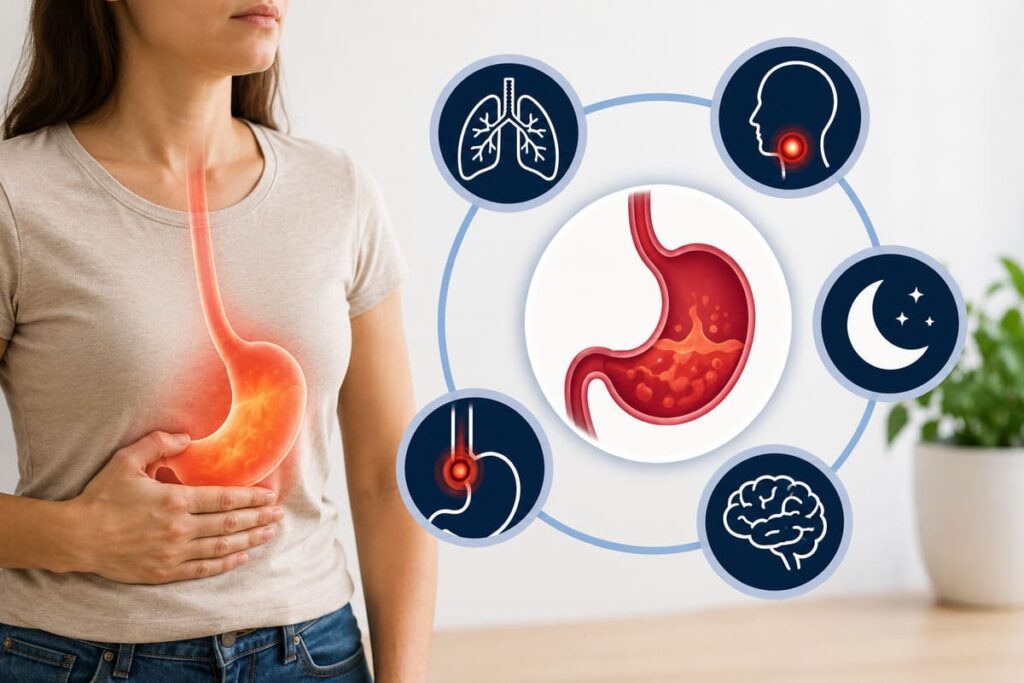
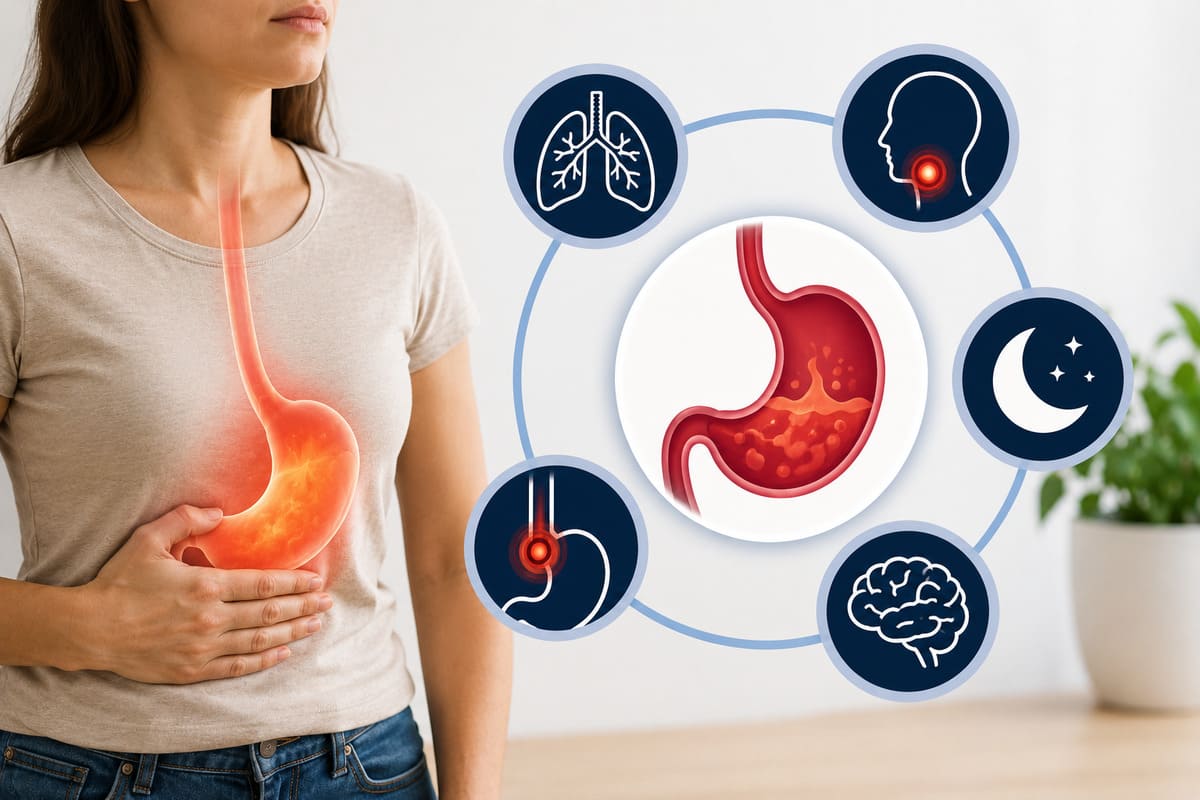
    VA Secondary Conditions to GERD.

    A secondary service-connected condition is a disability that develops because of or is worsened by another service-connected disability.

    According to 38 CFR § 3.310, veterans may receive compensation when a service-connected condition causes or aggravates another disability. 

    For example, if you have service-connected GERD and chronic acid exposure causes Barrett’s esophagus or aggravates asthma, those conditions may qualify for secondary service connection if the medical evidence supports the relationship. 

    This differs from direct service connection, where a condition is linked directly to military service. In a secondary claim, the key question is whether the new condition resulted from an already service-connected disability. 

    For a deeper understanding of service connecting secondary conditions, see Telemedica’s guide on Understanding VA Secondary Conditions and How to Prove Service Connection. 

    How GERD Can Affect Other Parts of the Body

    GERD is often thought of as a digestive condition, but chronic reflux can affect multiple body systems. 

    Repeated exposure to stomach acid may damage the esophagus, irritate the throat and vocal cords, contribute to respiratory symptoms, disrupt sleep, and affect overall quality of life.  

    For some veterans, these complications become separate diagnosed conditions that may support secondary service connection.  

    The National Institute of Diabetes and Digestive and Kidney Diseases (NIDDK) notes that untreated GERD can lead to complications both inside and outside the esophagus, including respiratory and throat-related conditions. 

    Common VA Secondary Conditions to GERD

    Not every veteran with GERD develops secondary conditions. However, medical literature has identified several complications that may occur in some individuals with chronic reflux disease. 

    Barrett’s Esophagus

    One of the most well-known complications of GERD is Barrett’s esophagus, which, according to the NIDDK, is when long-term acid exposure causes changes in the cells lining the esophagus. 

    Medical evidence that may support a claim includes: 

    • Endoscopy reports 
    • Pathology findings 
    • Gastroenterology treatment records 
    • Specialist opinions linking the condition to GERD 

    Esophagitis

    Esophagitis is inflammation of the esophagus caused by repeated acid exposure. 

    Symptoms may include painful swallowing, chest discomfort, difficulty eating, and chronic irritation. 

    The American College of Gastroenterology notes that chronic reflux can damage the esophageal lining and contribute to inflammatory changes. 

    Relevant evidence may include endoscopy findings, treatment records, and gastroenterology evaluations. 

    Esophageal Strictures and Dysphagia

    Chronic inflammation can sometimes lead to scar tissue formation within the esophagus. 

    This scarring may narrow the esophagus and create what is known as an esophageal stricture. Veterans with strictures often experience dysphagia, or difficulty swallowing. 

    Evidence may include: 

    • Endoscopy reports 
    • Imaging studies 
    • Swallow studies 
    • Specialist diagnoses 

    Chronic Laryngitis and Voice Disorders

    GERD does not always stop at the esophagus. 

    When acid reaches the throat and vocal cords, it may contribute to laryngopharyngeal reflux, sometimes called “silent reflux.” 

    Reflux reaching the upper airway may cause hoarseness, chronic throat clearing, persistent cough, or voice changes. 

    Asthma and Respiratory Conditions

    Research has identified a relationship between GERD and certain respiratory disorders. 

    According to studies available through PubMed, GERD and asthma share genetic components, and reflux can contribute to airway irritation that may worsen asthma symptoms in some patients. 

    Sleep Disturbances and Insomnia

    Many veterans with GERD experience symptoms that worsen at night. 

    Nocturnal reflux can interrupt sleep repeatedly and contribute to: 

    • Frequent awakenings 
    • Daytime fatigue 
    • Difficulty maintaining sleep 
    • Reduced quality of life 

    A diagnosed insomnia disorder may potentially qualify for secondary service connection if medical evidence demonstrates that GERD caused or aggravated the condition. 

    Anxiety and Depression Secondary to GERD

    One area that is frequently overlooked is the relationship between chronic physical illness and mental health. 

    Living with severe GERD symptoms can affect nearly every aspect of daily life. Persistent discomfort, sleep disruption, dietary restrictions, social limitations, and chronic health concerns can contribute to psychological distress. 

    To support a mental health secondary claim, veterans typically need: 

    • A mental health diagnosis 
    • Treatment records 
    • Evidence showing how GERD contributed to or aggravated the condition 

    Can GERD Medications Cause Secondary Conditions?

    Veterans may manage GERD with proton pump inhibitors (PPIs) such as omeprazole, pantoprazole, and esomeprazole.  

    These medications are generally considered safe and effective, but researchers have studied whether long-term use may be associated with certain health concerns.  

    Because medication-related claims are highly fact-specific, veterans should not assume a side effect automatically qualifies as a secondary condition. A medical provider must be able to explain how the medication contributed to a diagnosed disability. 

    The U.S. Food and Drug Administration (FDA) has issued safety communications regarding several potential risks associated with long-term proton pump inhibitor (PPI) therapy, including low magnesium levels, certain fracture risks, and Clostridioides difficile-associated diarrhea.  

    These warnings do not mean PPIs are unsafe for most veterans, but they highlight the importance of individualized medical evaluation when considering medication-related secondary claims. 

    What Evidence Does the VA Need for a GERD Secondary Claim?

    Successful secondary claims generally require three elements: 

    1. A current diagnosis, and 
    1. Medical evidence and/or medical opinions (e.g., a nexus letter) connecting the condition to your service-connected GERD, and  
    1. Documentation showing the severity of the condition  

    Treatment records from gastroenterologists, pulmonologists, ear, nose, and throat specialists, or mental health providers may all be relevant depending on the disability being claimed.  

    Pro Tip: In many cases, a nexus letter becomes the key piece of evidence because it explains whether GERD caused or aggravated the secondary condition. 

    How a Nexus Letter Can Strengthen a GERD Secondary Claim

    Many secondary claims are denied because the VA does not see enough evidence connecting the two conditions. 

    Common reasons for denial include: 

    • No diagnosis 
    • Inadequate medical rationale 
    • Lack of supporting records 
    • Failure to address aggravation 

    A credible nexus letter can help bridge these gaps. 

    An effective nexus opinion typically: 

    • Reviews your complete medical history 
    • References relevant medical literature 
    • Explains the relationship between GERD and the secondary condition 
    • Uses VA-friendly language and standards 

    Learn more in Telemedica’s guide on How to Get a Nexus Letter. 

    Veterans may also benefit from an Independent Medical Opinion (IMO) when additional clarification is needed regarding causation or aggravation. 

    When Should You Consider a Medical Records Review?

    Many veterans focus exclusively on the condition for which they are already service connected. 

    However, a comprehensive medical records review may reveal additional complications that could support secondary service connection. 

    A medical records review may help identify: 

    • Previously diagnosed secondary conditions 
    • Missing evidence 
    • Potential nexus opportunities 
    • Documentation gaps that could affect your claim 

    >> What is a Medical Records Review and When Do You Need One Before Getting a Nexus Letter? 

    Conclusion

    GERD can be more than a digestive condition. Chronic reflux may contribute to esophageal disorders, respiratory complications, sleep disturbances, and mental health conditions that significantly affect your quality of life. 

    If you believe your service-connected GERD has caused or worsened another diagnosed condition, it may be worth exploring whether secondary service connection is appropriate. Strong medical evidence — including treatment records, specialist evaluations, and a well-supported nexus opinion — can play a critical role in helping the VA understand the connection. 

    Medical Evidence Wins VA Claims

    Insufficient medical evidence is one of the most common reasons VA disability claims are denied. 

    Medical evidence is a crucial piece of the puzzle that VA raters consider when reviewing a disability claim. Telemedica provides solutions for veterans looking to bolster their claims through high-quality medical evidence (such as DBQs and nexus letters) that win claims! 

    Schedule your 20-minute consultation call and learn how to get the supporting medical evidence you need to strengthen your claim. 


    FAQs | Frequently Asked Questions

    Can I receive VA disability benefits for conditions secondary to GERD?

    Yes. If a diagnosed condition was caused or aggravated by your service-connected GERD, it may qualify for secondary service connection. 

    What are the most common VA secondary conditions to GERD?

    Potential secondary conditions include Barrett’s esophagus, esophagitis, esophageal strictures, respiratory conditions, sleep disorders, and certain mental health conditions when supported by medical evidence. 

    Can anxiety be secondary to GERD for VA disability purposes?

    Potentially. If medical evidence demonstrates that GERD caused or aggravated an anxiety disorder, the VA may consider secondary service connection. 

    Can depression be caused by a service-connected GERD condition?

    It may be possible when a qualified medical provider determines that chronic GERD symptoms substantially contributed to or worsened depression. 

    Can sleep apnea be secondary to GERD?

    Research on the relationship between GERD and sleep apnea is ongoing. Each claim must be evaluated based on the veteran’s individual medical evidence. 

    Can asthma be secondary to GERD?

    Some medical research suggests GERD can worsen asthma symptoms. A nexus opinion is often important for establishing the connection. 

    What evidence do I need for a GERD secondary claim?

    Most successful claims include a diagnosis, medical records, and a nexus opinion explaining how GERD caused or aggravated the secondary condition. 

    Do GERD symptoms alone qualify as a secondary condition?

    Generally no. The VA typically requires a separate diagnosed disability rather than symptoms alone. 

    Can side effects from GERD medications support a VA claim?

    Potentially. If treatment for GERD causes a diagnosed condition, medical evidence may support a secondary claim. 

    Do I need a nexus letter for a secondary GERD claim?

    The VA doesn’t require a nexus letter, but it’s highly recommended for secondary service connection. A well-supported nexus letter is often one of the strongest forms of evidence in a secondary service connection claim. Learn more: When Do You Need a Nexus Letter for a VA Claim?

  • Can I Get a Nexus Letter for a Mental Health Condition if There’s No In-Service Event in My Records?

    Can I Get a Nexus Letter for a Mental Health Condition if There’s No In-Service Event in My Records?

    Yes, a provider may still be able to write a nexus letter without a documented in-service event if your evidence supports a connection to military service.

    A missing record isn’t the same as a missing event. Many veterans experienced stressors, trauma, or mental health symptoms during service that were never formally documented.

    When records are incomplete, other evidence may establish a connection between your current mental health condition and military service.

    This guide explains when a mental health nexus letter may still be possible, what evidence providers may consider, and how to establish a connection to military service when an in-service event isn’t documented.

    Key Takeaways

    • You may still be able to obtain a mental health nexus letter even if there is no documented in-service event in your records.
    • Providers can consider lay statements, buddy statements, treatment records, and other evidence when records are incomplete.
    • A missing record doesn’t automatically prevent a nexus letter, but there must be evidence linking your condition to military service.

    Table of Contents

    Why Some Mental Health Events Don’t Appear in Service Records

    Many mental health conditions stem from experiences that were never formally documented during service.

    Some service members don’t seek treatment when symptoms begin. Others may not recognize the symptoms, worry about career impacts, or choose not to report a traumatic event.

    Some mental health symptoms may not even manifest until years later.

    As a result, veterans may have little or no documentation of the event, symptoms, or onset of their condition in their service records.

    A Missing Record Doesn’t Automatically Prevent a Nexus Letter

    The absence of documentation doesn’t automatically mean a nexus letter is impossible.

    A provider may still be able to support a nexus opinion if other evidence establishes what happened during service and whether it relates to your current condition.

    The key question isn’t whether the event appears in your records, but whether there is enough evidence to support a connection between your condition and military service.

    What Can a Provider Use When an Event Isn’t Documented?

    When an event isn’t documented, providers often look for evidence to establish what happened during the service and whether it relates to your current condition.

    Depending on the circumstances, a provider may review:

    • Personal statements describing the event or onset of symptoms
    • Buddy statements from fellow service members
    • Statements from family members who observed behavioral changes
    • Personnel records showing performance changes or disciplinary issues
    • Deployment records or combat-related documentation

    Together, these records may establish whether a mental health condition is connected to military service.

    Special Considerations for MST Claims

    According to Department of Defense estimates, only about 1 in 5 military sexual trauma (MST) incidents are reported to military officials, meaning many survivors have little or no documentation of the event in their service records.

    When no official report exists, the VA may consider evidence outside service treatment records to help establish the traumatic event.

    Providers may review behavioral changes, requests for transfer, performance issues, substance abuse history, counseling records, and other markers associated with the event.

    For MST survivors, these records may establish a connection to military service even when no official report exists.

    The Bottom Line

    A documented in-service event can strengthen a mental health claim, but it isn’t always required for a nexus letter.

    When service records are incomplete, other evidence may help establish what happened during service and whether a connection to your current condition exists.

    Wondering Whether a Nexus Letter Is Possible?

    Even without a documented in-service event, other evidence may support a connection between your mental health condition and military service.

    Telemedica’s providers can review your records and determine whether a nexus opinion is appropriate based on the available evidence.

    Schedule a 20-minute consultation to discuss your claim and potential next steps.

    FAQs | Frequently Asked Questions

    What evidence can support a mental health nexus letter?

    A provider may consider service records, treatment notes, personal and buddy statements, and personnel records that indicate an event or symptom onset during service.

    Can I get a mental health nexus letter if I never sought treatment during service?

    Yes, if other evidence shows symptoms began during service or relate to an in-service event.

    Can a buddy statement support a mental health nexus letter?

    Yes, a buddy statement can show an in-service event, symptom onset, or behavioral change for a nexus opinion.

    Can I get a nexus letter if the event was never reported?

    Yes, if other evidence (personal/buddy statements, treatment records, etc.) suggests an event during service.

    Can a provider write a nexus letter based on lay evidence?

    Yes, providers may consider lay evidence alongside medical and service records in forming a nexus opinion.


  • How to Claim a Mental Health Condition Secondary to a Physical Disability

    How to Claim a Mental Health Condition Secondary to a Physical Disability

    If you have a service-connected physical condition and also struggle with depression, anxiety, or other mental health issues, you may be eligible for additional compensation. 

    Secondary service connection means that an already service-connected condition causes or aggravates another condition. For example, the stress of living with chronic pain, physical limitations, sleep disturbances, or reduced quality of life can lead to mental health conditions. 

    Understanding how to prove a mental health condition secondary to a physical disability could significantly increase your overall VA disability rating and monthly compensation. 

    Key Takeaways

    • You can receive VA disability benefits for a mental health condition that is caused or aggravated by a service-connected physical disability. 
    • Depression and anxiety secondary to chronic pain are among the most overlooked secondary VA claims. 
    • Strong medical evidence, including a nexus letter and medical opinion, is often the key to establishing secondary service connection. 

    Table of Contents

    Can I Claim a Mental Health Condition Secondary to a Physical Disability?

    Mental Health Secondary to Physical Disability.

    Yes, the VA allows veterans to establish secondary service connection when a service-connected condition causes or aggravates another disability. 

    This means that if your physical disability contributes to depression, anxiety, adjustment disorder, or another mental health condition, you may qualify for additional compensation. 

    Common examples include: 

    • Depression secondary to chronic back pain 
    • Anxiety secondary to migraines 
    • Depression secondary to knee injuries 
    • Mental health conditions related to traumatic brain injury (TBI) 
    • Depression secondary to degenerative arthritis 
    • Anxiety caused by chronic pain and physical limitations 

    Many veterans spend years focusing on their physical symptoms without realizing that the emotional and psychological effects of those conditions may also be compensable. 

    The VA recognizes that chronic pain can affect nearly every aspect of daily life, including sleep, employment, relationships, social functioning, and overall mental health. 

    How Chronic Pain Can Lead to Depression and Anxiety

    Research consistently shows a strong connection between chronic pain and mental health disorders. 

    According to the VA, chronic pain can affect sleep, mood, energy levels, relationships, and daily activities. Chronic pain may lead to depression and anxiety, which can make coping with pain more difficult, creating a cycle that negatively affects overall health and quality of life. 

    Veterans living with chronic pain often experience: 

    • Sleep disturbances 
    • Reduced physical activity 
    • Social isolation 
    • Difficulty maintaining employment 
    • Loss of independence 
    • Increased stress and frustration 

    Over time, these challenges can contribute to symptoms such as: 

    • Persistent sadness 
    • Loss of interest in activities 
    • Feelings of hopelessness 
    • Irritability 
    • Anxiety and excessive worry 
    • Difficulty concentrating 

    When these symptoms develop into a diagnosable mental health condition, veterans may qualify for secondary service connection. 

    Common Physical Disabilities That Lead to Secondary Mental Health Claims

    Although any service-connected disability may potentially contribute to a mental health condition, some conditions appear frequently in successful secondary claims.

    Musculoskeletal Conditions

    Veterans with chronic back pain, neck pain, knee injuries, hip conditions, shoulder injuries, and arthritis often experience significant functional limitations that contribute to depression and anxiety. 

    Tinnitus

    Tinnitus can lead to depression. Veterans whose depression is caused by service-connected tinnitus may qualify for a VA rating for depression (secondary to tinnitus). Related: How a Nexus Letter for Depression Secondary to Tinnitus Can Strengthen Your Claim

    Migraines

    Severe migraines can interfere with work, family responsibilities, and daily functioning, creating significant emotional distress. Related: 6 VA Secondary Conditions to migraines.

    Chronic Pain

    Conditions involving ongoing pain frequently serve as the foundation for secondary mental health claims because of the substantial impact pain has on everyday life. 

    Traumatic Brain Injury (TBI)

    TBI can affect cognition, mood regulation, emotional control, and overall quality of life. Many veterans with TBI develop secondary mental health conditions that require independent evaluation. 

    What Does the VA Need to Approve a Secondary Mental Health Claim?

    To establish secondary service connection, the VA generally looks for three elements: 

    Requirement Description 
    Current Diagnosis A diagnosed mental health condition such as depression, anxiety, or adjustment disorder 
    Primary Service-Connected Condition An existing service-connected disability 
    Medical Nexus Medical evidence showing the primary disability caused or aggravated the secondary condition 

    The nexus is often the most important part of the claim. 

    Without a medical opinion connecting the two conditions, many veterans struggle to prove the relationship between chronic pain and mental health symptoms. 

    The Importance of a Strong Nexus Letter

    A nexus letter is a medical opinion written by a qualified healthcare provider explaining how one condition caused or aggravated another. 

    For secondary mental health claims, a credible nexus letter should explain: 

    • The veteran’s medical history 
    • The severity of the physical condition 
    • How chronic pain or functional limitations affect daily life 
    • The development of mental health symptoms 
    • Why the mental health condition is at least as likely as not related to the service-connected disability 

    A well-supported nexus opinion can help bridge the gap between your physical disability and your mental health diagnosis. 

    Learn more about How to Get a Nexus Letter and how it can strengthen your VA claim. 

    How the VA Rates Depression Secondary to Chronic Pain

    There is no separate VA rating specifically for depression secondary to chronic pain. 

    Instead, the VA evaluates mental health conditions using the General Rating Formula for Mental Disorders under 38 CFR § 4.130. 

    Possible ratings for depression include: 

    VA Rating General Level of Occupational and Social Impairment 
    0% Diagnosis present but symptoms do not impair functioning 
    10% Mild symptoms 
    30% Occasional decrease in work efficiency 
    50% Reduced reliability and productivity 
    70% Deficiencies in most areas of life 
    100% Total occupational and social impairment 

    Many veterans searching for a VA depression secondary to chronic pain rating are surprised to learn that the rating is based on symptom severity rather than the underlying physical condition. 

    A veteran with severe depression related to chronic pain may qualify for a 70% or even 100% mental health rating depending on the level of impairment.

    >> View the Full Guide to VA Ratings for Depression 

    Signs You May Have a Secondary Mental Health Condition

    You may want to explore a secondary mental health claim if your service-connected condition has led to: 

    • Chronic sadness or depression 
    • Increased anxiety 
    • Panic attacks 
    • Sleep problems 
    • Social withdrawal 
    • Irritability 
    • Difficulty maintaining relationships 
    • Reduced work performance 
    • Loss of motivation 

    Medical Evidence Wins VA Claims

    Did you know that a lack of medical evidence is the #1 reason VA disability claims are denied?   

    Medical evidence is a crucial piece of the puzzle that VA raters consider when reviewing a disability claim. Telemedica provides solutions for veterans looking to bolster their claims through high-quality medical evidence (such as DBQs and nexus letters) that win claims!    

    Schedule your 20-minute consultation call and learn how to get the supporting medical evidence you need to strengthen your claim.

    Conclusion

    Many veterans focus on proving their physical disability while overlooking the mental health impact that disability has created. 

    If chronic pain, physical limitations, migraines, TBI, or another service-connected condition has caused or aggravated depression, anxiety, or another mental health disorder, you may be eligible for secondary service connection. 

    Understanding how to establish a mental health condition secondary to a physical disability could help you obtain the compensation and recognition your condition deserves. The key is strong medical evidence that clearly connects the two conditions. 

    FAQs | Frequently Asked Questions

    Can I receive VA disability for depression secondary to chronic pain?

    Yes. If your chronic pain stems from a service-connected condition and contributes to a diagnosed depressive disorder, you may qualify for secondary service connection. 

    Do I need a nexus letter for depression secondary to chronic pain?

    The VA doesn’t require nexus letters but a credible nexus letter for secondary service connection is highly recommended. A credible nexus letter often improves your chances of proving the connection between your physical disability and your mental health condition. Find Nexus Letter Doctors Near Me

    What VA rating can I receive for depression secondary to chronic pain?

    The VA evaluates mental health conditions under the General Rating Formula for Mental Disorders. Ratings range from 0% to 100% depending on symptom severity and impairment. 

    Can anxiety be secondary to a physical disability?

    Yes. Anxiety disorders may qualify for secondary service connection when medical evidence shows they were caused or aggravated by a service-connected physical condition. 

    Can TBI cause secondary mental health conditions?

    Yes. Many veterans with traumatic brain injuries develop depression, anxiety, mood disorders, or other mental health conditions that may qualify for secondary service connection. 

    What evidence is most important for a secondary mental health claim?

    The strongest claims typically include a current diagnosis, evidence of a service-connected physical disability, treatment records, and a well-supported medical nexus letter connecting the conditions. 

  • Chronic Pain Syndrome VA Rating Explained for Veterans Filing Disability Claims

    Chronic Pain Syndrome VA Rating Explained for Veterans Filing Disability Claims

    Chronic pain is a common issue for veterans, often caused by service-related injuries such as musculoskeletal trauma, nerve damage, or repetitive strain. When pain lasts longer than three months and interferes with daily life, it may qualify as chronic pain syndrome for VA disability purposes.

    The VA compensates for chronic pain, but the chronic pain syndrome VA rating process is not straightforward. Because the VA does not assign a specific diagnostic code (DC) for chronic pain syndrome, claims are rated by analogy under physical or mental health conditions. Without strong medical evidence, many veterans are underrated or denied.

    In this post, we’ll explain how the VA rates chronic pain syndrome, what VA disability ratings are possible, how to establish service connection, and how to maximize your benefits — especially if you have depressive disorder due to chronic pain syndrome.

    Key Takeaways

    • Chronic pain syndrome isn’t listed as a specific VA diagnostic code but is often rated analogously under related conditions, such as fibromyalgia or mental health disorders, with possible ratings from 0% to 100%.
    • Service connection can be established directly from an in-service event or secondarily by nexus to another service-connected condition, potentially increasing overall compensation.
    • Medical evidence, including nexus letters and DBQs, is critical; claims without it may be denied or rated lower than you deserve.

    Table of Contents

    What is Chronic Pain Syndrome for VA Disability Purposes?

    chronic pain syndrome va rating

    Chronic pain syndrome is characterized by ongoing pain lasting longer than three months that significantly impacts physical functioning, mental health, or both.

    In veterans, chronic pain is often linked to:

    • Back and neck injuries
    • Joint damage, including knees, shoulders, and hips
    • Nerve injuries or radiculopathy
    • Combat trauma or training accidents

    Chronic pain syndrome often involves psychological components, including stress, depression, irritability, and sleep disturbances. Common symptoms include:

    • Persistent or widespread pain
    • Fatigue
    • Poor sleep
    • Mood changes
    • Reduced ability to work or socialize

    When chronic pain is connected to military service, it may qualify for VA disability compensation.

    How the VA Rates Chronic Pain

    Does the VA Have a Diagnostic Code for Chronic Pain Syndrome?

    No. The VA does not list “chronic pain syndrome” as a standalone condition in the Schedule for Rating Disabilities. Instead, the VA assigns a rating by analogy, meaning your condition is rated under the diagnostic code that best reflects your symptoms.

    This is similar to how the VA evaluates other unlisted conditions.

    Analogous Ratings the VA Uses for Chronic Pain Syndrome

    Depending on how your condition presents, the VA may rate chronic pain syndrome under:

    Chronic Pain Syndrome VA Rating Explained

    A chronic pain syndrome VA rating can range from 0% to 100%, depending on severity, functional loss, and secondary conditions. Fibromyalgia, for example, can be rated at 10% (requires continuous medication for control), 20% (episodic pain with flare-ups often triggered by emotional stress or overexertion), or 40% (constant, widespread pain with symptoms such as fatigue, stiffness, or depression that are refractory to therapy).

    When Chronic Pain is Rated as a Mental Health Condition

    Chronic pain may be evaluated as a pain disorder or somatic symptom disorder, especially when pain dominates daily functioning and leads to psychological symptoms that impair occupational and social life.

    Chronic Pain Syndrome VA Rating Chart (Mental Health Criteria)

    When rated under the VA’s General Rating Formula for Mental Disorders, ratings include:

    VA Rating Criteria 
    0% Diagnosed condition with no symptoms interfering with work or social functioning, or symptoms controlled by continuous medication.
    10% Mild symptoms decreasing work efficiency during stress or are controlled by continuous medication resulting in impairment of occupational or social functioning.
    30% Occupational and social impairment accompanied by occasional decrease in work efficiency due to symptoms like depressed mood, anxiety, or chronic sleep impairment including intermittent periods of inability to perform occupational tasks.
    50% Occupational and social impairment results in reduced reliability and productivity, due to symptoms like flattened affect, panic attacks more than once a week, or difficulty maintaining relationships.
    70% Occupational and social impairment involving deficiencies in most areas, due to symptoms like suicidal ideation, near-continuous depression, or inability to adapt to stress.
    100% Total occupational and social impairment, due to symptoms like gross thought impairment, persistent danger to self/others, or severe memory loss.

    How to Establish Service Connection for Chronic Pain Syndrome

    To receive a VA rating for chronic pain syndrome, you must establish service connection, which means proving your pain is linked to your military service.

    Direct Service Connection

    Direct service connection requires:

    1. A current diagnosis of chronic pain syndrome, and
    1. An in-service injury, event, illness, or aggravation, and
    1. A medical nexus (e.g., a nexus letter) linking the two

    Secondary Service Connection

    Secondary service connection applies when chronic pain is caused or aggravated by an already service-connected condition.

    Common examples include:

    • Back injuries causing chronic pain
    • Joint conditions leading to altered gait and widespread pain
    • Nerve damage resulting in ongoing pain

    Read Next: Understanding VA Secondary Conditions and How to Prove Service Connection and Nexus Letter for Secondary Conditions

    Medical Evidence Needed for a Chronic Pain Syndrome VA Rating

    A Nexus Letter Is Critical for Chronic Pain Claims

    A nexus letter provides the medical opinion linking chronic pain to service or to another service-connected condition.

    Claims lacking nexus evidence are frequently denied.

    Read next: How to Get a Nexus Letter

    Using DBQs to Support a Higher VA Rating

    Disability benefits questionnaires (DBQs) allow providers to document symptom severity and functional loss. It’s a crucial step for tracking symptom severity and how they impact your daily life.

    Depressive Disorder Due to Chronic Pain Syndrome VA Rating

    One of the most impactful secondary claims is depressive disorder due to chronic pain.

    How Secondary Mental Health Ratings Increase VA Compensation

    Depression caused by chronic pain is rated separately under mental health diagnostic codes, often referenced in VA depression secondary to physical injury claims. Ratings range from 0% to 100% based on occupational and social impairment.

    Can Chronic Pain and Depression Qualify You for TDIU?

    Yes. If chronic pain and related mental health conditions prevent substantially gainful employment, you may qualify for Total Disability based on Individual Unemployability (TDIU).

    How to File a Claim for Chronic Pain Syndrome

    Filing a VA claim for chronic pain syndrome is straightforward but requires preparation.

    Step-by-Step Guide to Filing Your VA Disability Claim

    1. Gather medical records and your current diagnosis
    1. Complete VA Form 21-526EZ online, or download and submit by mail, fax, or in person at a regional office
    1. Submit nexus letters, DBQs, and lay statements
    1. If requested, attend a VA compensation and pension (C&P) exam

    Medical Evidence Wins VA Claims

    Did you know that a lack of medical evidence is one of the top reasons VA disability claims are denied?

    Medical evidence is a crucial piece of the puzzle that VA raters consider when reviewing a disability claim. Telemedica provides solutions for veterans looking to bolster their claims through high-quality medical evidence (such as DBQs and nexus letters) that win claims!

    Schedule your 20-minute consultation call and learn how to get the supporting medical evidence you need to strengthen your claim. and learn how to get the supporting medical evidence you need to strengthen your claim.

    FAQs | Frequently Asked Questions

    What is the VA rating for chronic pain syndrome?

    The VA does not list “chronic pain syndrome” as a standalone condition in the Schedule for Rating Disabilities. Instead, the VA assigns a rating by analogy, meaning your condition is rated under the diagnostic code that best reflects your symptoms, which may include musculoskeletal or mental health conditions.

    What is the average chronic pain syndrome VA rating?

    There is no “average” rating because chronic pain is rated by analogy. Veterans with chronic pain typically receive ratings between 10% and 50%, depending on symptom severity and functional limitations.

    How does the VA rate depressive disorder due to chronic pain syndrome?

    When chronic pain causes or worsens depression, the VA rates the mental health condition separately as a secondary disability. Ratings range from 0% to 100% based on occupational and social impairment. A medical nexus linking depression to chronic pain is needed for approval.

    What medical evidence do I need for a chronic pain syndrome VA rating?

    Successful claims typically include a current diagnosis; medical records showing ongoing treatment; evidence of an in-service injury or a service-connected condition; and a nexus letter linking chronic pain to service (or to another service-connected disability).

    Can chronic pain syndrome qualify for presumptive service connection?

    Chronic pain syndrome itself is not automatically presumptive, but it may qualify if linked to a presumptive condition. For example, veterans with Gulf War service may receive service connection if chronic pain is part of a medically unexplained chronic multi-symptom illness (MUCMI). Each case is evaluated based on service history and medical evidence.

    How long does it take to get a VA rating for chronic pain syndrome?

    Initial VA disability claims typically take 84.7 days to process as of January 2026. Claims with compelling evidence submitted upfront may move faster, while claims requiring more exams or appeals can take significantly longer. Providing complete medical documentation early is one of the best ways to reduce delays.

  • Adjustment Disorder VA Rating

    Adjustment Disorder VA Rating

    Mental health conditions are among the most common service-connected disabilities affecting U.S. veterans. While many people are familiar with post-traumatic stress disorder (PTSD), another condition that frequently appears in disability claims is adjustment disorder.

    If your adjustment disorder is connected to your military service, you may qualify for VA disability compensation.

    In this post, we’ll explain how the VA evaluates adjustment disorder, including ratings for adjustment disorder with anxiety, chronic adjustment disorder, and adjustment disorder with mixed anxiety and depressed mood.

    Key Takeaways

    • Adjustment disorder is a recognized mental health condition that can qualify for VA disability compensation if it is service-connected.
    • The adjustment disorder VA rating ranges from 0% to 100%, depending on how symptoms affect occupational and social functioning.
    • The VA uses the same rating criteria for related diagnoses such as adjustment disorder with anxiety and adjustment disorder with mixed anxiety and depressed mood.
    • Medical documentation — including evaluations, treatment records, and compensation and pension exams — plays a critical role in determining a VA disability rating.

    Table of Contents

    What Is Adjustment Disorder?

    adjustment disorder VA rating

    Adjustment disorder is a mental health condition that develops when emotional or behavioral symptoms occur in response to a stressful event or major life change.

    According to the Diagnostic and Statistical Manual of Mental Disorders (DSM-5), adjustment disorder involves distress that is disproportionate to the stressor and leads to impairment in social, occupational, or important areas of functioning.

    Symptoms typically appear within several months of a stressful event and may include:

    • Anxiety or excessive worry
    • Depressed mood
    • Irritability
    • Difficulty concentrating
    • Sleep disturbances
    • Feeling overwhelmed or unable to cope

    For veterans, adjustment disorder may develop after experiences such as:

    • Deployment or combat exposure
    • Military sexual trauma (MST)
    • Serious injury or illness
    • Separation from service
    • Loss of fellow service members

    If these symptoms significantly affect daily functioning and are connected to military service, the condition may qualify for a VA disability rating for adjustment disorder.

    What Is the VA Rating for Adjustment Disorder?

    The VA rating for adjustment disorder ranges from 0% to 100% under the VA’s General Rating Formula for Mental Disorders. Ratings are based on the severity of symptoms and the level of occupational and social impairment they cause.

    The rating criteria are defined in the VA Schedule for Rating Disabilities for Mental Disorders, which provides standardized guidelines for evaluating mental health conditions.

    Rather than focusing only on the diagnosis, the VA evaluates:

    • Frequency of symptoms
    • Severity of symptoms
    • Duration of symptoms
    • Impact on work, relationships, and daily functioning

    How the VA Rates Adjustment Disorder

    Adjustment disorder is evaluated under diagnostic code (DC) 9440 within the VA mental health rating system.

    All mental health conditions — including depression, anxiety disorders, and adjustment disorder — are rated using the General Rating Formula for Mental Disorders, described in the VA disability rating schedule.

    Possible disability ratings, ranging from 0% to 100%, may include:

    0% VA Rating

    A 0% rating means the condition has been diagnosed but symptoms do not significantly interfere with occupational or social functioning or require continuous medication.

    Veterans may still qualify for service connection at this level even if compensation is not awarded.

    10% VA Rating

    A 10% rating is assigned when symptoms are mild or transient and primarily appear during periods of significant stress, or symptoms are controlled with continuous medication.

    Examples may include:

    • Occasional anxiety
    • Mild sleep disturbances
    • Temporary difficulty concentrating

    30% VA Rating

    A 30% disability rating reflects occasional decreases in work efficiency due to symptoms such as:

    • Depressed mood
    • Anxiety
    • Chronic sleep impairment
    • Suspiciousness
    • Mild memory issues

    This is a common rating for veterans currently diagnosed with adjustment disorder.

    50% VA Rating

    A 50% rating indicates more significant functional impairment.

    Symptoms may include:

    • Panic attacks more than once a week
    • Flattened affect and speech, unstable motivation and mood
    • Difficulty maintaining work productivity and understanding complex commands
    • Problems with judgment or decision-making
    • Short- and long-term memory impairment
    • Difficulty maintaining relationships

    70% VA Rating

    A 70% rating reflects severe impairment affecting most areas of life, including work, school, family relations, judgment, thinking, or mood.

    You may experience:

    • Persistent depression or anxiety
    • Thoughts of self-harm
    • Impaired speech and impulse control
    • Difficulty adapting to stressful circumstances
    • Inability to maintain hygiene, appearance
    • Inability to maintain effective relationships

    100% VA Rating

    The highest rating, 100% VA disability, is assigned when symptoms cause total occupational and social impairment.

    Examples may include:

    • Severe cognitive impairment
    • Persistent hallucinations or delusions
    • Inappropriate behavior
    • Disorientation to time or place
    • Inability to perform daily activities independently

    Adjustment Disorder with Anxiety VA Rating

    Some veterans are diagnosed with adjustment disorder with anxiety, meaning anxiety symptoms are the primary response to the stressor.

    Symptoms may include:

    • Excessive worry
    • Restlessness or tension
    • Difficulty concentrating
    • Sleep problems

    The VA Veterans Health Library overview of anxiety disorders notes that persistent anxiety can significantly affect daily functioning, relationships, and work performance.

    However, the diagnostic subtype does not change the VA rating criteria. The VA still evaluates the condition based on overall impairment using the same mental health rating formula.

    If you have a current diagnosis of adjustment disorder and anxiety, common ratings fall between 30% and 70%, depending on symptom severity.

    Chronic Adjustment Disorder VA Rating

    Adjustment disorder is often considered a short-term condition, but in some cases symptoms may persist over time.

    When symptoms continue for extended periods or remain linked to ongoing stressors, clinicians may diagnose chronic adjustment disorder.

    The VA rating for chronic adjustment disorder is determined using the same criteria under DC 9440. The VA focuses primarily on functional impairment, rather than the duration of the condition.

    For example:

    • Persistent sleep disturbance and anxiety affecting work performance may qualify for a 30% rating.
    • Severe symptoms interfering with relationships and employment may result in 50% or 70% ratings.

    Each claim is evaluated individually based on medical evidence and documented symptoms.

    VA Rating Adjustment Disorder with Mixed Anxiety and Depressed Mood

    Another common diagnosis among veterans is adjustment disorder with mixed anxiety and depressed mood.

    This subtype involves symptoms of both anxiety and depression, such as:

    • Persistent sadness or low mood
    • Excessive worry or nervousness
    • Low energy or fatigue
    • Difficulty concentrating
    • Changes in sleep patterns

    Depressive symptoms can occur in response to stressful life events and may require professional treatment.

    As with other forms of adjustment disorder, the VA rating for adjustment disorder with mixed anxiety and depressed mood ranges from 0% to 100%, depending on how symptoms affect occupational and social functioning.

    What Happens During a VA Mental Health C&P Exam?

    While pursuing disability benefits, the VA may request that you undergo a compensation and pension (C&P) exam.

    The purpose of this exam is to evaluate:

    • The current diagnosis
    • Symptom severity
    • Impact on daily functioning
    • Connection to military service

    These evaluations help the VA determine whether a condition is service-connected and what disability rating should be assigned.

    During a mental health C&P exam, clinicians may ask questions about your:

    • Emotional symptoms
    • Work history
    • Relationships and social functioning
    • Sleep patterns
    • Stress triggers

    The findings from this evaluation often play a major role in the final disability rating.

    Service Connecting Adjustment Disorder

    To receive disability compensation for adjustment disorder, veterans must establish service connection. The three elements typically required are:

    1. A current medical diagnosis: A qualified healthcare professional must diagnose you with adjustment disorder or a related mental health condition.
    1. An in-service event, injury, illness, or aggravation: There must be evidence of an event, injury, or stressor that occurred during your military service.
    1. A medical nexus (link) between the two: A medical opinion must connect the condition to the in-service stressor. Supporting evidence may include VA medical records, private mental health treatment records, psychological evaluations, or C&P exam findings.

    Comprehensive medical documentation helps ensure the VA accurately evaluates the severity of symptoms.

    Secondary Service Connection

    If your current diagnosis was caused or aggravated by another service-connected condition, you can claim secondary service connection.

    You’ll need a current diagnosis and a medical nexus linking your adjustment disorder to the other service-connected condition. A medical nexus letter can play a critical role in proving secondary service connection.

    Related: Learn more about linking your current condition to your military service in our posts What is a Nexus Letter? and Understanding VA Secondary Conditions and How to Prove Service Connection.

    Medical Evidence Wins VA Claims

    Did you know that a lack of medical evidence is the #1 reason VA disability claims are denied?

    Medical evidence is a crucial piece of the puzzle that VA raters consider when reviewing a disability claim. Telemedica provides solutions for veterans looking to bolster their claims through high-quality medical evidence (such as DBQs and nexus letters) that win claims!

    Schedule your 20-minute consultation call and learn how to get the supporting medical evidence you need to strengthen your claim. 

    Conclusion

    Adjustment disorder is a recognized mental health condition within the VA disability system, and many veterans experience symptoms related to service-connected stressors. The adjustment disorder VA rating ranges from 0% to 100%, depending on how symptoms affect occupational and social functioning.

    Whether your current diagnosis involves adjustment disorder with anxiety, chronic adjustment disorder, or adjustment disorder with mixed anxiety and depressed mood, the VA uses the same standardized mental health rating criteria.

    Understanding how the VA evaluates adjustment disorder — and ensuring that symptoms are properly documented — can help veterans pursue the disability benefits they may be entitled to receive.

    FAQs | Frequently Asked Questions

    What is the VA rating for adjustment disorder?

    The VA assigns ratings from 0% to 100% based on how symptoms affect occupational and social functioning under the General Rating Formula for Mental Disorders.

    What is the adjustment disorder with anxiety VA rating?

    Adjustment disorder with anxiety is rated using the same VA mental health criteria as adjustment disorder. Veterans commonly receive ratings between 30% and 70%, depending on symptom severity and functional impairment.

    What is the chronic adjustment disorder VA rating?

    Chronic adjustment disorder is evaluated under DC 9440. The rating ranges from 0% to 100% and depends on how persistent symptoms affect work performance, relationships, and daily life.

    What is the VA rating for adjustment disorder with mixed anxiety and depressed mood?

    This condition is rated under the VA mental health formula. Ratings often fall between 30% and 70%, though mild cases may rate 0% and severe cases may qualify for 100% disability.

  • What Evidence Matters Most for a VA Rating Increase? How to Prove Your Disability Got Worse 

    What Evidence Matters Most for a VA Rating Increase? How to Prove Your Disability Got Worse 

    The most important evidence for a VA disability rating increase is current, detailed medical documentation that proves your condition has worsened and now meets the criteria for a higher disability rating.  

    The VA is not just looking for a diagnosis; it’s looking for clear proof of increased severity, functional impairment, and alignment with specific rating criteria. 

    Many veterans submit evidence and still get denied because their documentation doesn’t clearly match VA rating criteria. 

    The strongest claims combine updated medical records, a properly completed Disability Benefits Questionnaire (DBQ), expert medical opinions, and clear proof of how your condition impacts your daily life and ability to work. 

    Key Takeaways

    • The VA prioritizes recent, condition-specific medical evidence when processing disability claims. 
    • A strong DBQ can directly support higher VA rating criteria. 
    • To increase your VA disability rating, you must prove functional impairment, not just symptoms. 
    • Private medical evidence can outweigh a weak C&P exam when it comes to a rating increase. 
    • Your medical evidence must align with your condition’s diagnostic code (DC) in the VA Schedule for Rating Disabilities (VASRD). 

    Table of Contents

    What Evidence Matters Most for a VA Rating Increase?

    What Evidence Matters Most for a VA Rating Increase?

    The best evidence includes: 

    • A completed Disability Benefits Questionnaire (DBQ) 
    • Objective findings (MRIs, labs, range-of-motion testing) 
    • Evidence of reduced ability to work or function daily 
    • Independent medical opinions when needed 

    What Evidence Does the VA Need to Increase Your Disability Rating?

    Many veterans assume that submitting more medical records is enough, but the VA doesn’t increase ratings based on volume — it increases ratings based on specific criteria being met. 

    This is why a veteran can have years of treatment records and still be denied an increase. 

    To approve a rating increase, the VA evaluates whether your condition now meets the criteria for a higher percentage under the VA Schedule for Rating Disabilities (38 CFR Part 4). 

    The VA focuses on: 

    • Severity of symptoms 
    • Frequency and duration 
    • Functional loss (work and daily life impact) 
    • Objective clinical findings 

    For example, musculoskeletal conditions are often rated on range of motion and functional loss, while mental health conditions are rated based on occupational and social impairment. 

    The 5 Most Important Types of Evidence for a VA Rating Increase

    1. Updated Medical Records

    Recent treatment records are the foundation of a strong claim. 

    Strong records include: 

    • Specialist visits 
    • Medication changes 
    • Physical therapy notes 
    • Documented symptom progression 

    Focus on evidence from the last 6–12 months whenever possible. 

    2. Disability Benefits Questionnaires (DBQs)

    A DBQ is one of the most powerful tools because it is structured around VA rating criteria. 

    A high-quality DBQ: 

    • Addresses all rating elements 
    • Includes objective findings 
    • Clearly documents severity and limitations 

    3. Objective Medical Evidence

    Objective findings strengthen your claim by providing measurable proof. 

    Examples: 

    • MRIs and X-rays 
    • Lab results 
    • Range-of-motion testing 
    • Mental health evaluations 

    4. Independent Medical Opinions (IMOs)

    These are critical when evidence is unclear or disputed. 

    They are especially helpful if: 

    • Your C&P exam is inaccurate 
    • Your claim was previously denied 
    • Your condition is complex or secondary 

    5. Functional Impact Evidence

    The VA evaluates how your condition affects your ability to function. 

    Important examples: 

    • Difficulty working or maintaining employment 
    • Physical limitations (standing, walking, lifting) 
    • Cognitive or emotional impairment 
    • Sleep disruption

    A lay statement and/or personal statement can help the VA see how your condition is affecting your life.

    A Note on C&P Exam Results

    It’s common for veterans to leave a C&P exam feeling like their symptoms weren’t fully captured. 

    When that happens, the VA may base its decision on incomplete information — unless you provide stronger private medical evidence. 

    How to Prove Your VA Disability Has Gotten Worse

    To qualify for a higher rating, you must show clear evidence of progression. 

    You can prove your condition has worsened by submitting: 

    • New medical records showing increased severity 
    • More frequent or intense symptoms 
    • Reduced ability to work or perform daily activities 
    • Updated DBQ reflecting current limitations 
    • Objective testing that supports decline 

    What is the best evidence for a VA rating increase?

    The best evidence includes recent medical records, a DBQ, and proof of functional impairment that matches VA criteria. 

    How do you prove a VA disability worsened?

    You prove a condition has worsened by providing updated medical evidence, objective findings, and documentation of increased functional limitations. 

    Evidence That Helps vs. Hurts Your VA Rating Increase

    Evidence Type When it Helps When it Hurts 
    Medical Records Recent, detailed, condition-specific Outdated or vague 
    DBQ Fully completed and condition-specific Incomplete or generic 
    Objective Testing Clear measurable findings No supporting diagnostics 
    Lay Statements Specific functional limitations General complaints 
    Medical Opinion Strong rationale and record review Weak or unsupported 

    Why VA Rating Increase Claims Get Denied

    Many claims may be denied due to poor or misaligned evidence. 

    Common reasons: 

    • No recent medical documentation 
    • Evidence does not match higher rating criteria 
    • Weak or incomplete DBQ 
    • Inconsistent medical records 
    • Lack of functional impact evidence 

    How to Increase Your VA Disability Rating Faster

    If you want to strengthen your claim: 

    1. Review your Diagnostic Code criteria 
    1. Identify what is required for the next rating level 
    1. Gather updated medical records 
    1. Obtain a credible DBQ tailored to your condition 
    1. Consider an IMO 

    Medical Evidence Wins VA Claims

    Did you know that a lack of medical evidence is the #1 reason VA disability claims are denied?   

    Medical evidence is crucial for VA raters reviewing a disability claim.   

    Telemedica provides solutions for veterans looking to bolster their claims through high-quality medical evidence that wins claims!   

    Schedule your 20-minute consultation and learn how to get the supporting medical evidence you need to strengthen your claim. 

    Conclusion

    The evidence that matters most for a VA rating increase is evidence that is recent, objective, detailed, and aligned with VA rating criteria. 

    Strong claims combine: 

    • Updated medical records 
    • A high-quality DBQ 
    • Objective findings 
    • Functional impact documentation 
    • Expert medical opinions when needed 

    If your evidence does not clearly show how your condition meets a higher rating, improving your medical documentation may be the most important next step. 

    FAQs | Frequently Asked Questions

    What is the most important evidence for a VA rating increase?

    The most important evidence is recent medical documentation that shows your condition has worsened and meets higher rating criteria. A credible DBQ from a qualified provider like Telemedica can bridge this gap.

    How do I increase my VA disability rating from 70% to 100%?

    You must show your condition meets the criteria for a 100% rating, which often includes severe functional impairment and inability to maintain substantially gainful employment. 

    What qualifies as new evidence for a VA rating increase?

    New evidence includes recent medical records, updated DBQs, new diagnoses, or documentation showing worsening symptoms. 

    Can I file for a VA increase without a DBQ?

    Yes, but a DBQ significantly strengthens your claim by aligning your condition with VA rating criteria. 

    How long does a VA rating increase take?

    Processing times vary, but most claims take several months depending on complexity and evidence quality. 

    Can I get a VA rating increase without new medical evidence?

    It is possible, but much more difficult. Most successful claims rely on updated medical documentation. 

    What is the fastest way to increase a VA rating?

    The fastest way is submitting strong, complete evidence upfront—especially recent records and a detailed DBQ. 

  • How a Fully Developed Claim Can Help the VA Make a Decision Faster

    How a Fully Developed Claim Can Help the VA Make a Decision Faster

    The fully developed claim program was created to make the VA disability claims process faster and more straightforward for veterans who already have strong evidence to support a claim. 

    For many veterans, the difference between a delayed decision and a timely one comes down to medical evidence. When your records clearly show a current diagnosis, a service connection, and the severity of your condition, the VA can move faster and with more confidence. 

    In this veteran’s guide, we explain what a fully developed claim is, how it compares to a standard claim, and why medical evidence is so important to your submission. 

    Key Takeaways

    • A VA fully developed claim submission includes all required medical and service evidence up front, allowing the VA to make a decision faster. 
    • Strong medical documentation — current diagnoses, nexus opinions (e.g., a nexus letter), and treatment records — is often the deciding factor in whether a claim succeeds. 
    • Veterans can file a VA fully developed claim online and use telehealth services to obtain high-quality medical evidence without unnecessary delays. 

    Table of Contents

    What is a Fully Developed Claim?

    Fully Developed Claim.

    A VA fully developed claim is a disability claim submitted with all required evidence at the time of filing. This includes medical records, supporting documentation, and any relevant service information needed for the VA to make a decision without additional development. 

    According to the U.S. Department of Veterans Affairs, the Fully Developed Claim Program is designed to reduce wait times by limiting the need for the VA to gather evidence on the veteran’s behalf. When everything is provided upfront, claims often move faster through the system. 

    This option works best for veterans who: 

    • Already have a confirmed current medical diagnosis 
    • Can show a connection (nexus) between their condition and military service 
    • Have access to complete medical documentation

    VA Fully Developed Claims vs. Standard VA Claims

    The key difference between a fully developed claim VA submission and a standard claim is who gathers the evidence. 

    With a standard claim, the VA assists in collecting medical records, service records, and other documentation. While helpful, it often lengthens the process. 

    With a VA fully developed claim, the veteran confirms that: 

    • All relevant evidence has already been submitted 
    • No additional records are expected 

    If the VA needs more evidence that has to be added later, they may convert the claim to a standard process, which can slow things down. 

    The Elements of a Fully Developed Claim

    For the VA to approve a fully developed claim, three core elements must be clearly supported — and medical evidence plays a role in each: 

    1. A Current Medical Diagnosis 

    The condition must be diagnosed by a qualified healthcare provider and documented in medical records. 

    2. An In-Service Event, Injury, Illness, or Aggravation 

    This may include service treatment records or other credible supporting evidence. 

    3. A Medical Nexus (e.g., a Credible Nexus Letter)

    A professional medical opinion linking your current diagnosis to your military service is often critical, especially for complex or long-term conditions. 

    Note: Without strong medical documentation tying these elements together, even valid claims can face delays or denials. 

    The Importance of Medical Evidence

    Medical evidence is often the deciding factor in whether a VA claim is successful. 

    Clear documentation can: 

    • Confirm the diagnosis 
    • Establish severity and functional impact (through documents like a disability benefits questionnaire, or DBQ) 
    • Provide a nexus opinion linking the condition to service 

    For many veterans, having organized, medically sound evidence upfront is what allows a fully developed claim to live up to its name. 

    How to File a Fully Developed Claim

    The most efficient method for filing a fully developed claim is online, but you can also print out a VA Form 21-526EZ and mail or fax it to the VA or deliver it in person at a VA regional office. 

    However you choose to file, the steps typically include: 

    • Gathering all relevant medical records and supporting documents 
    • Completing VA Form 21-526EZ 
    • Certifying that no additional evidence will be submitted 
    • Filing online, by mail or fax, or in person 

    The fully developed claim VA timeline varies, but claims with clear, complete medical evidence are often processed faster than standard claims. As of April 2026, the average number of days it takes the VA to complete disability-related claims is 75.7 days. 

    Medical Evidence Wins VA Claims

    Did you know that a lack of medical evidence is the #1 reason VA disability claims are denied?  

    Medical evidence is crucial for VA raters reviewing a disability claim. 

    Telemedica provides solutions for veterans looking to bolster their claims through high-quality medical evidence that wins claims! 

    Schedule your 20-minute consultation and learn how to get the supporting medical evidence you need to strengthen your claim. 

    Conclusion

    A fully developed claim gives veterans the opportunity to take control of the VA disability process, especially when supported by strong medical evidence.  

    Understanding what the VA needs, gathering documentation early, and using accessible healthcare options like telehealth can make the difference between delays and decisions. 

    When your medical evidence clearly tells your story, the VA is better positioned to act quickly and fairly. 

    FAQs | Frequently Asked Questions

    What is the fully developed claim program?

    The fully developed claim program allows you to submit all required evidence for your VA disability claim upfront so the VA can process the claim faster without additional development, such as gathering evidence or information on their own. 

    How long is the fully developed claim VA timeline?

    Timelines vary for all VA disability claims, but fully developed claims with complete medical evidence are often processed faster than standard claims. As of April 2026, the average number of days it takes the VA to complete disability-related claims is 75.7 days. 

    Can I use telehealth medical records for a VA fully developed claim?

    Yes. Medical evidence from qualified providers, including telehealth visits, is accepted by the VA when it meets documentation requirements. 

    What happens if I submit new evidence after filing my fully developed VA claim?

    If additional evidence is added to a fully developed claim, the VA may convert the claim to a standard claim, which can extend processing time.


  • How to Get a Nexus Letter for PTSD 

    How to Get a Nexus Letter for PTSD 

    If you’re a veteran filing a VA disability claim for PTSD, one of the most important pieces of evidence you can submit is a medical nexus letter. This document connects your current PTSD diagnosis to your service — and it is often the missing link between an approved claim and a denial. 

    Many veterans are denied PTSD benefits not because they don’t qualify, but because there is not yet sufficient medical evidence connecting their condition to military service. 

    This post explains how to get a nexus letter for PTSD, who can write one, what it must include to meet VA standards, and how to use it to strengthen your VA claim or appeal. 

    Key Takeaways

    • A PTSD nexus letter is a medical opinion linking your PTSD to your military service. 
    • The letter must state that your PTSD is “at least as likely as not” caused or aggravated by service. 
    • You do not need combat experience to qualify for PTSD service connection. 
    • The VA accepts private and telehealth nexus letters when properly written.  
    • A strong nexus letter can help with initial VA claims, supplemental claims, and appeals. 

    Table of Contents

    What is a Nexus Letter for PTSD?

    A nexus letter is a written medical opinion from a qualified healthcare provider explaining why your PTSD is connected to your military service. 

    This letter goes beyond a simple diagnosis; it provides a reasoned medical opinion supported by your records, explaining why it’s “at least as likely as not” that your PTSD resulted from or was aggravated by your service. 

    There are three requirements for the VA to grant service connection for PTSD: a current diagnosis; evidence of an in-service event, injury, illness, or aggravation; and a medical link between the two. 

    A nexus letter directly addresses the third requirement — one of the reasons PTSD claims may be denied. 

    What Makes a PTSD Nexus Letter VA-Compliant?

    A strong nexus letter for PTSD should include: 

    • The provider’s credentials 
    • Confirmation that military and medical records were reviewed 
    • Identification of the specific in-service stressor 
    • A clear opinion on causation using VA legal language (“at least as likely as not”) 
    • A well-reasoned explanation supported by clinical findings, DSM-5 criteria for PTSD, relevant medical literature (when appropriate) 

    Important: A short doctor’s note or therapy summary is not a nexus letter and usually carries little weight with VA raters. 

    If you’re unsure where to start, Telemedica’s team of experienced providers can conduct a comprehensive mental health evaluation and craft a nexus letter tailored to your PTSD claim. 

    Related: Medical Nexus Letters and DBQs 

    How to Get a Nexus Letter for PTSD (Step-by-Step)

    Obtaining a nexus letter doesn’t have to be complicated. Follow these actionable steps to secure one effectively: 

    1. Gather Your Evidence 

    Before seeing a provider, collect: 

    • Your DD-214 
    • Service treatment records, if available 
    • Personnel records 
    • Buddy statements or lay statements 
    • Prior VA decisions (if denied before) 
    • Personal stressor statement explaining what happened and how it affects you today 

    2. Choose a Qualified Provider 

    The VA accepts nexus letters from: 

    • Psychiatrists (MD/DO) 
    • Licensed psychologists (PhD/PsyD)  
    • Other licensed mental health professionals if competent and well-reasoned 

    What matters most is expertise and rationale, not just the provider’s title. 

    Telemedica connects veterans with licensed mental health professionals experienced in VA disability standards. 

    3. Schedule an Evaluation 

    The provider will: 

    • Review your military and medical records 
    • Conduct a mental health evaluation 
    • Confirm current diagnosis under DSM-5 criteria  
    • Assess the link between your symptoms and service 

    4. Request the Nexus Letter 

    Clearly explain that you need a nexus letter for your VA claim and that it must include VA-compliant language. Provide all documents upfront to allow for a detailed review. 

    5. Review and Submit 

    Before submitting, confirm the letter: 

    • Uses “at least as likely as not” 
    • Identifies your specific in-service stressor 
    • Includes medical reasoning  
    • Is signed and dated  

    How to Prove PTSD Service Connection

    Proving service connection for PTSD requires demonstrating three elements to the VA: 

    • Current Diagnosis: A current and formal PTSD diagnosis from a qualified provider, based on symptoms like flashbacks, avoidance, hypervigilance, and mood changes. 
    • In-Service Stressor: Evidence of a traumatic event, injury, illness, or aggravation during service, such as combat logs, medals (e.g., Combat Action Ribbon), or lay statements from fellow service members. 
    • Medical Nexus: This is where the nexus letter shines, linking the stressor to your current diagnosis with medical reasoning. 

    Common challenges include delayed symptom onset or non-combat stressors like military sexual trauma. To overcome these, include timelines in your evidence showing how symptoms progressed. 

    PTSD VA Ratings

    The VA rates PTSD at 0%, 10%, 30%, 50%, 70%, or 100%, under the General Rating Formula for Mental Disorders (38 CFR § 4.130, Diagnostic Code 9411), assigning percentages based on how symptoms affect your occupational and social functioning. 

    Most veterans with PTSD receive 50% or 70% ratings.  

    >> See our complete guide to PTSD VA Ratings 

    Pro Tip: A nexus letter is not required for a VA rating increase. Instead, the VA focuses on current symptom severity, often supported by a Disability Benefits Questionnaire (DBQ) or medical opinion. Telemedica can assess your current rating and provide evidence for reevaluation. 

    Secondary Conditions Linked to PTSD

    PTSD often causes or worsens other ratable conditions that may also qualify for VA benefits, including: 

    • Migraines or tension headaches triggered by stress 
    • Sleep apnea, often linked to PTSD-related hyperarousal 
    • Gastrointestinal issues like GERD or IBS from chronic anxiety 
    • Erectile dysfunction (ED) due to medication side effects or psychological factors 
    • Hypertension from prolonged stress response 

    Pro Tip: Each secondary condition requires its own medical nexus opinion (e.g., a nexus letter) linking it to PTSD. 

    Medical Evidence Wins VA Claims

    Did you know that a lack of medical evidence is the #1 reason VA disability claims are denied?  

    Medical evidence is a crucial piece of the puzzle that VA raters consider when reviewing a disability claim. Telemedica provides solutions for veterans looking to bolster their claims through high-quality medical evidence that wins claims!  

    Schedule your 20-minute consultation call and learn how to get the supporting medical evidence you need to strengthen your claim.

    Conclusion

    Securing a nexus letter for PTSD is a vital step in obtaining the VA benefits you’ve earned.  

    By understanding the requirements, gathering strong evidence, and working with experts, you can significantly improve the outcome of your claim.  

    At Telemedica, we’re committed to making this process accessible and effective through our telemedicine services, assisting veterans like you to receive the compensation and benefits you deserve. Don’t let a lack of documentation stand in your way — take action today to build a winning claim. 

    FAQs | Frequently Asked Questions

    How do I get a nexus letter for PTSD?

    To get a nexus letter for PTSD, gather your service and medical records, complete a PTSD evaluation with a qualified mental health provider, and request a VA-compliant medical opinion stating that your PTSD is “at least as likely as not” related to military service. 

    Does the VA accept private nexus letters for PTSD?

    Yes. The VA accepts private nexus letters, including telehealth evaluations, as long as they are written by a qualified provider and include medical reasoning and VA legal language. 

    Can I get service connection for PTSD without combat experience?

    Yes. PTSD claims can be approved for noncombat stressors such as military sexual trauma (MST), training accidents, or fear-based deployments. 

    Do I need a nexus letter if I already had a VA C&P exam?

    Not always. However, a private nexus letter can help if the C&P exam was unfavorable, incomplete, or inaccurate. 

    Can a telehealth provider write a PTSD nexus letter?

    Yes. Telemedicine nexus letters are valid and accepted by the VA when properly documented.  

    Who is qualified to write a nexus letter for PTSD?

    Psychiatrists, psychologists, and other licensed mental health professionals with PTSD expertise can write nexus letters. The VA evaluates competency, credentials, and reasoning, not just job titles. 

    How long does it take to get a nexus letter for PTSD?

    It typically takes a few days to several weeks, depending on record review complexity and provider availability.

    How much does a PTSD nexus letter cost?

    Costs vary widely depending on evaluation time and record review. Prices commonly range from several hundred to more than a thousand dollars. 

    Do I need a nexus letter for a PTSD VA rating increase?

    No. A nexus letter may help clarify symptom progression but is not required. A medical opinion or DBQ documenting increased severity can support a claim for increase.

  • Agent Orange Presumptive Conditions List for VA Disability

    Agent Orange Presumptive Conditions List for VA Disability

    If you were exposed to Agent Orange during military service, the VA recognizes a specific list of Agent Orange presumptive conditions that qualify for disability compensation without requiring proof of direct causation.

    This presumptive status makes it easier for eligible veterans to receive monthly tax-free benefits, as the VA automatically assumes the condition is service connected based on qualifying service and diagnosis.

    This guide provides the full Agent Orange presumptive conditions list, explains eligibility requirements, and shows how the VA assigns disability ratings so you can better understand your benefits and claim options.

    Key Takeaways

    • Exposure to Agent Orange, an herbicide used by the U.S. military in the 1960s, has since been linked to various health conditions in exposed veterans. 
    • If you have a current diagnosis of one of these presumptive conditions for Agent Orange, you don’t need to prove exposure caused your illness — just confirm your qualifying service and current diagnosis. 
    • With the addition of the VA PACT Act, conditions like hypertension and several types of cancer are now included on the VA presumptive conditions list, broadening eligibility for many veterans. 
    • Even with presumptive status, detailed medical records help secure the highest possible VA disability rating based on the severity of your symptoms. 

    Table of Contents

    What is Agent Orange?

    Agent Orange Presumptive Conditions.

    Agent Orange was a tactical herbicide used by the U.S. military during the Vietnam War to clear vegetation and deny cover to enemies.  

    It contained a toxic chemical called dioxin, which has been linked to various health problems in exposed veterans.  

    Exposure typically occurred through spraying operations in Vietnam from 1962 to 1971. However, Agent Orange also affected military personnel in other locations, including the Korean Demilitarized Zone (DMZ), Laos, Cambodia, and Guam, as well as those who served on certain aircraft. 

    What is Presumptive Service Connection?

    Presumptive service connection means the VA automatically assumes your military service caused certain conditions if you meet specific criteria, such as serving in a qualifying location during a defined period.  

    For Agent Orange presumptive conditions, eligibility often requires service in Vietnam, the Korean DMZ, Laos, Cambodia, Guam, or on certain aircraft, plus a current diagnosis of a listed condition. 

    Qualifying for Agent Orange Exposure

    To qualify for VA disability compensation and benefits for Agent Orange presumptive conditions, you must have served in certain locations at specific times when Agent Orange was used or stored.  

    This includes: 

    • The Republic of Vietnam, aboard a U.S. military vessel that operated in the inland waterways of Vietnam, or on a vessel operating not more than 12 nautical miles seaward from the demarcation line of the waters of Vietnam and Cambodia between Jan. 9, 1962, and May 7, 1975 
    • Any U.S. or Royal Thai military base in Thailand from Jan. 9, 1962, through June 30, 1976 
    • Laos from Dec. 1, 1965, through Sept. 30, 1969 
    • Cambodia at Mimot or Krek, Kampong Cham Province from April 16, 1969, through April 30, 1969 
    • Guam or American Samoa or in the territorial waters off Guam or American Samoa from Jan. 9, 1962, through July 31, 1980 
    • Johnston Atoll or on a ship that called at Johnston Atoll from Jan. 1, 1972, through Sept. 30, 1977 
    • In or near the Korean DMZ for any length of time between Sept. 1, 1967, and Aug. 31, 1971 
    • In an Air Force unit location where a C-123 aircraft with traces of Agent Orange was assigned, and had repeated contact with this aircraft due to your flight, ground, or medical duties 
    • You were involved in transporting, testing, storing, or other uses of Agent Orange during your military service 

    Agent Orange Presumptive Conditions List

    Below is a comprehensive list of the VA-recognized Agent Orange presumptive conditions, including information on the condition and a brief overview of the VA rating. 

    AL Amyloidosis

    AL amyloidosis is a rare disease that occurs when an abnormal protein called amyloid builds up in organs like the heart, kidneys, liver, or nerves, affecting their function. 

    VA Rating: Rated at 100% under diagnostic code (DC) 7717 when primary amyloidosis is present, with potential additional ratings for organ dysfunction residuals like heart, kidney, or nerve involvement. 

    Bladder Cancer

    Bladder cancer starts in the cells lining the bladder, often as urothelial carcinoma, and can cause blood in the urine or frequent urination. 

    VA Rating: Rated at 100% during active cancer or treatment under DC 7528 (malignant neoplasms of the genitourinary system), continuing for 6 months after treatment ends, then reevaluated based on residuals such as urinary dysfunction, infections, or renal impairment. 

    Chronic B-Cell Leukemias (including CLL)

    This includes chronic lymphocytic leukemia, a cancer of white blood cells that can lead to swollen lymph nodes, fatigue, and infections. 

    VA Rating: Rated at 100% during active illness or treatment under DC 7703 (leukemia), with asymptomatic early-stage CLL often at 0%; post-active phase ratings depend on residuals like anemia, frequent infections, or hematologic impairment. 

    Chloracne (or Similar Acneform Disease)

    Chloracne is an acne-like skin condition caused by chemical exposure, featuring cysts, blackheads, and scarring, often on the face and neck. 

    VA Rating: Rated under DC 7829 (or analogous to 7806 dermatitis) based on extent and depth of skin involvement (e.g., 30% rating if 40% or more of your face/neck is affected, 20% rating for intertriginous areas, 10% rating otherwise), requiring at least 10% disabling within one year of exposure. 

    Diabetes Mellitus Type 2

    Type 2 diabetes occurs when the body doesn’t use insulin properly, leading to high blood sugar levels that can cause fatigue, thirst, and nerve damage over time. 

    VA Rating: Rated under DC 7913 from 10% if easily managed up to 100% for severe cases that require insulin or frequent hospitalizations, with separate ratings possible for related complications. 

    Hodgkin Lymphoma (Hodgkin Disease)

    Hodgkin lymphoma is a cancer of the lymphatic system starting in B cells, often causing swollen lymph nodes, fever, and weight loss. 

    VA Rating: Rated at 100% during active illness or treatment under DC 7709, continuing with a mandatory exam six months post-treatment; afterward rated on residuals such as lymph node removal, immune suppression, or systemic impairment. 

    Hypertension (High Blood Pressure)

    Hypertension is elevated blood pressure that strains the heart and arteries, increasing risks for heart disease and stroke; it often shows no symptoms. 

    VA Rating: Rated under DC 7101 from 10% to 60% based on blood pressure readings (diastolic/systolic levels) and evidence of end-organ damage or history of hypertensive complications. 

    Related: Hypertension VA Rating Guide

    Hypothyroidism

    Hypothyroidism is an underactive thyroid gland that doesn’t produce enough hormones, leading to fatigue, weight gain, and cold sensitivity. 

    VA Rating: Rated under DC 7903 at 100% if presenting as myxedema crisis (with cold intolerance, weakness, cardiac/mental issues), continuing for six months post-stabilization. Otherwise, rated at 30% initially for six months post-diagnosis, then based on residuals like fatigue, metabolic issues, or complications. 

    Ischemic Heart Disease

    Ischemic heart disease, or myocardial ischemia, happens when reduced blood flow to the heart causes chest pain and can lead to heart attacks. 

    VA Rating: Rated under DC 7005 (or analogous) from 10% to 100% based on residuals such as cardiac hypertrophy, congestive heart failure, angina, or METs level of functional impairment. 

    Monoclonal Gammopathy of Undetermined Significance (MGUS)

    MGUS involves abnormal plasma cells producing faulty antibodies, raising risks for blood cancers like multiple myeloma; it often has no symptoms. 

    VA Rating: Typically rated at 0% as it’s asymptomatic and may precede other conditions (analogous to DC 7712 for smoldering multiple myeloma), unless symptomatic residuals develop warranting rating under related conditions. 

    Multiple Myeloma

    Multiple myeloma is a cancer of plasma cells in the bone marrow, causing bone pain, anemia, and kidney issues as faulty cells crowd out healthy ones. 

    VA Rating: Rated at 100% for symptomatic multiple myeloma under DC 7712, continuing for five years post-diagnosis with mandatory exam; afterward rated on residuals like bone lesions, anemia, or renal impairment. 

    Non-Hodgkin Lymphoma

    Non-Hodgkin lymphoma affects the lymphatic system, often starting in B or T cells, leading to swollen nodes, fatigue, and infections. 

    VA Rating: Rated at 100% during active disease, treatment, or indolent phase under DC 7715, continuing for two years beyond treatment with mandatory exam; thereafter rated on residuals like immune suppression, lymph node issues, or systemic effects. 

    Parkinson Disease and Parkinsonism

    Parkinson’s disease is a progressive nervous system disorder causing tremors, stiffness, and slowed movement due to dopamine loss; parkinsonism refers to similar symptoms from various causes. 

    VA Rating: Rated under DC 8004 (paralysis agitans) with a minimum 30% for motor impairment (tremors, rigidity, gait issues), up to 100% depending on overall severity of motor symptoms and functional loss. 

    Peripheral Neuropathy, Early-Onset

    Peripheral neuropathy damages nerves outside the brain and spinal cord, causing numbness, tingling, and weakness, often in the hands and feet. It must be at least 10% disabling within one year of exposure. 

    VA Rating: Rated under peripheral nerve codes (e.g., DC 8510–8720, such as DC 8520  for sciatic) from 10% to 80%, or higher per limb, based on degree of incomplete/complete paralysis, sensory loss, motor weakness, or neuritis/neuralgia, requiring at least 10% disabling within one year of exposure. 

    Porphyria Cutanea Tarda

    Porphyria cutanea tarda causes skin sensitivity to sunlight, leading to blisters, redness, and scarring on exposed areas like hands and face. It must be at least 10% disabling within one year of exposure. 

    VA Rating: Rated under DC 7815 (bullous disorders) or skin formula from 10% to 60% based on systemic therapy duration (e.g., 60% if constant systemic therapy for longer than 12 months) and extent of skin lesions/scarring. 

    Prostate Cancer

    Prostate cancer develops in the prostate gland and may cause urinary issues or blood in semen. It’s one of the most common cancers in men. 

    VA Rating: Rated at 100% during active cancer or treatment under DC 7528, continuing for six months post-treatment with mandatory exam; afterward rated on residuals like urinary obstruction, infections, erectile dysfunction, or renal issues. 

    Respiratory Cancers (Including Lung Cancer)

    Respiratory cancers affect the lungs, larynx, trachea, or bronchus, often causing persistent cough, shortness of breath, or coughing up blood. Covered respiratory cancers include: 

    • Lung cancer 
    • Cancer of the trachea 
    • Cancer of the larynx  
    • Cancer of the bronchus 

    VA Rating: Rated at 100% during active disease or treatment under DC 6819 (or analogous for malignant neoplasms), with post-treatment reevaluation on residuals such as reduced lung function, obstruction, or metastases. 

    Soft Tissue Sarcomas (Other Than Excluded Types)

    Soft tissue sarcomas are rare cancers starting in muscles, fat, or connective tissues, often presenting as a painless lump. They include, but are not limited to: 

    • Dermatofibrosarcoma protuberans (including fibrosarcomatous variations) 
    • Fibrosarcoma 
    • Leiomyosarcoma 
    • Liposarcoma 
    • Malignant fibrous histiocytoma 
    • Myxofibrosarcoma 
    • Rhabdomyosarcoma 
    • Soft tissue sarcoma of any histological type, excluding osteosarcoma (bone cancer), chondrosarcoma (cartilage cancer), Kaposi’s sarcoma, and mesothelioma

    VA Rating: Rated at 100% during active disease or treatment under DC 5329 (or analogous), continuing for six months post-therapy if no recurrence; thereafter rated on residuals like local tissue damage, functional loss, or pain. 

    NOTE: Your actual rating depends on compensation and pension (C&P) exam results, medical records, and how the condition impacts daily life/work. If you’re filing or appealing, strong medical evidence of severity is essential (even for presumptives) to maximize your rating. 

    Agent Orange–Related Benefits for Children

    The VA recognizes certain birth defects among veterans’ children are related to the veteran’s service in Vietnam or Korea, particularly spina bifida. Spina bifida is a condition that occurs when the spine and spinal cord don’t form properly in utero. 

    VA Rating: Since this condition impacts the child of the veteran, it’s rated differently than a traditional VA disability claim. Instead, you’ll submit an Application for Benefits for a Qualifying Veteran’s Child Born with Disabilities (VA Form 21-0304). Benefits can include compensation, health care, and job training. 

    The Value of a DBQ

    A Disability Benefits Questionnaire (DBQ) is a standardized form completed by a medical professional. The form will include information about your symptoms, how they impact your daily life, and how they’re related to your military service. 

    There are separate DBQs depending on your condition, and they often serve to strengthen the medical evidence necessary to win your VA disability claim. 

    VA Ratings for Agent Orange Presumptive Conditions

    VA disability ratings for Agent Orange presumptive conditions are assigned under the VA Schedule for Rating Disabilities and depend on the applicable diagnostic code and severity of the condition. 

    For example, diabetes type 2 might rate 20% if managed with diet and medication, but higher if insulin is required. Conditions like cancers are often rated at 100% during active treatment.  

    What Evidence Do I Need to Submit for My Agent Orange Presumptive Claim?

    For a presumptive claim, you primarily need: 

    • Proof of service in a qualifying location 
    • A current medical diagnosis of the condition 
    • Records showing the condition’s severity for VA rating purposes 

    Note: No service-connection evidence is required for VA-recognized presumptive conditions, but if your service location isn’t presumptive, you will need proof of direct exposure and a nexus statement linking your current diagnosis to that exposure.

    Medical Evidence Wins VA Claims

    Did you know that a lack of medical evidence is the #1 reason VA disability claims are denied?  

    Medical evidence is crucial for VA raters reviewing a disability claim.  

    Telemedica provides solutions for veterans looking to bolster their claims through high-quality medical evidence that wins claims!  

    Schedule your 20-minute consultation and learn how to get the supporting medical evidence you need to strengthen your claim.

    Conclusion

    Agent Orange presumptive conditions make it easier for eligible veterans to qualify for VA disability compensation because the VA automatically assumes service connection based on qualifying service and diagnosis. However, your final VA disability rating depends on the severity of your condition, supporting medical records, and clear documentation of symptoms and functional limitations.

    Even with presumptive status, strong medical evidence remains one of the most important factors in securing the highest possible VA rating. Detailed medical evaluations, diagnostic findings, and properly completed documentation can directly impact your compensation outcome.

    Understanding your eligibility and ensuring your condition is fully documented can help you get the highest possible VA compensation and benefits you earned through your service.


    FAQs | Frequently Asked Questions

    Are skin cancers presumptive conditions for Agent Orange disability?

    No, skin cancers (including melanoma and non-melanoma types like basal cell or squamous cell carcinoma) are not on the VA’s list of presumptive conditions for Agent Orange exposure. The VA does recognize specific skin-related conditions like chloracne (or similar acneform diseases) and porphyria cutanea tarda as presumptive, but these are not forms of skin cancer. 

    Is bladder cancer a presumptive condition for Agent Orange exposure?

    Yes, bladder cancer is a presumptive condition for Agent Orange exposure. If you have a current diagnosis of bladder cancer and qualifying service with presumed exposure, the VA presumes the diagnosis is related to your service. This qualifies you for disability compensation. 

    Yes, chronic lymphocytic leukemia (CLL) is a presumptive condition. The VA includes it under the broader category of chronic B-cell leukemias (which covers CLL, hairy-cell leukemia, and other related chronic B-cell leukemias). Qualifying veterans with CLL automatically get the presumption. 

    Is COPD a presumptive condition for Agent Orange?

    No, chronic obstructive pulmonary disease (COPD) is not a presumptive condition for Agent Orange exposure. The VA’s presumptive list for Agent Orange focuses on specific cancers (like respiratory cancers, including lung cancer), diabetes, heart disease, and others, but COPD is not included. (Note: COPD can be presumptive under other exposures, like burn pits via the PACT Act, but not for Agent Orange.) 

    What if my condition isn’t on the Agent Orange presumptive conditions list?

    If your condition isn’t on the VA presumptive list, you can still file a claim. However, you may need additional evidence linking it to Agent Orange exposure.


  • MST VA Rating for PTSD Caused by Military Sexual Trauma

    MST VA Rating for PTSD Caused by Military Sexual Trauma

    Military sexual trauma (MST) can have lasting effects that reach far beyond the moment it occurred. 

    For many, the impact appears later as PTSD, anxiety, depression, or changes in daily life. These can make work, relationships, and routines more difficult. 

    This post explains how the VA rates MST, defines military sexual trauma, how MST-related PTSD claims are evaluated, and what to expect during the VA disability process. 

    If you’re navigating this process, you aren’t alone. Many others have been in your position and understanding what to expect can make the path forward feel more manageable. 

    Key Takeaways

    • Military sexual trauma is an experience, not a diagnosis or a mental health condition. 
    • The VA evaluates the conditions that result from MST rather than the experience itself. 
    • A compensation and pension exam, when required, is a VA-ordered evaluation used to determine whether MST-related conditions are service-connected and how they affect your daily life, work, and relationships. 
    • As an MST survivor, you may qualify for MST-related care even if you aren’t eligible for other VA services. 

    Table of Contents

    Military Sexual Trauma Definition

    The MST definition used by the VA describes it as a form of personal trauma that includes sexual harassment, sexual assault, or rape during military service. 

    While MST can lead to lasting physical or mental health conditions, it’s considered an experience rather than a medical diagnosis on its own. 

    It can affect service members of any sex or background, and the person responsible may or may not be connected to the military. 

    Although PTSD is commonly associated with MST and may be service-connected under 38 CFR § 3.304(f)(5), other mental health conditions can also result from MST. 

    Examples of MST include, but aren’t limited to: 

    • Being pressured into sexual activities with threats if you refuse, or with promises of better treatment in exchange for sex. 
    • Sexual contact or activities without your consent, including when you were asleep or intoxicated. 
    • Being overpowered or physically forced to have sex. 
    • Being touched or grabbed in a sexual way that made you uncomfortable, including during hazing experiences. 
    • Comments about your body or sexual activities that you found threatening. 
    • Unwanted sexual advances that you found threatening. 

    Can You Get VA Disability for MST?

    Yes. While there is no standalone MST VA rating, the VA compensates for the physical or mental health conditions caused by MST. 

    PTSD is the most common MST-related condition and is rated under the VA’s General Rating Formula for Mental Disorders at 0%, 10%, 30%, 50%, 70%, or 100%. 

    Your PTSD MST VA rating is based on symptom severity and how your condition affects your work, relationships, and daily functioning. 

    >> View Our Main Guide on PTSD VA Rating Criteria 

    How the VA Reviews MST Claims

    The VA handles MST-related claims differently from most other claims and assigns them to specially trained reviewers to reduce errors.  

    These claims may require extra review steps, and MST can be recognized whether it happened during active duty, training, or inactive duty training. 

    For PTSD claims tied to MST, the VA allows alternative evidence and behavioral markers to be used.  

    For non-PTSD conditions, the VA follows standard service-connection rules while still recognizing MST as the in-service event. 

    Establishing Service Connection for an MST VA Rating

    To be eligible for an MST VA rating, you must provide the following: 

    • A current medical diagnosis (such as PTSD or another condition) 
    • Evidence of an in-service event, injury, or illness 
    • A medical nexus linking your current diagnosis to the in-service event 

    A nexus letter from a licensed medical provider, particularly one experienced with VA disability standards, can clearly link your current diagnosis to your MST experience.  

    To meet VA requirements, the opinion should state that your condition is “at least as likely as not” caused or aggravated by events during your military service.

    How to File PTSD for Sexual Trauma Claims

    You can file a VA claim online, by mail, in person, or with the help of a trained professional. 

    You can also reach out to a Veterans Benefits Administration MST outreach coordinator at your local VA regional office.  

    Note: You can contact an MST outreach coordinator at your local VA regional office and request a male or female coordinator, when available. 

    How the VA Evaluates Evidence in an MST Claim

    If your service records lack MST documentation, you can use alternative evidence. 

    This recognizes the reality that many survivors didn’t report the trauma at the time it occurred. 

    Alternative evidence may come from sources outside military records, including rape crisis centers, counseling or health clinics, civilian police or medical reports, chaplains or clergy, fellow service members, family members, roommates, or even personal journals or diaries. 

    The VA can’t deny an MST claim just because there is no official report or service record of the assault. 

    In addition, courts have made it clear that missing documentation doesn’t mean the trauma didn’t happen. 

    The Importance of “Markers” in MST Claims

    When neither service records nor alternative evidence clearly establish that the trauma occurred, the VA looks for behavioral changes, often referred to as “markers.” 

    Markers are indirect signs that a traumatic event may have taken place, even if the event itself is not documented. 

    Examples of markers include, but aren’t limited to: 

    • Sudden changes in work performance 
    • Substance use 
    • Unexplained anxiety or depression 
    • Requests for duty reassignment 
    • Increased medical visits without clear diagnoses 
    • Relationship problems 
    • Changes in medication use 

    These behavioral shifts may occur during service or even years after separation if they connect back to the in-service trauma. 

    The Role of Medical Opinions

    If there are signs of trauma but not enough proof by themselves, the VA may ask a medical professional to review the evidence and explain whether the behavior changes match what is typically seen after personal trauma. 

    A clear medical opinion stating that the evidence fits the claimed trauma can be used to establish service connection.  

    While it isn’t the only factor the VA considers, medical opinions often play a significant role in MST-related PTSD claims. 

    PTSD MST C&P Exam

    The VA may contact you to schedule your MST-related PTSD compensation and pension (C&P) exam, and it’s important that you attend.  

    While this can be a difficult step, missing the exam may result in your claim being denied. 

    At the start of the exam, the examiner will confirm which conditions are being evaluated. You’ll be asked to discuss how the traumatic event affected you and how it continues to impact your daily life. 

    While talking about military sexual trauma can be difficult, the C&P exam is a critical step in determining service connection and your VA disability rating.  

    It’s best to be honest, explain your symptoms clearly, and describe any changes in your work, relationships, or ability to function since the trauma. 

    Bringing brief notes can keep the discussion focused and ensure all relevant details are addressed. 

    >> Learn More: How Much Weight Does a C&P Exam Have? 

    VA MST Screening Questions

    The following MST screening questions will likely be part of your confidential VA MST screening. 

    While you were in the military:  

    1. Did you receive uninvited and unwanted sexual attention, such as touching, cornering, pressure for sexual favors, or verbal remarks?  
    1. Did someone ever use force or threat of force to have sexual contact with you against your will?  

    Note: A “yes” or otherwise affirmative response to either screening question is considered a positive MST screen, but it doesn’t indicate a current diagnosis, distress, or a need for treatment.  

    VA health care providers are encouraged to ask every veteran about MST, because individuals may not disclose these experiences unless asked directly. 

    >> View Our Main Guide for VA MST Screening Questions 

    Benefits and Services for MST Survivors

    The VA is committed to ensuring MST survivors can access care, with MST Coordinators available at every VA healthcare system to connect veterans to appropriate services.  

    MST-related physical and mental health care is available at no cost, doesn’t require a disability rating or prior reporting, and is offered through: 

    • Specialized inpatient or residential programs  

    Benefits and services are designed to meet veterans at various stages of recovery. 

    How Telemedica Supports with MST Claims

    When you’re ready to explore medical documentation for an MST-related condition, Telemedica is available as a clinical resource focused on VA disability evaluations. 

    You can schedule a 20-minute consultation to get answers for your service-connected disability and start on your path to well-being.


    FAQs | Frequently Asked Questions

    What is the MST PSTD VA rating?

    An MST PTSD VA rating reflects the severity of PTSD caused by military sexual trauma and determines the level of VA disability compensation based on the severity of symptoms and the occupational and social impairment they cause. VA ratings for PTSD range from 0% to 100%, with breaks at 10%, 30%, 50%, and 70%. 

    What is the average disability rating for MST?

    The average disability rating for MST is 70%. 

    How common is military sexual trauma (MST)?

    VA screening data show that about 1 in 3 women and 1 in 50 men report experiencing military sexual trauma. 

    Do men file MST-related VA claims?

    Yes. MST claims are not gender-specific, and the VA recognizes that MST affects service members of all genders. 

    Can I receive VA care for MST without filing a claim?

    Yes. The VA offers MST related healthcare even if you don’t file a disability claim or qualify for other VA benefits. 

    Can I file an MST claim years after leaving the military?

    Yes. There is no time limit for filing an MST-related VA disability claim. 

    Do I need a nexus letter for an MST claim?

    No, a nexus letter isn’t required for every MST-related claim. However, if service records or alternative evidence don’t clearly link your condition to military service, a medical nexus opinion may strengthen your claim. 

    Why are MST claims denied?

    MST claims are often denied due to missing documentation, missed C&P exams, or a lack of a clear medical nexus linking the condition to service.  

    In many cases, the VA has acknowledged that claims were denied because alternative evidence, known as “markers,” such as behavioral changes or lay statements, was overlooked. 

    Learn How to File a VA Appeal