Category: Nexus Letter

  • Understanding VA Secondary Conditions and How to Prove Service Connection

    Understanding VA Secondary Conditions and How to Prove Service Connection

    VA secondary conditions can make a major difference in your overall disability rating and monthly compensation.

    These are health issues that develop because of an already service-connected condition—and they’re often overlooked.

    Understanding how the VA defines, rates, and approves secondary service connection is key to maximizing your benefits and building a stronger, evidence-based claim.

    Key Takeaways

    • VA secondary conditions are disabilities that develop or worsen because of an already service-connected condition. 
    • Proving secondary service connection requires a current diagnosis and medical evidence showing it was caused or aggravated by your service-connected condition. 
    • A nexus letter is key evidence for proving a secondary condition, linking it to your service-connected disability and improving your chances of VA approval. 

    Table of Contents

    What are VA Secondary Conditions?

    VA Secondary Conditions.

    A VA secondary condition is a disability that develops because of another already service-connected condition. 

    These conditions can either be caused directly by your primary disability or result from your primary disability, making another condition worse.  

    If the VA verifies that connection, the secondary condition can receive its own disability rating and increase your total combined rating. 

    For example, if a service-connected knee injury causes an altered gait that leads to hip or back pain, those new conditions may qualify as secondary. 

    The VA recognizes two types of secondary conditions: 

    • Secondary conditions directly caused by a primary service-connected disability 
    • Secondary conditions made worse by (aggravated by) a service-connected disability 

    How the VA Rates Secondary Conditions

    The VA rates secondary conditions the same way it rates primary conditions, based on the severity of your symptoms and the criteria in the VA Schedule for Rating Disabilities (VASRD).  

    The VA assigns each condition with its own percentage and then combines it with your other ratings using VA math.  

    Even a lower-rated secondary condition can increase your overall combined rating. 

    How are VA Secondary Conditions Calculated?

    VA math can be confusing because it doesn’t add percentages together the way you might expect. 

    Once the VA assigns a disability percentage to your secondary condition, it’s combined with your other service-connected ratings using the VA’s combined ratings table. 

    For example, a 30% rating combined with a 20% rating doesn’t total 50%; VA math brings it to 40%. 

    The VA calculates your combined rating using a specific formula that accounts for the impact of multiple disabilities on your overall functioning.

    How to Establish Secondary Service Connection

    To successfully prove secondary service connection, you need clear medical evidence linking your conditions. 

    Proving secondary service connection requires: 

    • A current diagnosis – Medical documentation of your secondary condition from a qualified licensed provider. 
    • A medical nexus – Evidence showing that your secondary condition was caused or aggravated by your primary service-connected condition. 

    Did you know? It’s highly recommended to get a credible Nexus Letter when proving secondary service connection.

    Value of a Nexus Letter for Secondary Conditions

    A nexus letter for secondary conditions is strongly recommended and is frequently the key factor between approval and denial. 

    To prove secondary service connection, you must show your disability is “proximately due to” or “aggravated by” another service-connected condition.  

    A detailed nexus letter from an independent medical provider is often the most effective way to demonstrate this link. 

    The team at Telemedica specializes in writing strong nexus letters that show how your primary condition caused or worsened your secondary condition. 

    How to File a VA Secondary Claim

    You can file a VA claim for secondary conditions using VA Form 21-526EZ:  

    • By mail    
    • Via fax  

    Conclusion

    The VA rates secondary conditions the same way it rates primary disabilities—using the same percentage criteria and evidence requirements outlined in the VA Schedule for Rating Disabilities. Each secondary condition receives its own rating based on severity, symptoms, and functional impact, which can increase your overall combined disability percentage.

    To establish secondary service connection, you’ll need strong medical evidence clearly linking your secondary condition to your primary service-connected disability. A credible Nexus Letter from a qualified medical professional is often the most persuasive piece of evidence you can submit—it explains how your conditions are connected and can make the difference between denial and approval.

    By understanding how secondary conditions are evaluated and preparing solid medical documentation, you can build a stronger VA disability claim and ensure you’re compensated for the full scope of your service-related health issues.

    Medical Evidence Wins VA Claims

    Did you know that a lack of medical evidence is the #1 reason VA disability claims are denied?  

    Medical evidence is a crucial piece of the puzzle that VA raters consider when reviewing a disability claim. Telemedica provides solutions for veterans looking to bolster their claims through high-quality medical evidence that wins claims!  

    Schedule your 20-minute consultation call and learn how to get the supporting medical evidence you need to strengthen your claim. 


    FAQs | Frequently Asked Questions

    What are secondary conditions for VA disabilities?

    VA secondary conditions are disabilities that develop because of, or are made worse by, a primary service-connected condition.  

    How does the VA rate secondary conditions?

    The VA rates secondary conditions the same way it rates primary conditions. Each secondary condition receives its own disability percentage based on the severity of your symptoms and the criteria in the VA Schedule for Rating Disabilities. 

    What are the most common VA secondary conditions?

    Some of the most common secondary conditions include, but aren’t limited to: 

    • Depression secondary to chronic pain 
    • Migraines secondary to tinnitus
    • Gastroesophageal reflux disease (GERD) secondary to mental health

    How do you prove VA secondary conditions?

    To prove a VA secondary condition, you must have a current diagnosis of your new condition and a medical link connecting your secondary condition to your primary service-connected condition. 

    Do you need a current diagnosis for a secondary condition?

    Yes, you must have a current diagnosis of your secondary condition to be eligible for a secondary service connection. 

    How long does a secondary VA claim take?

    Approval times for secondary VA claims can vary, often taking several months. Providing detailed medical evidence and a nexus letter may speed up the process. You can track the status of your claim anytime on VA.gov. 

    Do I need a nexus letter for secondary conditions?

    It’s highly recommended. You aren’t required to submit a nexus letter; however, they frequently prove to be a vital piece of evidence when proving secondary conditions. A qualified medical professional writes a nexus letter that explains how your secondary condition links to your primary service-connected disability. 

    Can secondary conditions increase my overall VA rating?

    Yes. If your secondary condition is service-connected and rated, it can increase your combined disability rating, potentially resulting in higher benefits.



  • What to Know if Your VA Claim was Denied for Not Being Service Connected

    What to Know if Your VA Claim was Denied for Not Being Service Connected

    Receiving a denial letter stating that your VA claim has been denied because your condition is not service connected can feel like a frustrating setback. However, it’s often a matter of missing or insufficient medical evidence. 

    When the VA denies a claim because the condition isn’t linked to service, they’re telling you the medical proof wasn’t strong enough to establish service connection. Understanding the critical role of medical evidence is key to overcoming a VA disability claim denial.  

    This guide breaks down why medical documentation matters most, common reasons for denial, and proven steps to strengthen your case if your VA claim has been denied. 

    Key Takeaways

    • Medical evidence is the foundation of every successful VA disability claim; without it, even a clear in-service injury won’t establish service connection. 
    • The #1 reason the VA denies claims as not service-connected is lack of a clear medical nexus. 
    • A strong nexus letter from a qualified doctor can turn a denial into an approval when submitted as new evidence. 
    • Presumptive conditions still require current medical diagnoses, even if the nexus is assumed. 
    • Gathering private medical records, DBQs, and independent medical opinions dramatically increases approval chances after a VA disability claim denial.

    Table of Contents

    Proving Service Connection: Why Medical Evidence is Everything

    The VA requires three elements for primary service connection, and two of them depend entirely on medical evidence: 

    1. Current disability: You must have a current medical diagnosis documented in your medical records. 
    1. In-service event, injury, illness, or aggravation: This can be supported by service records, treatment records, lay or personal statements. 
    1. Nexus (medical link): This is where most claims fail. The VA needs medical evidence showing your current disability is “at least as likely as not” caused or aggravated by service. (e.g., a credible Nexus Letter) 

    Without solid medical documentation, the VA has no choice but to deny your claim. Even service connection for VA presumptive conditions (burn pits, Gulf War) still require a current medical diagnosis.

    Note: The presumption doesn’t remove the nexus requirement; it concedes the link if the criteria are met and no other cause is shown, but it does not remove the need for medical proof of the disability itself.

    In Need of a Current Medical Diagnosis?

    If you are looking to establish a new medical diagnosis, or solidify an existing one—you’re in the right place. We provide missing documentation in order to service-connect your VA disability claim.

    If you’re experiencing a condition but don’t have recent treatment records, a telemedicine evaluation can help document how that condition affects your daily life today. This documentation may help strengthen your case for service connection when combined with your full medical and service history.

    Medical Evidence Wins VA Claims

    Did you know that a lack of medical evidence is the #1 reason VA disability claims are denied?   

    Medical evidence is a crucial piece of the puzzle that VA raters consider when reviewing a disability claim. Telemedica provides solutions for veterans looking to bolster their claims through high-quality medical evidence that wins claims!  

    Schedule your 20-minute consultation, get answers for your service-connected disability, and start on your path to well-being.  

    Get your high-quality medical evidence from the medical evidence experts!

    Can The VA Deny a Presumptive Disability?

    Yes, the VA can and does deny presumptive conditions. The presumption removes the need to prove the nexus (link to service), but you still must prove that you have a current diagnosis that matches the presumptive list and that you served in the qualifying location and time period (e.g., Vietnam between Jan. 9, 1962 and May 7, 1975, for Agent Orange, Gulf War from Aug. 2, 1990, to present for undiagnosed illness, or PACT Act burn-pit exposure zones). 

    Common denial reasons for presumptive claims: 

    • No current formal medical diagnosis in your records. 
    • Current diagnosis doesn’t exactly match the presumptive list (e.g., “chronic fatigue” instead of chronic fatigue syndrome). 
    • Service location/time not verified in your DD-214 or personnel file. 
    • Condition manifested too late (certain presumptive conditions have time limits). 

    Proving Secondary Service Connection

    Secondary service connection allows veterans to claim disabilities that are caused or aggravated by an already service-connected condition, even if the secondary issue did not originate during military service. For example, service-connected knee pain may lead to back issues due to altered gait, or chronic pain could cause secondary depression. 

    To prove secondary service connection, the VA requires three elements, with medical evidence at the core: 

    • Current medical diagnosis: A documented current diagnosis of a secondary condition (e.g., lumbar strain). 
    • Service-connected primary condition: Already established and rated by the VA (e.g., right knee arthritis at 10%). 
    • Nexus: Medical proof that the primary condition “at least as likely as not” caused or aggravated the secondary one beyond its natural progression. 

    Pro Tip: VA claims for secondary service connection often fail without a strong nexus letter from a qualified doctor explicitly linking it to the primary condition. A credible Nexus Letter is highly recommended for establishing secondary service connection.

    When appealing a secondary service connection denial, you can submit a Supplemental Claim with a medical nexus letter, updated records, a completed DBQ for the secondary condition, and any functional impact notes. Private medical opinions tend to carry more weight than brief C&P exams. 

    VA Claim Denied Not Service Connected? 10 Common Reasons

    1. No current medical diagnosis: It’s critical to have a current medical diagnosis; symptoms alone (without a formal diagnosis) will lead to a VA claim denial. Get a Current Medical Diagnosis
    1. Missing a credible nexus letter or medical opinion: This is the primary reason VA claims are denied as not service connected. 
    1. Unfavorable C&P exam: Examiner found no medical link based on incomplete records. Related: How Much Weight Does a C&P Exam Have?
    1. Private treatment records never submitted: VA only reviews what you provide or what they request. 
    1. Outdated or incomplete medical records: Gaps in treatment history raise doubts. 
    1. No Disability Benefits Questionnaire (DBQ): DBQs provide the exact medical evidence raters need by reporting your severity of symptoms using terminology the VA understands. Related: What is a VA DBQ?
    1. Pre-existing condition not shown to be aggravated: Requires medical evidence of worsening beyond natural progression. 
    1. Secondary conditions without medical linkage: Knee pain causing back issues needs a doctor’s statement or credible Nexus Letter.
    1. Mental health claims without PTSD stressor verification or current diagnosis: Requires specific medical documentation. 
    1. Failure to submit new private medical evidence after a claim denial: Repeating the same file virtually guarantees another denial. 

    How to Overcome a VA Claim Denial? Focus on Stronger Medical Evidence

    There are three appeal options when your VA disability claim has been denied, and each one serves a different purpose.  

    It’s important to remember that there’s a one-year deadline to file an appeal. If you miss that deadline, you can still file a new claim, but you lose the original effective date (which could cost thousands in back pay). Always file within one year to protect your earliest possible payment start date. 

    Supplemental Claim

    If you didn’t have enough medical evidence and need to submit new and relevant documentation, then the fastest way to reverse a VA disability claim denied for lack of service connection is through a Supplemental Claim. Here’s exactly what to gather: 

    • Private nexus letter: A board-certified doctor reviews your records and states, “It is at least as likely as not that the veteran’s current [condition] was caused by [in-service event].” This single document can be pivotal in overturning a denial. 
    • Updated treatment records: Any new diagnoses, test results, or progress notes since the denial. 
    • Completed DBQ: Have your doctor fill out the exact DBQ for your condition. 
    • Independent Medical Examination (IME) or Independent Medical Opinion (IMO): Paid exams specifically for VA claims often carry more weight than brief C&P exams. 
    • Functional impact statements: Medical notes describing how your condition affects your quality of life are critical for rating percentage. 

    File everything with VA Form 20-0995 (Supplemental Claim) within one year to protect your earliest effective date.  

    Pro Tip: Don’t rely solely on VA medical records. Private providers often document limitations and connections the VA system misses. 

    Higher-Level Review

    A Higher-Level Review (HLR) is your best option if you think there was an error or if you want a second opinion on your claim. You won’t be able to include additional documentation or medical evidence.  

    Board of Veterans’ Appeals

    If you don’t agree with the decision on your Supplemental Claim or Higher-Level Review, you can appeal to a Veterans Law Judge at the Board of Veterans’ Appeals. You can choose:  

    • A direct review considers the claim as-is with no additional documentation or medical evidence, 
    • An evidence submission review considers new and previously submitted evidence, or 
    • A hearing, which allows you to submit new evidence but doesn’t require it. 

    The wait time on this appeal is generally the longest, and often the last recommended option to pursue.

    Get the Medical Evidence You Need—FAST

    It’s possible to get the medical evidence you need for your VA claim from anywhere in the country—no waiting rooms or travel required. 

    Through Telemedica’s nationwide telehealth services, veterans can meet with qualified medical professionals online to get nexus letters, DBQs, telemedicine evaluations, independent medical opinions, and more from the comfort of home. 

    All you need is an internet connection to connect with the medical evidence experts who help veterans strengthen their VA claims every day. 

    Conclusion

    When your VA claim is denied as not service connected, the message is clear: The medical evidence wasn’t there. The good news is that you have options. By obtaining a current diagnosis, treatment records, and a strong medical nexus opinion from a qualified physician, you can turn a denial into an approval.  

    Don’t resubmit the same file. Build a medical evidence package that leaves no doubt about service connection. 

    Need medical evidence to strengthen your VA claim?

    Connect with Telemedica’s nationwide telehealth team and get started today.


    FAQs | Frequently Asked Questions

    Why is medical evidence so important for VA claims?

    The VA is legally required to base decisions on medical facts, not just your word. Without medical documentation of current diagnosis and medical nexus, claims must be denied. 

    Can I win my appeal without new medical evidence?

    Rarely, unless the VA has made a mistake on the initial decision. Higher-Level Review uses only existing evidence. Supplemental Claims with new and relevant medical proof have the highest success rate. 

    How do I get a nexus letter after my VA claim was denied?

    Schedule with a private specialist familiar with VA claims. Provide all service records, current treatment notes, and a cover letter explaining the denial reason. 

    Are VA doctors allowed to write nexus letters?

    VA providers are discouraged from writing nexus opinions for compensation claims. Private physicians are your best source. 

    How long does new medical evidence take to work?

    As of September 2025, Supplemental Claims with strong new and relevant medical evidence are often decided in about 74 days. 

    If a VA claim is denied, can I reapply?

    Yes, you can absolutely “reapply” after a VA claim is denied, but the VA doesn’t call it reapplying; they call it an appeal. You have one year from the date on your denial letter to file a Supplemental Claim, Higher-Level Review, or an Appeal to the Board of Veterans’ Appeals. If you miss the one-year deadline, you can file a new claim, but you lose the original effective date. 

    How is a VA claim for tinnitus denied?

    The VA denies tinnitus claims for these main reasons: you don’t have a current diagnosis, the in-service event has not been established, the C&P examiner says it’s “less likely than not” related to your service, or you’ve filed tinnitus as a secondary condition but the primary condition hasn’t been rated as service connected. You can file a Supplemental Claim once those issues have been addressed.


  • Knee Pain VA Rating Guide for Veterans Seeking Disability Benefits

    Knee Pain VA Rating Guide for Veterans Seeking Disability Benefits

    The knee pain VA rating is an important factor for any veteran living with knee problems.

    Understanding how the VA evaluates knee conditions—along with the causes, rating criteria, and related secondary issues—can help you navigate the claims process with confidence and secure the benefits you’ve earned.

    In this guide we’ll break down key factors that influence knee pain VA ratings, including service connection, bilateral knee conditions, and common secondary disabilities—and explain why strong medical evidence is essential for winning your VA claim.

    Key Takeaways

    • A knee pain VA rating reflects the severity of your knee condition and determines the level of disability compensation you may receive from the VA. 
    • The VA rates knee pain based on range of motion (flexion/extension), instability, and ankylosis. 
    • Veterans with bilateral knee pain may be eligible for a higher combined VA rating. 
    • Chronic knee issues can also lead to secondary conditions, such as hip, arthritis, or back problems. 

    Table of Contents

    Common Causes of Knee Pain in Veterans

    knee pain VA rating.

    Knee pain is common among veterans due to the physical demands of military service.  

    Common causes include: 

    • Overuse injuries: From repetitive stress or heavy activity 
    • Arthritis: Including osteoarthritis or post-traumatic arthritis 
    • Ligament or meniscus tears: Often from injuries or accidents 
    • Patellofemoral pain syndrome: Pain around the kneecap from stress or misalignment 

    Even if symptoms appear years after service, they may still be service-connected. 

    VA-Ratable Knee Conditions

    Several knee conditions can qualify for VA disability benefits, depending on their cause, severity, and impact on movement.  

    Common VA-ratable knee conditions include: 

    • Knee Instability: When the knee feels loose or wobbly during everyday movements like walking or standing. 
    • Osteoarthritis: A degenerative joint disease where cartilage breaks down, leading to stiffness, swelling, and pain. 
    • Subluxation: A partial dislocation of the knee joint, meaning the bones in the knee don’t line up as they should, causing pain, swelling, and reduced mobility. 
    • Ankylosis: Severe stiffness or inability to move the knee, usually because the joint is fused or stuck in place from injury, arthritis, or ongoing inflammation. 
    • Osteomyelitis: A long-lasting infection in the bone or bone marrow that can cause pain, swelling, and fever. 
    • Effusion: Fluid buildup in or around the knee joint, often referred to as “water on the knee.” 
    • Hyperextension: When the knee is forced beyond its normal straightening point, leading to pain or ligament damage. 
    • Bursitis: Swelling of small, fluid-filled sacs (bursae) that cushion the knee, leading to pain and tenderness in the area around the joint. 

    How the VA Determines Your Knee Pain VA Rating

    The VA rates knee pain under Title 38, CFR, Part 4, assigning disability ratings ranging from 10% to 60% based on the condition’s severity. 

    Your VA disability rating for knee pain may also be based on: 

    • Flexion: To what degree the knee can bend 
    • Extension: To what degree can the knee be straightened 

    Normal flexion ranges from 135° to 140°, and normal extension is typically between 0° and -10°. 

    Most knee impairments are rated under diagnostic code (DC) 5257, while conditions such as unfavorable ankylosis of the knee (where the joint is completely stiff or fixed in place) fall under DC 5256, with ratings ranging from 30% to 60%. 

    Note: If your knee injury requires surgery (i.e., knee replacement), you may receive a temporary 100% VA disability rating during recovery. The temporary rating lasts for four months, when your condition is reevaluated. 

    >> Learn More About the VA Disability Rating for Knee Replacement 

    VA Knee Rating Chart

    DC 5257, Knee, other impairment of: VA Rating 
    Recurrent subluxation or instability:  
    Unrepaired or failed repair of complete ligament tear causing persistent instability, and a medical provider prescribes both an assistive device (e.g., cane(s), crutch(es), walker) and bracing for ambulation 30% 
    One of the following:  
    (a) Sprain, incomplete ligament tear, or repaired complete ligament tear causing persistent instability, and a medical provider prescribes a brace and/or assistive device (e.g., cane(s), crutch(es), walker) for ambulation. 20% 
    (b) Unrepaired or failed repair of complete ligament tear causing persistent instability, and a medical provider prescribes either an assistive device (e.g., cane(s), crutch(es), walker) or bracing for ambulation 20% 
    Sprain, incomplete ligament tear, or complete ligament tear (repaired, unrepaired, or failed repair) causing persistent instability, without a prescription from a medical provider for an assistive device (e.g., cane(s), crutch(es), walker) or bracing for ambulation 10% 

    VA Rating Chart for Unfavorable Ankylosis of the Knee

    DC 5256, Ankylosis of the Knee: VA Rating 
    Extremely unfavorable, in flexion at an angle of 45° or more 60% 
    In flexion between 20° and 45° 50% 
    In flexion between 10° and 20° 40% 
    Favorable angle in full extension or in slight flexion between 0° and 10° 30% 

    VA Rating Chart for Limitation of Flexion

    DC 5260, Leg, Limitation of Flexion VA Rating 
    Flexion limited to 15° 30% 
    Flexion limited to 30° 20% 
    Flexion limited to 45° 10% 
    Flexion limited to 60° 0% 

    VA Rating Chart for Limitation of Extension

    DC 5261, Leg, Limitation of Extension  VA Rating 
    Flexion limited to 45° 50% 
    Flexion limited to 30° 40% 
    Flexion limited to 20 ° 30% 
    Flexion limited to 15° 20% 
    Flexion limited to 10° 10% 
    Flexion limited to 5° 0% 

    Establishing Service Connection for Knee Pain

    To prove service connection for knee pain, you must provide evidence of the following:  

    1. A current medical diagnosis 
    1. An in-service event, injury, aggravation, or illness  
    1. A medical nexus (link) between your current diagnosis and the in-service event, injury, aggravation, or illness (e.g. via a nexus letter)

    Bilateral Knee Pain VA Rating

    If both knees are affected, the VA may assign a bilateral knee rating, which can increase your overall disability compensation. 

    The VA evaluates each knee separately using the knee rating chart, taking into account factors such as range of motion, pain, instability, and surgical history. 

    >> Calculate Your Combined VA Rating 

    Secondary Conditions to Knee Pain

    Chronic knee issues can lead to secondary conditions, where ongoing pain or limited mobility can cause additional physical problems, such as hip, back, or arthritis issues. 

    To establish a secondary service connection, you need a current medical diagnosis and strong evidence linking the condition to your service-connected knee injury.  

    A credible nexus letter from a qualified medical provider is highly recommended for proving secondary service connection. 

    >> View Our Full Guide on VA Secondary Conditions to Knee Pain 

    Nexus Letter for Knee Pain VA Claim

    A nexus letter is a key medical document from a qualified healthcare provider that explains the direct link between your current knee condition and your military service.

    For a knee pain VA rating, a strong nexus letter should explain: 

    • How your knee condition began or worsened due to military service (e.g., repeated physical strain, injuries, or training impact). 
    • The medical reasoning linking your service-connected event to your current diagnosis. 
    • Whether it’s “at least as likely as not” that your knee pain is related to your service.

    Filing a VA Claim for Knee Pain

    You can file a VA claim for knee pain using VA Form 21-526EZ: 

    • By mail 
    • Via fax 

    C&P Exam for Knee Pain

    A compensation & pension (C&P) exam is a medical evaluation performed by the VA to review your knee pain and determine how it affects your daily life. 

    During the exam, the VA will review your medical history, examine your knees, and assess your pain, range of motion, stability, and surgical history.  

    Providing thorough medical records and discussing your symptoms openly helps ensure an accurate rating. 

    Not all VA claims require a C&P exam, but if you’re scheduled for one, you must attend. Missing it could leave the VA without key evidence for your claim. 

    Learn More: How Much Weight Does a C&P Exam Have? 

    Conclusion

    Knee pain is a common and potentially disabling condition for veterans, but understanding how the VA evaluates and rates knee issues can make the claims process clearer and more manageable.  

    By documenting your condition, establishing service connection, and providing evidence, you can ensure your VA rating accurately reflects the severity of your knee pain. 

    Medical Evidence Wins VA Claims

    Did you know that a lack of medical evidence is the #1 reason VA disability claims are denied? 

    Medical evidence is a crucial piece of the puzzle that VA raters consider when reviewing a disability claim. Telemedica provides solutions for veterans looking to bolster their claims through high-quality medical evidence (such as DBQs and nexus letters) that win claims! 

    Schedule your 20-minute consultation call and learn how to get the supporting medical evidence you need to strengthen your claim. 


    FAQs | Frequently Asked Questions

    What is the VA rating for knee pain?

    The VA rating for knee pain usually ranges from 10% to 60%, depending on how much the condition limits your movement, causes pain, or affects your ability to walk, stand, or perform daily tasks. 

    How is a knee pain VA rating determined?

    A VA disability rating for knee pain is determined by medical exams, range of motion testing, pain levels, and X-ray or MRI evidence. 

    What is the average VA rating for knees?

    The average VA rating for knee conditions is typically around 10% to 30%. However, more severe cases involving major instability, surgeries, or total knee replacement can qualify for higher ratings up to 60% or even a temporary 100% during recovery. 

    What is the VA rating for knee arthritis?

    The VA rating for knee arthritis depends on the severity of your condition, including pain, range of motion, and impact on daily activities. Ratings are assigned under the VA Schedule for Rating Disabilities and can range from 10% to 60%, depending on the degree of functional loss and medical evidence. 

    How does the VA rate knee popping?

    The VA rating for knee popping is typically based on symptoms like joint instability, pain, and interference with mobility. The VA evaluates how these symptoms affect your ability to perform normal activities and assigns a disability percentage accordingly. 

    What conditions are secondary to knee pain?

    Several conditions can develop secondary to knee pain, including hip pain, back pain, and arthritis.


  • Hearing Loss VA Rating and Service Connection

    Hearing Loss VA Rating and Service Connection

    For many veterans, years of exposure to gunfire, aircraft, explosions, and heavy machinery lead to long-term hearing problems that affect daily communication and quality of life. 

    Knowing how the VA evaluates hearing loss can make the difference between a low rating and the compensation you rightfully deserve. 

    This veteran’s guide explains how you can get a VA rating for hearing loss, including how the VA tests your hearing, calculates ratings, and what evidence you need to qualify. 

    Key Takeaways

    • The VA rates hearing loss at 0%, 10%, 20%, 30%, 40%, 50%, 60%, 70%, 80%, 90%, or 100%, depending on the severity of your condition. 
    • The VA relies on two specific tests to evaluate hearing loss: the Pure Tone Threshold Average (PTA) and the Maryland CNC test, which measures the percent of speech discrimination. 
    • All VA hearing tests must be performed by a state-licensed audiologist and conducted without hearing aids, since the VA measures your natural hearing ability. 

    Table of Contents

    Hearing Loss in Veterans

    VA RATING FOR HEARING LOSS.

    Hearing loss is one of the most common VA disability claims, with over 1.5 million veterans receiving compensation as of FY 2024. Among Veterans with audiograms, a subset experience severe bilateral hearing loss. 

    Years of exposure to loud noises in military settings, such as gunfire, explosions, aircraft, and heavy machinery, make service members particularly susceptible to the effects of noise-induced hearing loss. 

    VA audiology services offer comprehensive hearing care tailored to your needs, designed to improve communication, enhance safety, and enhance the quality of life, while reducing risks such as social isolation, depression, and cognitive decline. 

    How the VA Rates Hearing Loss

    The VA rates hearing loss under CFR Title 38, Part 4, Schedule for Rating Disabilities, Diagnostic Code (DC) 6100, with possible VA ratings of 0%, 10%, 20%, 30%, 40%, 50%, 60%, 70%, 80%, 90%, or 100%. 

    How the VA Evaluates Hearing Loss

    A state-licensed audiologist must do a hearing exam for VA disability purposes.  

    The exam includes two main tests: 

    • The Maryland CNC Test: Measures how well you understand spoken words (speech discrimination). 

    These tests must be conducted without the use of hearing aids so that the VA can accurately measure your natural hearing ability. 

    How Hearing Loss Tests are Calculated

    The VA uses the average result from your Pure Tone Threshold Test in each ear to see how severe your hearing loss is, following the rules in 38 CFR § 4.85 – Evaluation of Hearing Impairment, which explains how hearing tests and rating tables decide your VA rating. 

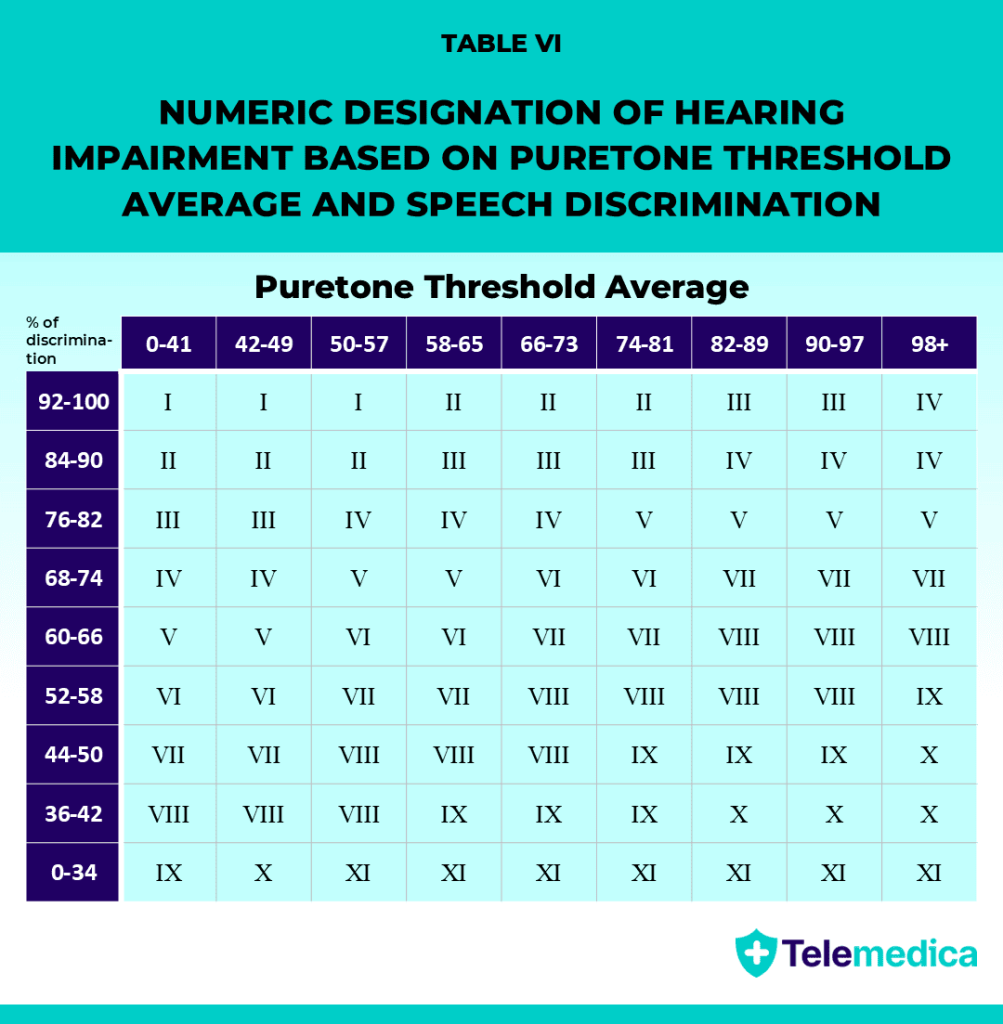
    Table VI

    Table VI helps determine your level of hearing loss by combining your Maryland CNC score and your Pure Tone Threshold Average (PTA). 

    • The left column of Table VI shows your speech discrimination score (from 92–100% down to 0–34%). 
    • The top row displays your PTA results (ranging from 0–41 to 98+). 
    • The Roman numeral rating (I to XI) that represents your hearing level appears where your two scores intersect. 

    For example, if your Pure Tone Threshold Average is 56 and your Speech Discrimination score is 77%, your hearing level for that ear would be IV. Then, you repeat the process for your other ear. 

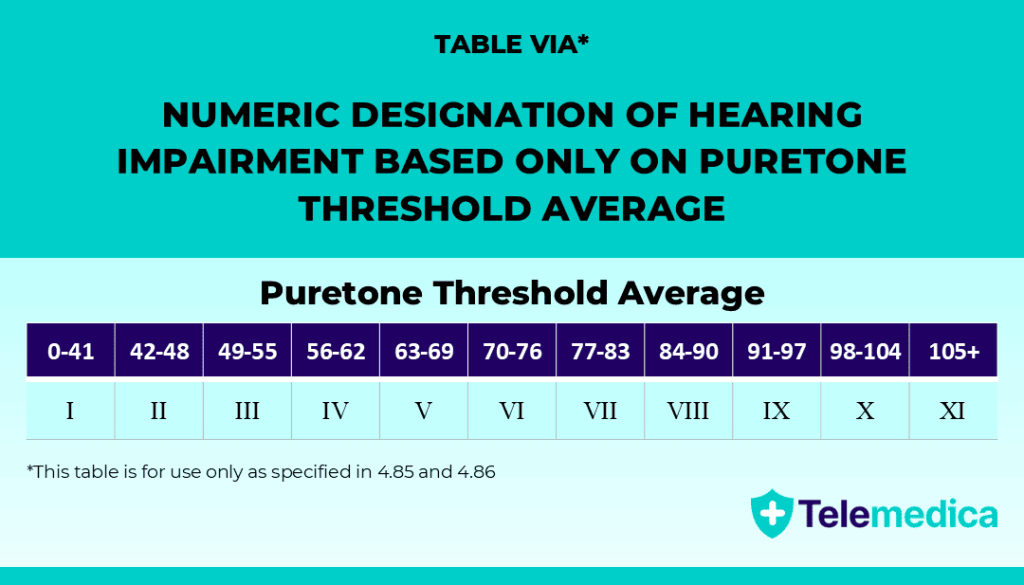
    Table VIA

    If language barriers, inconsistent results, or other issues prevent the use of the speech-discrimination test, the VA applies Table VIa instead. 

    This table assigns a Roman numeral based only on your average pure tone hearing score. 

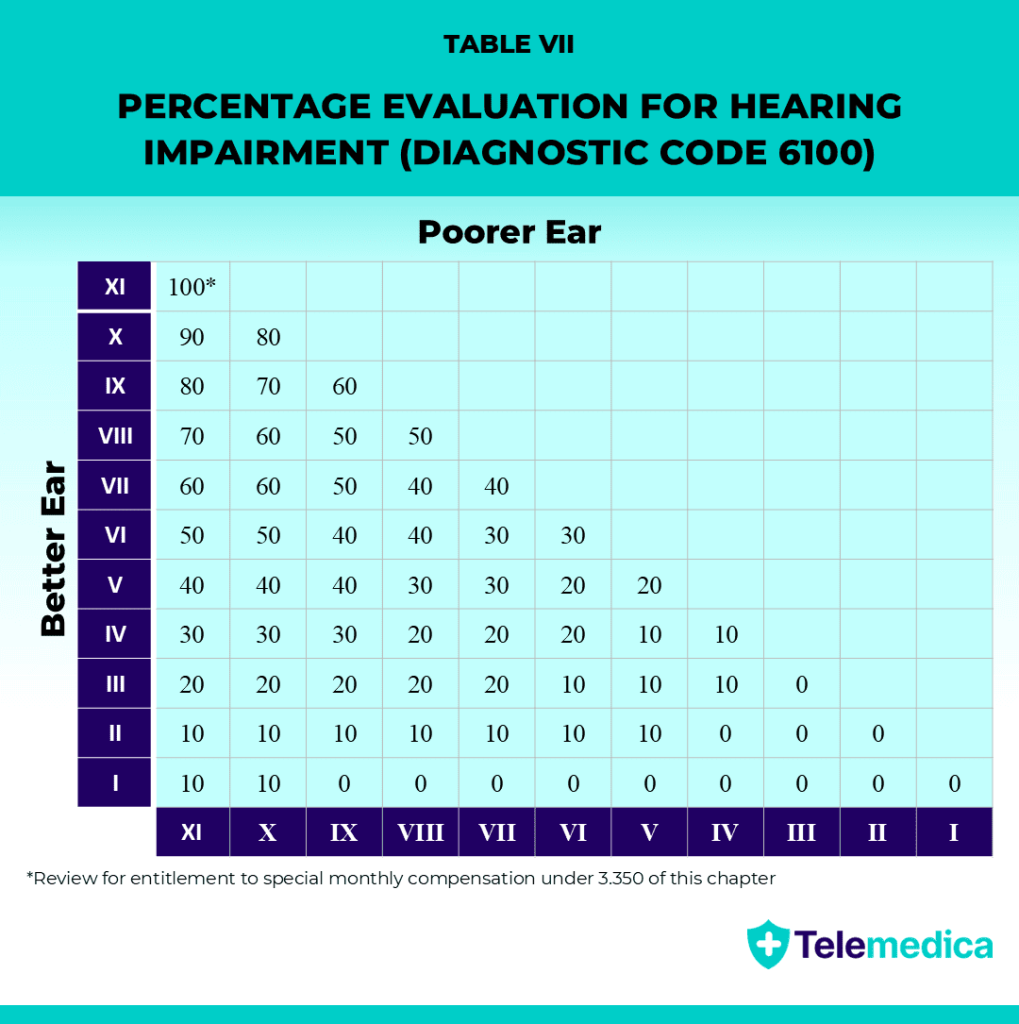
    Table VII

    Once each ear has a Roman numeral, the VA uses Table VII to calculate your final VA hearing loss rating (0%–100%). 

    • The rows show the ear with better hearing. 
    • The columns show the ear with poorer hearing. 

    You can find your final disability percentage where those two numbers meet on the chart. 

    Example: If your poorer-hearing ear is assigned a VI and your better-hearing ear is assigned a VII, you will receive a final VA hearing loss rating of 30%. 

    Proving Service Connection for Hearing Loss

    Direct Service Connection

    Direct service connection means your disability was directly caused or aggravated by an event, injury, or illness that occurred while you were on active military duty. 

    To qualify for a direct service connection for hearing loss, you must provide evidence of the following: 

    • A current medical diagnosis 
    • An in-service event, injury, aggravation, or illness 
    • A medical nexus (link) between your current diagnosis and the in-service event, injury, aggravation, or illness 

    Secondary Service Connection

    Secondary service connection applies when your hearing loss is caused or worsened by another service-connected condition.  

    Although this is less common, you can still qualify if medical evidence links the two, since the VA usually rates hearing loss as a direct condition.  

    A strong nexus letter from a licensed provider is essential to prove the connection. 

    To prove hearing loss as a secondary condition, you’ll need: 

    • A current medical diagnosis 
    • Medical evidence showing that your primary service-connected disability directly caused or aggravated your hearing loss

    VA Disability Rating for Bilateral Hearing Loss

    If your condition affects both ears, you may qualify for a VA disability rating for bilateral hearing loss. 

    The VA assigns a final disability rating by evaluating the severity of each ear separately. Since the VA considers both ears, this can lead to a higher overall rating than for unilateral hearing loss.

    VA Ratings for Hearing Loss and Tinnitus

    It’s possible to receive a VA rating for both hearing loss and tinnitus; however, the VA assigns separate ratings for each condition. Hearing loss is rated under DC 6100, while tinnitus is rated under DC 6260.

    >> Learn more about Tinnitus VA Ratings and upcoming VA changes

    VA Hearing Disability Rates 2026

    Here are the 2026 VA hearing disability rates for a single veteran: 

    • 0%: Non-compensable ($0/month) 
    • 10%: $180/42/month 
    • 20%: $356.66/month 
    • 30%: $552.47/month 
    • 40%: $795.84/month 
    • 50%: $1,132.90/month 
    • 60%: $1,435.02/month 
    • 70%: $1,808.45/month 
    • 80%: $2,102.15/month 
    • 90%: $2,362.30/month 
    • 100%: $3,938.58/month 

    These amounts represent the monthly tax-free benefits a veteran without dependents can receive based on their VA disability rating. Veterans with dependents may receive higher monthly payments at ratings of 30% and above. 

    How to File a VA Claim for Hearing Loss

    You can file a VA claim using VA Form 21-526EZ: 

    • By mail 
    • Via fax 

    C&P Exam for Hearing Loss

    If you file a VA claim for hearing loss, you’ll typically undergo a Compensation & Pension (C&P) exam.  

    The purpose of this exam is to confirm your current diagnosis, establish a service connection, and provide evidence needed to support your claim. 

    During the C&P exam, you can expect: 

    • A review of your medical history and a discussion of your symptoms 
    • Questions about your military noise exposure 
    • A physical examination of your ears 
    • Audiometric testing to measure your hearing sensitivity 

    C&P Preparation Tips: Gather all relevant medical records, maintain a detailed symptom diary, and review the Hearing Loss DBQ to understand what the exam will assess. 

    Learn More: How Much Weight Does a C&P Exam Have? 

    Medical Evidence Wins Claims

    Did you know that a lack of medical evidence is the #1 reason that VA disability claims are denied? 

    From nexus letters to IMOs and DBQs, we deliver the medical evidence you need to support your VA claim and set you up for success. Our service and support was built to serve veterans like you. 

    Book your 20-minute consultation today and get expert guidance that can put you on the fast track to winning your VA disability claim.

    Final Thoughts

    Securing a VA hearing loss rating can seem complicated because the VA relies on strict formulas and test results, rather than personal experiences.  

    The best way to strengthen your claim is to ensure you have high-quality audiology testing, clear evidence of service-related noise exposure, a current diagnosis, and a strong medical nexus linking your hearing loss to service.  

    Understanding how the VA evaluates hearing loss gives you a better chance of receiving the rating you rightfully deserve. 


    (FAQs) Frequently Asked Questions

    What is the VA rating for hearing loss?

    The VA bases a hearing loss rating on the results of two tests: the Pure Tone Audiometric Test and the Maryland CNC Test. The VA assigns a disability rating between 0% and 100% depending on how severe your hearing loss is in each ear. 

    What is the maximum VA rating for hearing loss?

    The highest possible VA rating for hearing loss is 100%, indicating a profound loss of hearing in both ears that significantly impacts daily communication and functioning. 

    Is hearing loss a VA presumptive condition?

    No. Hearing loss is not on the VA’s presumptive conditions list. That means the VA does not automatically assume your hearing loss was caused by military service, even if you had noise exposure.

    Are there any VA secondary conditions to hearing loss?

    Several conditions may be rated secondary to service-connected hearing loss. Common examples include tinnitus, anxiety or depression caused by communication difficulties, and possible balance disorders such as vertigo. Each condition must have medical evidence showing it was caused or aggravated by your service-connected hearing loss.

    Is it hard to get VA disability for hearing loss?

    It can be challenging. Even a 10% rating for hearing loss requires meeting strict VA testing criteria, but securing a strong nexus letter linking your hearing loss to service can significantly improve your chances of approval. 

    Can you get disability for hearing loss and tinnitus?

    Yes. You can receive a VA disability rating for hearing loss and tinnitus; however, the VA assigns separate ratings for each condition. Hearing loss is rated under DC 6100, while tinnitus is rated under DC 6260. 

    What is the VA rating for hearing loss with hearing aids?

    The VA rates your hearing loss based on how you hear without hearing aids. Even if you use hearing aids, the tests are conducted unaided, and the rating is determined based on those unaided results. 

    How much hearing loss does it take to qualify for disability?

    To qualify for VA disability for hearing loss, your Maryland CNC and Pure Tone Threshold test results must meet the VA’s rating criteria. There is no specific decibel level required; only test scores high enough to produce a compensable rating under the VA’s tables.


  • Asthma VA Rating and Service Connection

    Asthma VA Rating and Service Connection

    Many veterans develop breathing problems after deployment (sometimes years after leaving service). Recent studies show that combat veterans face a higher risk of developing asthma due to exposure to burn pits, dust, and other airborne hazards. 

    If you experience shortness of breath, coughing, wheezing, or chest tightness, you may qualify for VA disability benefits for asthma.  

    Understanding how the VA rates asthma, and how to establish service connection, can help you strengthen your claim for VA disability compensation and benefits. 

    Key Takeaways

    • Asthma VA ratings range from 10% to 100%, depending on the frequency and severity of symptoms or attacks, pulmonary function test results, and medication requirements. 
    • The most important piece of medical evidence for asthma is a pulmonary function test (PFT), which tests how well your lungs work. 
    • Asthma is considered a presumptive condition if it was diagnosed after service and the veteran served in specific locations during qualifying time periods. 

    Table of Contents

    What is Asthma?

    Asthma VA Rating.

    Asthma is a respiratory condition in which your airways narrow, swell, and may produce extra mucus. There is no cure, but with the proper diagnosis and treatment, you can control the symptoms, which include: 

    • Shortness of breath 
    • Coughing 
    • Wheezing 
    • Chest pain or tightness 
    • Disrupted sleep (caused by the other symptoms) 

    For some people, asthma can be related to activities or environment, such as exercise, allergies, or exposure to chemical fumes, gases, or dust. The latter, called occupational asthma, may be the most relevant to veterans. 

    Asthma VA Ratings

    Asthma VA ratings range from 10% to 100%, depending on the severity of symptoms and the results of pulmonary function testing (PFTs) or required treatment. Asthma is rated under the diagnostic code (DC) 6602, with ratings assigned based on the outcome of a pulmonary function test (PFT). PFTs test how well your lungs work. 

    The important PFT measures for asthma claims are:  

    • Forced vital capacity (FVC). This is the total amount of air you can exhale in 1 long breath. 
    • Forced expiratory volume in 1 second (FEV1). This is the amount of air you exhale in the first second. FEV1 is often expressed as a percentage of FVC. 
    • FEV1/FVC. This is the amount of air exhaled in the first second, compared with the total amount of air exhaled. It’s given as a fraction (ratio) or a percentage. In general, the higher the FEV1/FVC, the better. 

     DC 6602 Asthma VA Rating Chart 

    Description of Impairment/Symptoms VA Disability Rating 
    FEV-1 less than 40-percent predicted, or; FEV-1/FVC less than 40 percent, or; more than one attack per week with episodes of respiratory failure, or; requires daily use of systemic (oral or parenteral) high dose corticosteroids or immuno-suppressive medications 100% 
    FEV-1 of 40- to 55-percent predicted, or; FEV-1/FVC of 40 to 55 percent, or; at least monthly visits to a physician for required care of exacerbations, or; intermittent (at least three per year) courses of systemic (oral or parenteral) corticosteroids 60% 
    FEV-1 of 56- to 70-percent predicted, or; FEV-1/FVC of 56 to 70 percent, or; daily inhalational or oral bronchodilator therapy, or; inhalational anti-inflammatory medication 30% 
    FEV-1 of 71- to 80-percent predicted, or; FEV-1/FVC of 71 to 80 percent, or; intermittent inhalational or oral bronchodilator therapy 10% 

    Note: In the absence of clinical findings of asthma at time of examination, a verified history of asthmatic attacks must be on record. 

    Establishing Service Connection for Asthma

    If you don’t qualify for asthma as a presumptive condition under the PACT Act, you must provide the following to prove service connection: 

    1. A current diagnosis of asthma 
    1. Evidence of an in-service event, injury, disease, or aggravation 
    1. A nexus (link) between your current diagnosis and in-service event through medical evidence (e.g., via a nexus letter or statement) 

    Asthma and the PACT Act

    You’re eligible for VA benefits under the PACT Act for asthma if you served in the Vietnam War, the Gulf War, Iraq, Afghanistan, or other locations specified by VA for post-9/11 service; or you deployed in support of the Global War on Terror in a qualifying location; or you were exposed to burn pits, toxins or other hazards during military service, and your asthma was diagnosed after service. 

    Secondary Conditions to Asthma

    Asthma can also lead to other health or medical issues that you may be able to claim as secondary conditions and increase your compensation.  

    Some of those secondary conditions include: 

    • Chronic bronchitis 
    • Diabetes 

    The Value of a Nexus Letter

    A nexus letter is a medical document that links your current diagnosis to a specific event, injury, or exposure during your military service.  

    For asthma, a nexus letter can be key to proving service connection, especially if your original claim was denied or if your condition is secondary to another service-connected disability.  

    Although the VA doesn’t require a nexus letter, having one may significantly strengthen your claim by offering clear medical evidence tying your condition to your service.  

    The experienced team at Telemedica provides well-crafted nexus letters.

    Medical Evidence Wins VA Claims

    Did you know that a lack of medical evidence is the #1 reason VA disability claims are denied?  

    Medical evidence is a crucial piece of the puzzle that VA raters consider when reviewing a disability claim. Telemedica provides solutions for veterans looking to bolster their claims through high-quality medical evidence that wins claims!  

    Schedule your 20-minute consultation call and learn how to get the supporting medical evidence you need to strengthen your claim.

    Conclusion

    Asthma can have a serious impact on your daily functioning. If you have a current diagnosis of asthma and can prove that it’s linked to your military service (or meet the presumptive condition criteria), you deserve an asthma VA rating and benefits.

    If you’re ready to strengthen your asthma VA claim, connect with Telemedica today. 


    FAQs | Frequently Asked Questions

    What is the average VA rating for asthma?

    This isn’t an “average” rating; however, asthma VA ratings range 10% to 100% disability based on the severity of your symptoms as measured by a pulmonary function test (PFT), which tests how well your lungs function. 

    Why did VA deny my asthma claim?

    If your VA claim for asthma was denied, you likely need more medical evidence. Being able to link your current diagnosis with an in-service event, injury, disease, or aggravation is critical to your claim. Telemedica can help you with a Nexus letter or DBQ to strengthen your claim. 

    What is the VA asthma rating criteria?

    The VA uses the results of a pulmonary function test (PFT) to determine asthma ratings for disability compensation. The VA rating for asthma ranges from 10% to 100%, depending on the severity of symptoms and need for interventions.  

    Under diagnostic code (DC) 6602, a 10% disability rating indicates a FEV-1/FVC (the amount of air exhaled in the first second, compared with the total amount of air exhaled) of 71%-80% and occasional use of an inhaler, whereas a 100% disability rating indicates a FEV-1/FVC less than 40% and daily use of medications. 

    Is asthma a VA disability for the PACT Act?

    Yes, asthma is a presumptive condition covered by the PACT Act for veterans with qualifying service and exposure to burn pits or other airborne hazards.  

    How do I prove asthma to VA?

    For the best chance at submitting a successful VA disability claim for asthma, you need to have a current medical diagnosis; evidence of an in-service event, injury, disease, or aggravation; and a nexus (link) between your current diagnosis and in-service event proven through medical evidence. 

    What VA conditions are secondary to asthma?

    Some of the common conditions that can be claimed as secondary conditions to asthma include obstructive sleep apnea (OSA), gastroesophageal reflux disease (GERD), chronic bronchitis, chronic sinusitis, anxiety and depression, hypertension, cardiovascular disease, diabetes mellitus, osteoporosis, chronic fatigue syndrome, panic disorder, vocal cord dysfunction (VCD), chronic rhinitis, pulmonary hypertension, lung infections, eczema (atopic dermatitis), and metabolic syndrome. 

    Can you receive separate VA ratings for asthma and sleep apnea?

    Not typically, as they are both considered respiratory conditions; however, in some cases, sleep apnea can be claimed as a secondary condition to service-connected asthma.


  • 10 VA Secondary Conditions to Radiculopathy

    10 VA Secondary Conditions to Radiculopathy

    Radiculopathy can have far-reaching effects beyond nerve pain, often leading to a variety of secondary health conditions that impact your daily life and overall well-being.  

    These VA secondary conditions to radiculopathy can include musculoskeletal issues, chronic pain syndromes, sleep disturbances, and even mental health challenges. 

    This post covers 10 secondary conditions to radiculopathy, explains VA ratings, key elements for establishing secondary service connection, and how to file a claim.

    Key Takeaways

    • Secondary conditions to radiculopathy can develop when chronic nerve pain and limited mobility lead to additional health issues, such as muscle weakness, joint degeneration, or mental health challenges like anxiety and depression. 
    • To prove secondary service connection for a condition related to radiculopathy, you need a current diagnosis and medical evidence showing it was caused or aggravated by your service-connected radiculopathy. 
    • A nexus letter, while not required, is often essential to show that a secondary condition is “proximately due to” or aggravated by a service-connected disability.

    Table of Contents

    How the VA Rates Radiculopathy

    VA Secondary Conditions to Radiculopathy.

    The VA rates radiculopathy under the Schedule of Ratings for Neurological Conditions and Convulsive Disorders, using diagnostic codes 8510– 8730.  

    Ratings range from 0% to 80%, depending on symptom severity and the degree of paralysis. 

    10 VA Secondary Conditions to Radiculopathy

    Mental Health Conditions

    Chronic nerve pain from radiculopathy can take a significant toll on mental health. Constant discomfort, limited mobility, and the inability to perform everyday tasks can lead to mental health conditions, such as depression or anxiety.  

    These mental health conditions often develop as veterans struggle to manage the emotional and physical challenges of long-term pain. 

    The VA rates mental health conditions under the General Rating Formula for Mental Disorders. Ratings range from 0% to 100%, based on the level of social and occupational impairment. 

    Sleep Disturbances

    For many veterans, chronic nerve pain from radiculopathy makes getting quality sleep nearly impossible.  

    The discomfort often intensifies at night or when lying down, leading to insomnia, fatigue, and worsening pain over time. 

    The VA typically rates sleep disturbances based on the primary condition causing the disturbance.  

    For example, if it’s associated with a mental health condition, it would be rated under the General Rating Formula for Mental Disorders. 

    Chronic Pain Syndrome

    Radiculopathy causes constant, debilitating pain in affected areas, leading to chronic pain syndrome (CPS), sometimes associated with Somatic Symptom Disorder. 

    This secondary condition arises when the body’s pain receptors remain activated over long periods, creating a cycle of continuous pain.  

    CPS can affect your physical and emotional health, leading to sleep disturbances, irritability, and fatigue, requiring both pain management and psychological support. 

    The VA rates somatic symptom disorder under the General Rating Formula for Mental Disorders, using DC 9421.

    Fibromyalgia

    Fibromyalgia is a chronic pain disorder that can develop secondary to radiculopathy.  

    When nerve damage from radiculopathy increases the body’s pain sensitivity, it may trigger fibromyalgia symptoms such as widespread muscle pain, fatigue, sleep problems, and cognitive difficulties. 

    The VA rates fibromyalgia secondary to radiculopathy under DC 5025, with possible ratings of 10%, 20%, or 40%, depending on the severity and persistence of symptoms like chronic pain, exhaustion, and sleep disturbance. 

    Arthritis

    Chronic nerve pain and altered movement patterns from radiculopathy can gradually wear down the joints, leading to arthritis as a secondary condition. 

    When the body compensates for nerve-related weakness, numbness, or pain, it can place abnormal stress on certain joints.  

    Over time, this uneven pressure accelerates joint inflammation and degeneration, increasing the likelihood of developing arthritis in areas affected by compensatory movement. 

    The VA rates arthritis secondary to radiculopathy under various diagnostic codes, including 5002 and 5003.

    Muscle Atrophy

    When radiculopathy causes nerve compression or damage, it can lead to muscle weakness and atrophy in the affected limbs.  

    Over time, the lack of proper nerve signals causes muscles to shrink and lose strength, making it difficult for veterans to perform everyday activities. 

    The VA doesn’t rate muscle atrophy separately, as it is already considered part of the radiculopathy evaluation under the Schedule of Ratings for Peripheral Nerves (38 CFR § 4.124a).  

    However, documented atrophy can support a higher rating for radiculopathy if it shows more severe nerve impairment. 

    Foot Drop

    Foot drop happens when nerve damage from radiculopathy weakens or paralyzes the muscles that lift the front of the foot.  

    This can make walking difficult and increase the risk of tripping or falling, as veterans often have trouble raising their foot with each step. 

    The VA rates foot drop secondary to radiculopathy under DC 8521, with disability ratings ranging from 10% to 40%.  

    Higher ratings are given when symptoms include complete paralysis of the muscles controlling foot movement, significant weakness, or severe walking difficulties that limit mobility and daily function. 

    Gait Abnormalities

    Lower spine radiculopathy can lead to gait abnormalities as nerve damage affects balance and walking mechanics.  

    Leg weakness, stiffness, and uneven stride can cause abnormal walking patterns, which may worsen other musculoskeletal issues. 

    While the VA doesn’t assign a separate rating for gait abnormalities, they can be considered when evaluating related service-connected conditions.  

    For example, you may receive additional compensation if gait issues, such as a limp, are linked to your radiculopathy and result in further complications in the legs, feet, or back. 

    Bladder and Bowel Dysfunction

    Lumbar or sacral radiculopathy can affect the nerves controlling the bladder and bowels, leading to incontinence, constipation, or difficulty emptying the bladder or bowels.  

    This makes bladder and bowel dysfunction a serious secondary condition that often requires ongoing medical management. 

    The VA rates these conditions under DC 7542 (Neurogenic Bladder) and DC 7332 (Rectum and Anus, Impairment of Sphincter Control). 

    Sexual Dysfunction

    In more advanced cases of radiculopathy, particularly in the lower spine, nerve compression can affect the nerves that control sexual function.  

    This can cause erectile dysfunction in men or reduced arousal in women, as pelvic nerve damage from lower spine issues can disrupt intimacy and overall quality of life. 

    The VA typically assigns a 0% rating for erectile dysfunction (ED) or female sexual arousal disorder (FSAD) unless there’s a penile deformity with loss of function.  

    However, even without a compensable rating, you may still be eligible for Special Monthly Compensation (SMC) for the loss of use of a creative organ. 

    How to Establish Secondary Service Connection

    To prove service connection for secondary conditions to radiculopathy, you’ll need:  

    • A current diagnosis – Medical documentation of your secondary condition from a qualified licensed provider.  
    • A medical nexus – Evidence (e.g., a credible nexus letter) showing that your secondary condition was caused or aggravated by your service-connected radiculopathy.

    Nexus Letter for Secondary Conditions

    A nexus letter for secondary conditions is strongly recommended. While it’s not required, it frequently is the key factor between approval and denial.  

    To prove secondary service connection, you must show your disability is “proximately due to” or “aggravated by” another service-connected condition. 

    A detailed nexus letter from an independent medical provider is often the most effective way to demonstrate this link.

    Filing a VA Claim for Secondary Conditions

    To be eligible for a VA rating for secondary conditions to radiculopathy, you must file a VA claim. 

    You can file a VA claim using VA Form 21-526EZ: 

    • By mail   
    • Via fax 

    Medical Evidence Wins VA Claims

    Did you know that a lack of medical evidence is the #1 reason VA disability claims are denied? 

    Medical evidence is a crucial piece of the puzzle that VA raters consider when reviewing a disability claim. Telemedica provides solutions for veterans looking to bolster their claims through high-quality medical evidence that wins claims! 

    Schedule your 20-minute consultation call and learn how to get the supporting medical evidence you need to strengthen your claim. 


    FAQs | Frequently Asked Questions

    What is the VA rating for radiculopathy?

    The VA rates radiculopathy under diagnostic codes 8520, 8620, or 8720 in the Schedule of Ratings for Neurological Conditions and Convulsive Disorders, with ratings from 0% to 80% based on symptom severity and degree of paralysis. 

    How does radiculopathy cause secondary conditions?

    Many veterans develop radiculopathy secondary conditions because chronic nerve irritation and impaired movement can strain other parts of the body over time, often leading to joint degeneration, muscle weakness, and disrupted sleep. 

    Do I need a nexus letter for secondary conditions?

    While not required, a nexus letter from a qualified licensed medical provider is often essential to demonstrate the connection between your radiculopathy and the secondary condition. 

    Can secondary conditions increase my overall VA rating?

    Yes. If your secondary condition is service-connected and rated, it can increase your total combined disability rating, potentially leading to higher benefits. >>View VA Disability Calculator 

    Can I claim multiple secondary conditions at once?

    If several conditions are caused or aggravated by your service-connected radiculopathy, you can file claims for each. The VA will evaluate each condition separately and combine the ratings into your total disability percentage. 

    How long does it take to get a secondary condition approved?

    Approval times vary, but secondary VA claims can take several months. Submitting thorough medical evidence and a nexus letter may speed up the process. You can always check the status of your VA claim through VA.gov. 


  • Cervical Strain VA Rating Guide for Veterans with Neck Pain

    Cervical Strain VA Rating Guide for Veterans with Neck Pain

    Neck pain is one of the most common musculoskeletal issues among veterans, often caused by years of physical strain, heavy gear, and repetitive motion. A cervical strain (an injury to the muscles or soft tissue of the neck) can lead to chronic pain, stiffness, and limited range of motion that impacts daily life. 

    If your cervical strain is connected to your military service, you may qualify for VA disability compensation. The cervical strain VA rating ranges from 10% to 100%, depending on the severity of your symptoms, range of motion, and evidence of ankylosis. 

    In this guide, we’ll explain how the VA rates cervical strain, what factors influence your rating, and how high-quality medical evidence (like a DBQ or nexus letter) can strengthen your VA disability claim. 

    Key Takeaways

    • The cervical strain VA rating ranges from 10% to 100%, depending on factors such as range of motion, ankylosis, and other spine-specific criteria. 
    • In addition to a physical exam, a cervical strain C&P exam may include imaging tests such as X-rays, an MRI, or a CAT scan.  
    • Secondary conditions to cervical strain include chronic headaches and radiculopathy (pinched or compressed nerves); these secondary claims can increase your rating with the right medical evidence. 

    Table of Contents

    What is a Cervical Strain?

    Cervical Strain VA Rating.

    A cervical strain is an injury to the neck muscles caused by being twisted or bent in an unnatural or abnormal way. 

    According to the American Academy of Orthopaedic Surgeons, symptoms from a mild to severe neck injury may not manifest until hours after the injuring event, sometimes not until the next day.  

    Symptoms

    • Pain, especially in the back of the neck, that worsens with movement 
    • Pain that peaks a day or so after the injury, instead of immediately 
    • Muscle spasms and pain in the upper shoulder 
    • Headache in the back of the head 
    • Increased irritability, fatigue, difficulty sleeping, and difficulty concentrating 
    • Numbness in the arm or hand 
    • Neck stiffness or decreased range of motion (side to side, up and down, and/or circular) 
    • Tingling or weakness in the arms 

    How the VA Rates Cervical Strain

    Cervical strain VA ratings range from 10% to 100%, depending on the factors such as range of motion, ankylosis, and other spine-specific criteria.   

    As with cervicalgia VA ratings (general neck pain), cervical strains fall under § 4.71a Schedule of ratings—musculoskeletal system and the General Rating Formula for Diseases and Injuries of the Spine. Cervical strain specifically uses Diagnostic Code (DC) 5237, Lumbosacral or cervical strain, rated with or without symptoms such as pain (whether or not it radiates), stiffness, or aching. 

    Ankylosis and Range of Motion Assessment

    The VA assigns disability ratings based on various factors, but there are two important terms we want to highlight:  

    • “Ankylosis” refers to the stiffness or immobility of a joint and is referred to in cervical strain ratings of 30% and higher. 
    • A range of motion (ROM) assessment provides information on how movement is allowed or limited in your cervical spine. ROM can be assessed through various methods, but each evaluates the following movements: 
    • Forward flexion: How far you can bend your neck forward.  
    • Extension: How far you can bend your neck backward.  
    • Lateral flexion: How far you can tilt your neck to the right or left. 
    • Lateral rotation: How far you can turn your neck to the right or left. 

    Cervical Strain VA Rating Criteria and Explanations

    100%: Unfavorable ankylosis of the entire spine. 

    • This means your whole spine is stuck in a fixed, harmful position and you can’t move it at all. 

    50%: Unfavorable ankylosis of the entire thoracolumbar spine. 

    • Your mid-to-lower back is frozen in place in a damaging way, making normal movement impossible. 

    40%: Unfavorable ankylosis of the entire cervical spine, or forward flexion of the thoracolumbar spine 30 degrees or less, or favorable ankylosis of the entire thoracolumbar spine. 

    • Either your neck is frozen, or you can barely bend your back forward (30° or less). 

    30%: Forward flexion of the cervical spine 15 degrees or less or favorable ankylosis of the entire cervical spine. 

    • You can only bend your neck forward a tiny amount (15° or less), or your neck is locked in a fixed but not harmful position. 

    20%: Forward flexion of the thoracolumbar spine greater than 30 degrees but not greater than 60 degrees, or forward flexion of the cervical spine greater than 15 degrees but not greater than 30 degrees, or the combined range of motion of the thoracolumbar spine not greater than 120 degrees, or the combined range of motion of the cervical spine not greater than 170 degrees, or muscle spasm or guarding severe enough to result in an abnormal gait or abnormal spinal contour such as scoliosis, reversed lordosis, or abnormal kyphosis. 

    • Moderate limits: your back or neck bends somewhat but not fully, or spasms/guarding throw off your posture and walking. 

    10%: Forward flexion of the thoracolumbar spine greater than 60 degrees but not greater than 85 degrees, or forward flexion of the cervical spine greater than 30 degrees but not greater than 40 degrees, or combined range of motion of the thoracolumbar spine greater than 120 degrees but not greater than 235 degrees, or combined range of motion of the cervical spine greater than 170 degrees but not greater than 335 degrees, or muscle spasm, guarding, or localized tenderness not resulting in abnormal gait or abnormal spinal contour, or vertebral body fracture with loss of 50 percent or more of the height. 

    • Mild limits: you can still bend your back/neck a fair amount, or you have tenderness/spasms that don’t drastically change how you walk or stand. 

    Establishing Service Connection

    To qualify for a VA disability rating for cervical strain, you need to prove that your neck injury is connected to your service. For primary service connection, you will need:  

    1. A current medical diagnosis of cervical strain; and 
    1. An in-service event, injury, illness, or aggravation; and 
    1. A medical nexus (or link) between your condition and the incident (e.g., with a nexus letter or statement) 

    The Role of a Nexus Letter in Your Claim

    One of the most powerful tools for proving service connection is a medical nexus letter. A nexus letter is written by a licensed medical professional and directly explains how your cervical strain is linked to your time in service.  

    While a Nexus Letter doesn’t guarantee a claim approval, it often strengthens a claim by providing the VA with clear medical evidence tying your condition to military duty. 

    Telemedica specializes in providing veterans with high-quality nexus letters that use medical expertise and VA-specific language to make your case clear and compelling.

    How a DBQ Can Strengthen Your Claim

    Another critical piece of evidence is the Disability Benefits Questionnaire (DBQ). A DBQ is a standardized VA form that documents the full scope of your symptoms, range of motion limitations, and the impact of your cervical strain on daily life. 

    When completed by a qualified medical provider, a DBQ ensures the VA has a detailed, structured record of your condition in a format they already use for decision-making.  

    Telemedica provides complete DBQs that capture every detail of your cervical strain and secondary symptoms, helping you present the strongest possible case. 

    VA Secondary Conditions to Cervical Strain

    A secondary condition occurs when a service-connected disability has caused or aggravated a new or pre-existing condition, illness, or injury. 

    If you’ve successfully service-connected your cervical strain and are experiencing symptoms of other conditions connected to the neck pain, such as radiculopathy (pinched nerve) or chronic headaches/migraines, you may be able to claim them as a secondary condition. 

    Cervical Strain C&P Exam

    During a compensation and pension (C&P) exam for cervical strain, you should bring with you any medical records, including any previous range of motion (ROM) assessments. 

    If you haven’t had any imaging tests completed, be prepared for X-rays, magnetic resonance imaging (MRI), or a computed tomography (CT) scan.  

    While X-rays highlight issues in the bones, an MRI can show problems with your spinal cord, nerves, bone marrow and soft tissue; a CT scan can be helpful in place of an MRI.

    Conclusion

    There’s a reason the saying “pain in the neck” is so widespread—because neck pain is persistent, irritating, and impairs the most basic daily functions, like simply turning your head. 

    However, with a service connection and the proper medical evidence, you can be compensated by the VA for your cervical strain and neck pain.  

    Medical Evidence Wins VA Claims

    Did you know that a lack of medical evidence is the #1 reason VA disability claims are denied?   

    For a condition like cervical strain, strong medical evidence may include a range of motion assessment, imaging tests such as X-rays, MRIs, or CT scans, and supporting documentation like a nexus letter and DBQ. 

    Medical evidence is a crucial piece of the puzzle that VA raters consider when reviewing a disability claim. Telemedica provides solutions for veterans looking to bolster their claims through high-quality medical evidence (such as DBQs and nexus letters) that wins claims!   

    Schedule your 20-minute consultation call and learn how to get the supporting medical evidence you need to strengthen your claim. 


    FAQs | Frequently Asked Questions

    What is the cervical strain VA rating?

    Cervical strain VA ratings range from 10% to 100% depending on factors such as range of motion, ankylosis, and other spine-specific criteria. 

    What is a secondary condition to cervical strain?

    There are two common secondary conditions to cervical strain: radiculopathy (compressed or pinched nerve) and chronic headaches or migraines. 

    How serious is a cervical strain?

    Cervical strain ranges from mild to severe, depending on the cause of the strain and its symptoms. Since it can be caused by whiplash and is considered a whiplash-associated condition, this grading system may be helpful:  

    • Grade 0: No injury. 
    • Grade 1: Pain only. 
    • Grade 2: Pain plus signs of injury. 
    • Grade 3: Pain plus signs of injury and neurological effects. 
    • Grade 4: Severe pain and signs of serious or dangerous neurological effects.  

    What causes neck strain in the military?

    Neck strain can be caused by a number of factors in the military, including carrying heavy gear and equipment, high-impact activities, falls, vehicle accidents, explosions and other combat exposures, and stress, to name a few. 

    Is cervical strain the same as neck pain?

    Cervical strain is a specific kind of neck pain that refers to an injury of the neck muscles, as opposed to the bones or tendons.  

    However, the VA disability rating for neck and shoulder pain falls under the same VA rating for cervical strain—musculoskeletal system—and uses the General Rating Formula for Diseases and Injuries of the Spine to assign a rating. 

    How much VA disability can you get for neck pain?

    The cervical strain VA rating ranges from 10% to 100%, depending on factors such as range of motion, ankylosis, and other spine-specific criteria.


  • 5 VA Secondary Conditions to Shoulder Pain and How to Prove Service Connection

    5 VA Secondary Conditions to Shoulder Pain and How to Prove Service Connection

    For many veterans, lingering shoulder pain isn’t just an isolated injury; it can trigger a chain of related health issues that affect daily life and overall well-being. 

    VA secondary conditions to shoulder pain, such as back pain, neck strain, limited use of hands or fingers, nerve problems, and mental health challenges, may qualify you for additional disability benefits. 

    This post explains five common secondary conditions, how to establish service connection, file a claim, and strengthen your case with a credible nexus letter.

    Table of Contents

    Key Takeaways

    • VA secondary conditions to shoulder pain may qualify you for additional compensation and benefits. 
    • The VA rates secondary conditions to shoulder pain based on severity, functional limitations, and documented medical evidence, often under multiple diagnostic codes. 
    • Establishing a link between your shoulder pain and secondary conditions, supported by medical evidence, is critical for claim approval.
    • A Nexus Letter linking your shoulder pain to related secondary conditions is one of the strongest forms of evidence for claim approval.

    Shoulder Pain in Veterans

    VA Secondary Conditions to Shoulder Pain.

    Shoulder pain is a prevalent issue among veterans, often stemming from the physical demands of military service, including repetitive overhead motions, heavy lifting, and exposure to traumatic events. 

    This can lead to long-term discomfort and functional limitations, significantly impacting daily activities and quality of life. 

    For example, a 2023 study revealed that nearly 1 in 20 active-duty military service members sought nonoperative care for shoulder and upper-arm dysfunction during fiscal year 2014. 

    However, shoulder injuries don’t just affect your arm; they can lead to other health issues over time.  

    When a service-connected shoulder condition causes or worsens another medical problem, that condition may qualify as a secondary service-connected disability. 

    How the VA Rates Shoulder Pain

    The VA typically rates shoulder pain under one of two schedules: the musculoskeletal system or muscle injuries. 

    VA shoulder ratings typically range from 0% to 40% for most shoulder conditions, although severe limitations of motion can be rated up to 100%. 

    Most ratings are based on range of motion, how far you can lift, rotate, or extend your arm before pain occurs, and may be higher if your dominant arm is affected. 

    Note: Typically, only one rating is given per shoulder. 

    5 VA Secondary Conditions to Shoulder Pain

    Back Pain

    Shoulder pain can alter your posture and movement patterns, placing extra stress on the back, and eventually leading to secondary back pain. 

    The VA evaluates back pain under the General Rating Formula for Diseases and Injuries of the Spine, assigning ratings from 10% to 100% based on range of motion, painful motion, ankylosis, and functional limitations. 

    Even if your spine still moves normally, painful motion alone can qualify you for a minimum compensable rating, usually starting at 10%. 

    Neck Pain

    Veterans with shoulder injuries from service often develop neck pain over time as altered posture and movement put extra strain on the cervical spine. 

    A 2024 study found that neck pain is highly prevalent among military personnel, with a one-year prevalence rate as high as 83% and a lifetime prevalence of up to 78%. 

    The VA recognizes neck pain as potentially secondary to shoulder conditions and evaluates it under the General Rating Formula for Diseases and Injuries of the Spine.  

    VA ratings for neck pain secondary to shoulder pain are based on pain severity, limited range of motion, painful movement, and the presence of ankylosis, with ratings ranging from 0% to 100%. 

    Mental Health Conditions

    Chronic shoulder pain can affect more than just your mobility; it can also impact your mental well-being, contributing to stress, anxiety, or depression. 

    Ongoing discomfort and limitations in daily life often lead to frustration, social withdrawal, and emotional fatigue. 

    If your service-connected shoulder pain aggravates or causes a mental health condition, you could qualify for VA disability benefits. 

    The VA rates mental health conditions secondary to shoulder pain under the General Rating Formula for Mental Disorders, with potential ratings from 0% to 100%, depending on the severity of symptoms and the degree of occupational and social impairment. 

    Limited Use of Hands or Fingers

    Shoulder pain can interfere with the muscles and nerves that control your arms, making tasks that require fine motor skills or grip strength more difficult.  

    Over time, this can impact your ability to perform daily activities and reduce overall hand function. 

    The VA assigns ratings for limited use of the hands or fingers based on loss of motion, strength, or functional ability, taking into account whether the affected hand is your dominant or non-dominant hand. 

    The VA rates limited use of hands or fingers under the Schedule of Ratings for the Musculoskeletal System. 

    Nerve Conditions

    Chronic shoulder pain can sometimes put pressure on nearby nerves or cause irritation, particularly when injury or inflammation affects the area. 

    This can lead to symptoms such as numbness, tingling, weakness, or pain radiating down the arm to the hand. 

    The VA evaluates nerve conditions under the Schedule of Ratings for Neurological Conditions and Convulsive Disorders, depending on which nerve is affected, whether it involves your dominant or non-dominant arm, and the severity of the impairment, from mild incomplete paralysis to complete paralysis. 

    How to Service Connect Secondary Conditions to Shoulder Pain

    To establish secondary service connection, you’ll need two key elements:  

    • A current diagnosis: Medical documentation of your secondary condition from a qualified provider.  
    • A medical nexus: Evidence showing that your secondary condition was caused or aggravated by your service-connected shoulder pain.  

    —> A detailed nexus letter from an independent medical provider is often the most effective way to demonstrate this link. 

    Nexus Letter for Secondary Conditions to Shoulder Pain

    A nexus letter for secondary conditions is highly recommended. While the VA doesn’t require one, it may be the difference between an approval and a denial.  

    To prove secondary service connection, you must prove your secondary disability is “proximately due to’ or “aggravated by” another service-connected disability. 

    A nexus letter provides the VA with a detailed medical opinion from a qualified provider that connects your secondary condition to your service-connected knee pain. Learn More: How to Get a Nexus Letter

    How to File a VA Claim for Secondary Conditions

    You can file a VA claim for secondary conditions to shoulder pain in one of the following ways: 

    • By mail    
    • Via fax  

    Note: If you don’t file online, you’ll need to download and complete VA Form 21-526EZ. 

    Conclusion

    Chronic shoulder pain doesn’t always stay isolated—it can trigger other physical and mental health problems that affect your mobility, sleep, and overall well-being.

    If your service-connected shoulder condition has caused or aggravated another issue, you may be eligible for additional VA disability compensation through secondary service connection.

    The key to winning these claims lies in credible medical evidence, especially a credible nexus letter from a qualified provider that clearly explains how your shoulder injury led to your secondary condition.

    Medical Evidence Wins VA Claims

    Did you know that a lack of medical evidence is the #1 reason VA disability claims are denied?  

    Medical evidence is a crucial piece of the puzzle that VA raters consider when reviewing a disability claim. Telemedica provides solutions for veterans looking to bolster their claims through high-quality medical evidence that wins claims!  

    Schedule your 20-minute consultation call and learn how to get the supporting medical evidence you need to strengthen your claim.


    FAQs | Frequently Asked Questions

    What are common VA secondary conditions to shoulder pain?

    Several health issues can develop secondary to shoulder pain, including neck pain, back pain, nerve conditions, limited use of the hands or fingers, and mental health conditions. 

    What is the average VA rating for shoulder pain?

    VA disability ratings for shoulder pain typically range from 10% to 40%, depending on factors like range of motion, painful motion, muscle, or joint damage, and whether the affected shoulder is on the dominant or non-dominant arm. However, higher VA ratings may be granted for more serious conditions. 

    Is neck pain secondary to shoulder pain?

    Yes. Shoulder injuries can change posture and movement patterns, placing extra stress on the cervical spine, and potentially leading to chronic neck pain. 

    Can shoulder pain cause depression or anxiety?

    Yes, chronic pain and limited mobility from shoulder injuries can contribute to stress, depression, or anxiety, which the VA can recognize as secondary mental health conditions. 

    Do I need a nexus letter for VA secondary conditions to shoulder pain?

    While not required, a nexus letter provides a medical opinion connecting your secondary condition to your service-connected shoulder pain and can be crucial in securing claim approval. 

    Do secondary conditions increase VA ratings?

    Yes, if a secondary condition is proven to be caused or aggravated by a service-connected shoulder injury, it may increase your overall combined VA rating. >>View the VA Disability Calculator


  • 7 VA Secondary Conditions to Knee Pain and How to Claim Them

    7 VA Secondary Conditions to Knee Pain and How to Claim Them

    VA secondary conditions to knee pain can affect more than just your legs; they can also take a toll on your hips, back, feet, digestion, and mental health.  

    These issues often develop slowly, making it essential to recognize how they arise from your service-connected knee injury.  

    In this post, we explain seven VA secondary conditions to knee pain (and how the VA rates them). We’ll also examine why a strong Nexus Letter is important for proving secondary service connection, and how to file a secondary VA claim.

    Table of Contents

    Key Takeaways

    • Secondary conditions to knee pain develop when the effects of chronic knee issues contribute to additional physical or functional problems. 
    • A credible Nexus Letter from a qualified medical provider is a powerful tool for proving that your secondary condition is directly caused or aggravated by your service-connected knee injury. 
    • Strong medical evidence is the most critical factor in getting a secondary condition claim approved. 

    Understanding VA Secondary Conditions

    Secondary conditions occur when a service-connected disability, like knee pain, causes or worsens another medical issue.  

    These conditions may develop gradually over time as your body compensates for pain or altered movement. 

    Establishing secondary service connection requires a current medical diagnosis and strong evidence linking the secondary condition to your service-connected knee injury (e.g., a credible nexus letter). 

    7 VA Secondary Conditions to Knee Pain

    VA Secondary Conditions to Knee Pain.

    Hip Pain

    Knee injuries or degenerative issues can cause misalignment, altered gait, and extra pressure on the hip, eventually leading to discomfort. 

    How knee pain can lead to hip pain: 

    • Altered Gait: Favoring one leg places extra strain on the hip over time. 
    • Joint Stress and Misalignment: Knee problems disrupt lower-body alignment, which can increase hip pressure. 
    • Referred Pain: Knee issues can cause hip pain as nearby joints compensate for the affected area. 

    A 2023 study in Arthritis Research & Therapy found that knee and hip osteoarthritis are linked and increase the risk of falls, highlighting how connected lower-limb joints are.

    VA Ratings for Hip Pain Secondary to Knee Pain:

    Hip pain secondary to knee pain is rated under various diagnostic codes (DC), depending on your specific condition and the severity of your symptoms. 

    Back Pain

    Chronic knee pain can alter the way you walk and affect your posture, often placing extra stress on your spine.  

    Over time, this altered gait can lead to back pain or aggravate existing spinal conditions. 

    A 2017 study of adults aged 50–79 found that those with knee pain were far more likely to develop pain in other joints, including the back, compared to those without knee pain.

    VA Ratings for Back Pain Secondary to Knee Pain:

    VA ratings for back pain secondary to knee pain depend on the severity and impact on function, ranging from 0% to 100% under various diagnostic codes. Many conditions involving painful motion or limited mobility start at a 10% rating. 

    Plantar Fasciitis

    Plantar fasciitis is one of the most common causes of heel pain among veterans and can often be caused or aggravated by service-connected knee pain.  

    When knee pain alters the way you walk, it places additional strain on the plantar fascia, the thick band of tissue that runs along the bottom of your foot and connects your heel bone to your toes. 

    Common symptoms of Plantar Fasciitis include: 

    • Sharp heel pain (especially after standing, walking, or running) 
    • Painful or limited motion 
    • Tenderness and swelling around the heel 
    • Stiffness after rest 

    VA Ratings for Plantar Fasciitis Secondary to Knee Pain:

    The VA rates plantar fasciitis secondary to knee pain under DC 5269, with ratings ranging from 10% to 40%.

    Note: A 40% VA rating is only given if there is actual loss of use of the foot. 

    >>View Our Main Guide on Plantar Fasciitis VA Ratings 

    Arthritis

    Arthritis is characterized by the swelling and tenderness of one or more joints, most often causing pain and stiffness that worsens with age. 

    The two most common types are osteoarthritis (degenerative) and rheumatoid arthritis. 

    For veterans, knee pain and arthritis often go hand in hand. Knee pain can contribute to the development of arthritis, and existing arthritis can worsen knee pain, making it possible to claim arthritis as a secondary condition to service-connected knee pain.

    VA Ratings for Arthritis Secondary to Knee Pain:

    Degenerative arthritis is prevalent among veterans and is rated under DC 5003, with potential VA ratings of 10% or 20%. 

    GERD

    Gastroesophageal reflux disease (GERD) can develop as a secondary condition to service-connected knee pain, often due to the long-term use of pain medications prescribed to manage chronic knee issues.  

    GERD happens when stomach acid frequently flows back into the esophagus causing irritation and symptoms like persistent heartburn.

    VA Ratings for GERD Secondary to Knee Pain:

    The VA rates GERD under DC 7206, with potential ratings of 0%, 10%, 30%, 50% or 80%. 

    >> Learn More About GERD VA Ratings 

    IBS

    Irritable bowel syndrome (IBS) can be claimed as a secondary condition to service-connected knee pain, often due to side effects of long-term pain medications.  

    IBS typically causes abdominal pain, bloating, and changes in bowel habits, ranging from diarrhea to constipation, or both.

    VA Ratings for IBS Secondary to Knee Pain:

    The VA rates IBS under DC 7319, with potential ratings of 10%, 20%, or 30%. 

    Depression and Anxiety

    Chronic knee pain can disrupt work, social life, and physical activity, which may trigger or worsen depression and anxiety.  

    If you experience these symptoms, you may find everyday tasks overwhelming, struggle to leave the house, or feel persistent sadness and loss of interest in activities you once enjoyed. 

    Over time, the mental and emotional impact of chronic knee pain can significantly affect relationships, job performance, and overall quality of life.

    VA Ratings for Anxiety or Depression Secondary to Knee Pain:

    The VA rates depression and anxiety secondary to knee pain under the General Rating Formula for Mental Disorders, with potential ratings of 0%, 10%, 30%, 50%, 70%, or 100%. 

    >>Explore Secondary Conditions to Depression and Anxiety 

    Proving Secondary Service Connection

    To establish a secondary service connection, you’ll need two vital elements:  

    1. A current diagnosis – Medical documentation of your secondary condition from a qualified provider.  
    1. A medical nexus – Evidence showing that your secondary condition was caused or aggravated by your service-connected knee pain.  

    Did you know? A detailed nexus letter from an independent medical provider is often the most effective way to demonstrate the link between a primary service-connected condition and secondary conditions.

    Why Get a Nexus Letter for Secondary Conditions?

    A nexus letter is highly recommended when filing for secondary service connection.  

    To prove a secondary disability, you must show it is “proximately due to” or “aggravated by” your service-connected knee pain. 

    A credible nexus letter provides the VA with a detailed medical opinion from a qualified provider that explains the link between your secondary condition and your knee pain. While not required, it can be the difference between an approval and a denial. 

    A nexus letter for VA secondary conditions to knee pain: 

    • Establishes causation: Clearly explains how your knee pain caused or worsened your secondary condition. 
    • Adds credibility: Carries significant weight when written by a medical expert. 
    • Strengthens your VA claim: Provides the missing connection if the link between conditions isn’t apparent.

    How to File a VA Claim for Secondary Conditions

    To be eligible for a VA rating for secondary conditions to knee pain, you must file a VA claim. 

    You can file a VA claim: 

    • By mail    
    • Via fax  

    If you don’t file online, you must download and complete VA Form 21-526EZ to submit your claim. 

    Medical Evidence Wins VA Claims

    Did you know that a lack of medical evidence is the #1 reason VA disability claims are denied? 

    Medical evidence is a crucial piece of the puzzle that VA raters consider when reviewing a disability claim. Telemedica provides solutions for veterans looking to bolster their claims through high-quality medical evidence that wins claims! 

    Schedule your 20-minute consultation call and learn how to get the supporting medical evidence you need to strengthen your claim.


    FAQs | Frequently Asked Questions

    What conditions are secondary to knee pain?

    What conditions are secondary to knee pain?

    Common secondary conditions include hip pain, back pain, plantar fasciitis, arthritis, IBS, GERD, depression, and anxiety. 

    What is the VA rating for knee pain?

    The VA rating for knee pain ranges from 10% to 60%, depending on severity, range of motion, instability, and ankylosis. Temporary 100% ratings may apply after surgeries, such as knee replacements. 

    Is plantar fasciitis secondary to knee pain?

    Yes, it can be. Altered walking from knee pain may put extra stress on your feet, causing plantar fasciitis. You’ll need a current diagnosis and medical evidence showing the connection for VA approval. 

    Do I need a separate VA claim for the secondary condition?

    Yes. Even if the primary condition is already service-connected, you must file a separate claim for each secondary condition. 

    Can secondary conditions appear years after my knee injury?

    Yes. Many secondary issues, like arthritis or chronic back pain, develop over time. You can still file a claim if you can prove the connection between your service-connected knee injury and a secondary condition. 

    Can VA secondary conditions to knee pain increase my overall disability rating?

    Yes. Each approved secondary condition receives its own rating. When combined with your primary knee rating, it may increase your total VA disability percentage.


  • Sinusitis VA Rating and Service Connection

    Sinusitis VA Rating and Service Connection

    Sinusitis might sound like a run-of-the-mill viral infection—and in its acute, viral form, it is. But when bacteria are at the root of the infection, it can become a chronic condition.  

    If you’re a veteran who has a current diagnosis of chronic sinusitis and can prove that it’s caused by or aggravated by your military service, or you can meet the presumptive criteria, you might be eligible for a sinusitis VA rating. 

    In this guide, we’ll discuss the symptoms of sinusitis, the chronic sinusitis VA rating, and how to prove service connection.

    Table of Contents

    Key Takeaways

    • The VA rates a current diagnosis of chronic sinusitis from 0% to 50%, depending on the severity of symptoms and recurrence of episodes. 
    • Symptoms of sinusitis include pain or pressure in the face, ears, or teeth; stuffy nose; cough; fever; and more. 
    • Under the PACT Act, chronic sinusitis is considered a presumptive condition for veterans who served in certain combat zones and qualifying time periods. 

    What is Sinusitis?

    Sinusitis VA Rating.

    Sinusitis is an irritation of the sinuses caused by a virus or bacterial infection. The sinuses, which are normally filled with air, instead fill with fluid, causing pressure and pain in the face and nasal passages.  

    In its acute form (symptoms lasting less than four weeks), sinusitis is often treatable with antibiotics. However, it can become a chronic condition, with symptoms lasting at least 12 weeks and recurring multiple times per year.  

    Signs and Symptoms

    According to the Cleveland Clinic, the signs and symptoms of sinusitis are:  

    • Postnasal drip (mucus dripping down your throat) 
    • Runny nose with thick yellow or green mucus 
    • Stuffy nose 
    • Facial pressure (particularly around your nose, eyes and forehead). This might get worse when you move your head around or bend over 
    • Pressure or pain in your teeth 
    • Ear pressure or pain 
    • Fever 
    • Bad breath (halitosis) or a bad taste in your mouth 
    • Cough 
    • Headache 
    • Tiredness 

    Sinusitis VA Ratings

    Chronic sinusitis VA ratings are 0%, 10%, 30%, or 50%, depending on the persistence and severity of symptoms.  

    The VA has five diagnostic codes (DC 6510-6514) for sinusitis, depending on which and how many of the four sinus cavities are impacted, but they all follow the same general rating formula.

    General Rating Formula for Sinusitis VA Rating 
    Following radical surgery with chronic osteomyelitis, or; near constant sinusitis characterized by headaches, pain and tenderness of affected sinus, and purulent discharge or crusting after repeated surgeries 50% 
    Three or more incapacitating episodes per year of sinusitis requiring prolonged (lasting four to six weeks) antibiotic treatment, or; more than six non-incapacitating episodes per year of sinusitis characterized by headaches, pain, and purulent discharge or crusting  30% 
    One or two incapacitating episodes per year of sinusitis requiring prolonged (lasting four to six weeks) antibiotic treatment, or; three to six non-incapacitating episodes per year of sinusitis characterized by headaches, pain, and purulent discharge or crusting  10% 
    Detected by X-ray only 0% 

    Note: An incapacitating episode of sinusitis means one that requires bed rest and treatment by a physician. 

    The Importance of Strong Medical Evidence

    The VA’s decision is based heavily on the medical evidence you provide. Some of the documents you can submit include:  

    • Clinical notes documenting symptoms and functional impact 
    • X-rays or other medical imaging 
    • C&P exam findings

    Establishing Service Connection for Sinusitis

    Direct Service Connection: You can claim direct service connection if you have a current diagnosis of chronic sinusitis and can prove a link to an in-service event, injury, or disease related to your military service. 

    Secondary Service Connection: You can claim secondary service connection if you can be rated for sinusitis secondary to another rated condition, such as deviated septum or asthma.

    Presumptive Sinusitis VA Rating: PACT Act

    Under the PACT Act, signed in 2022 to expand health care to veterans exposed to burn pits, Agent Orange, and other toxic chemicals, chronic sinusitis is considered a presumptive condition for Gulf War-era and post-9/11 veterans who served in qualifying locations and time periods. 

    A presumptive condition doesn’t require an in-service event connecting your current diagnosis to your time in service; you only need to meet the service requirements for the presumption. 

    If you’re a Gulf War-era or post-9/11 veteran who served in qualifying locations and time periods, chronic sinusitis is a presumptive condition. That means the VA assumes (or “presumes”) your condition is linked to your time in service, as long as you meet the service criteria: 

    • You served in the Vietnam War, the Gulf War, Iraq, Afghanistan, or any other combat zone after 9/11, or 
    • You deployed in support of the Global War on Terror, or 
    • You were exposed to toxins or other hazards during military service at home or abroad.

    Sinusitis as a Secondary Condition (Sinusitis is Secondary to Another VA-Rated Condition)

    Sinusitis can be granted secondary service connection if it is caused or aggravated by another service-connected disability. In this case, sinusitis is the secondary condition, and the VA evaluates how your already service-connected condition led to chronic sinus inflammation.

    Conditions That Can Lead to Sinusitis (Sinusitis as Secondary):

    • Deviated septum (rated under DC 6502): A deviated septum can obstruct airflow and lead to recurring sinus infections, making sinusitis eligible as a secondary condition.
    • Allergic rhinitis or chronic rhinitis (rated under DC 6522): Ongoing nasal inflammation can develop into chronic sinusitis over time.
    • Asthma or respiratory conditions: Chronic airway inflammation can contribute to sinus blockages and bacterial buildup.

    If your sinusitis developed due to another service-connected condition, you may be eligible to file for sinusitis secondary to that condition.

    Secondary Conditions Caused by Sinusitis

    Once sinusitis is service-connected, you may also qualify for secondary ratings for conditions that stem from sinusitis.

    Conditions That May Be Secondary to Sinusitis:

    • Allergic rhinitis worsening due to chronic sinus inflammation
    • Nasal polyps caused by persistent inflammation from sinusitis
    • Asthma flare-ups linked to sinus and airway infections (post-nasal drip and chronic inflammation can aggravate asthma)
    • Chronic headaches or migraines due to sinus pressure and congestion — headaches can be rated separately under DC 8100.
    • Sleep disturbance or sleep apnea aggravation — sinus blockage can worsen airflow issues.
    • Upper respiratory infections or chronic bronchitis from prolonged mucus drainage

    Important Note: You can receive separate ratings for both sinusitis and its secondary effects as long as those secondary conditions produce distinct symptoms that are not already compensated under your primary sinusitis rating (to avoid pyramiding under 38 CFR § 4.14).

    Why a Nexus Letter Matters for Secondary Service Connection

    While the VA doesn’t require a nexus letter for secondary conditions, it’s one of the most influential pieces of evidence you can submit—especially when the link between conditions isn’t clearly documented in your medical records.

    To win secondary service connection, you must show that your new condition is either caused by or permanently aggravated by an already service-connected disability. That’s where a nexus letter becomes critical.

    A strong nexus letter for a secondary condition will:

    • Explain medical causation — clearly outlines how your service-connected condition led to or worsened your secondary condition.
    • Provide expert support — adds credibility to your claim because it comes from a qualified medical professional.
    • Fill gaps in your record — if the VA questions the connection or medical evidence is limited, a nexus letter often serves as the missing link for approval.

    C&P Exam for Sinusitis

    If the VA schedules a compensation and pension (C&P) exam, it means that they require additional medical documentation to decide your claim. It’s crucial to attend and be honest during this exam. 

    During the exam, you can expect to discuss your medical records, symptoms, impact on your daily functioning, and other lifestyle questions.  

    Conclusion

    Chronic sinusitis can be rated from 0% to 50%, depending on the persistence and severity of symptoms. If you’re a veteran with a current diagnosis of chronic sinusitis and can prove that it’s caused by or aggravated by your military service, or you meet the presumptive criteria, you should get the VA disability compensation and benefits you have earned.

    Medical Evidence Wins VA Claims

    Did you know that a lack of medical evidence is the #1 reason VA disability claims are denied? 

    Medical evidence is a crucial piece of the puzzle that VA raters consider when reviewing a disability claim. Telemedica provides solutions for veterans looking to bolster their claims through high-quality medical evidence that wins claims! 

    Schedule your 20-minute consultation, get answers for your service-connected disability, and start on your path to well-being.


    FAQs | Frequently Asked Questions

    Can you get a VA rating for sinusitis?

    Yes, you can get a VA rating for chronic sinusitis under the diagnostic codes (DCs) 6510-6514 for sinusitis, depending on which and how many of the four sinus cavities are impacted, but they all follow the same general rating formula. Chronic sinusitis can be rated from 0% to 50%, depending on the persistence and severity of symptoms.

    What is the highest VA rating for sinusitis?

    The highest possible VA disability rating for sinusitis is 50%. 

    Is it hard to get VA disability for sinusitis?

    Getting a VA rating for sinusitis isn’t necessarily hard, but it is dependent upon your ability to obtain a current medical diagnosis of chronic sinusitis, and either prove the connection between the condition and your service (a nexus) or meet the criteria for presumptive connection. 

    What to say at a C&P exam for sinusitis?

    In a C&P exam for sinusitis, you should be honest with your medical professional about your symptoms, their functional limitations on your daily life, and sharing your medical and service records. 

    How to prove sinusitis for a VA disability rating?

    Proving chronic sinusitis for a VA disability requires medical records, service records, and either a nexus (link) between your service and your condition or meeting the service criteria for a presumptive condition. 

    What are the symptoms of sinusitis for the VA?

    The symptoms of sinusitis are postnasal drip (mucus dripping down your throat), runny nose with thick yellow or green mucus, stuffy nose, facial pressure (particularly around your nose, eyes and forehead). This might get worse when you move your head around or bend over, pressure or pain in your teeth, ear pressure or pain, fever, bad breath (halitosis) or a bad taste in your mouth, cough, headache, and tiredness.