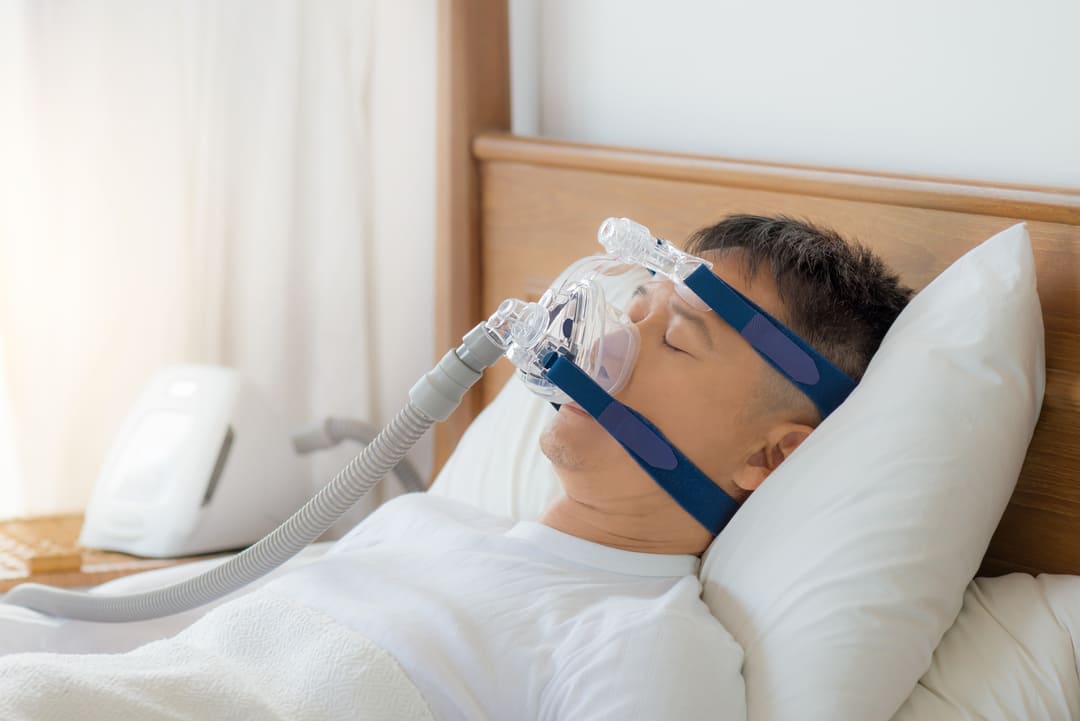
Category: Nexus Letter

  • Nexus Letter for Sleep Apnea Secondary to Sinusitis

    Nexus Letter for Sleep Apnea Secondary to Sinusitis

    Is a nexus letter for sleep apnea secondary to sinusitis your missing link? If you’ve received a denied claim, you’ll want to understand the significant impact a nexus letter can make. 

    In this guide, we’ll cover how a nexus letter impacts your VA disability claim, the steps to get service connected for sleep apnea secondary to sinusitis, and what VA rating you deserve. 

    The VA claims process can be challenging, but we’re here to help guide you. 

    Table of Contents

    NEXUS LETTER FOR SLEEP APNEA SECONDARY TO SINUSITIS

    Nexus Letter for Sleep Apnea Secondary to Sinusitis

    A nexus letter for sleep apnea secondary to sinusitis is vital evidence when applying for VA benefits. 

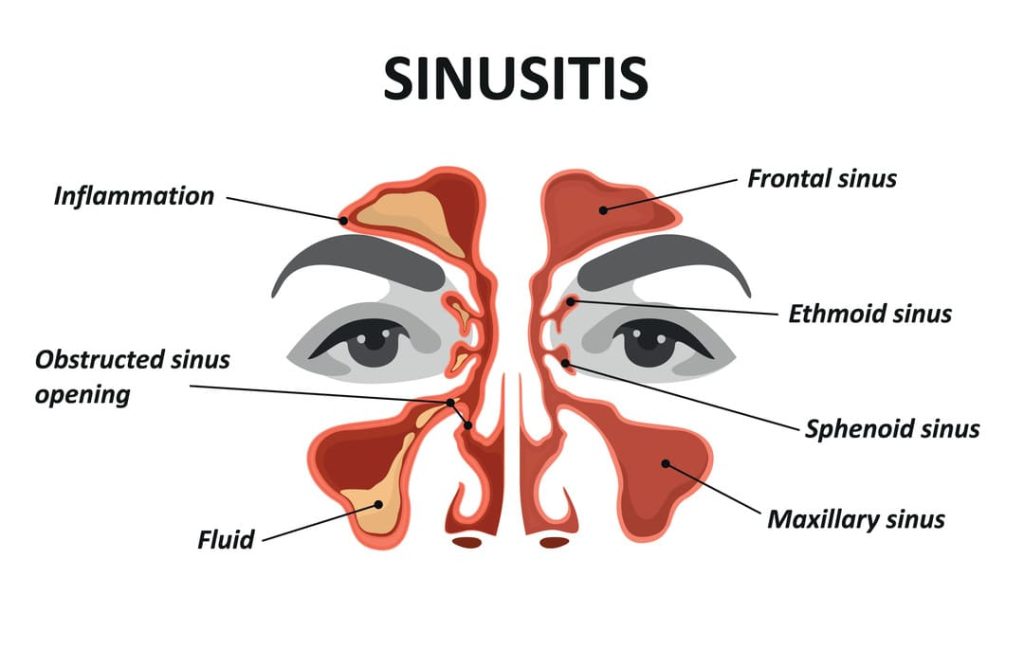
    Sinusitis can contribute to sleep apnea by causing sinus congestion and inflammation that blocks the nasal passages. But is your military service the culprit?

    Many veterans are susceptible to sinusitis due to burn pit exposure and other hazards. Obtaining a nexus letter is highly recommended if you want a better chance of winning your claim. 

    A Nexus Letter establishes a connection between your service-connected sinusitis and the development or worsening of sleep apnea. 

    It outlines a healthcare provider’s medical reasoning and professional opinion, clearly stating that sleep apnea results from sinusitis and makes you eligible for benefits.

    How Sleep Apnea and Sinusitis Are Connected

    SLEEP APNEA SECONDARY TO CHRONIC SINUSITIS AND RHINITIS

    Sleep apnea and sinusitis can be connected in several ways, so it’s essential to understand what is causing your condition. 

    Here’s a look at common reasons why sleep apnea can be secondary to sinusitis:

    1. Nasal congestion – When nasal passages are blocked due to mucus buildup or inflammation, it can contribute to obstructive sleep apnea. 
    2. Airway obstruction – Sinusitis can worsen the obstruction of your airways while sleeping, making it difficult for air to flow freely. 
    3. Inflammation – Inflammation caused by sinusitis can affect the soft tissues of your throat and airway, increasing the chances of sleep apnea. 
    4. Disrupted sleep – Sinusitis frequently leads to disrupted sleep, which can exacerbate sleep apnea symptoms and may contribute to the development or worsening of the condition long term. 

    Managing sinusitis and addressing nasal congestion can be important components of sleep apnea treatment, as improving nasal airflow may help reduce the severity of sleep apnea symptoms and improve overall sleep quality.

    >> Related: 5 Secondary Conditions to Sinusitis Veterans Should Know

    SLEEP APNEA SECONDARY TO SINUSITIS

    How to Get Service-Connected for Sleep Apnea Secondary to Sinusitis

    In order to win a VA disability claim for sleep apnea secondary to sinusitis you must be able to prove service connection. Service connection requires:

    • A current medical diagnosis (documented in a medical record) of the secondary VA disability you’re attempting to link (Sleep Apnea) to the current service-connected disability (Sinusitis) AND
    • A current service-connected primary disability (Sinusitis) AND
    • Medical nexus evidence establishing a connection between the service-connected primary condition (Sinusitis) AND the current disability you’re trying to connect secondary (Sleep Apnea)

    You will likely be required to attend a sleep study to receive an accurate sleep apnea diagnosis. A sleep study is vital in finding evidence of irregular breathing, gasping, and other obvious signs of sleep apnea. 

    VA Ratings for Sleep Apnea Secondary to Sinusitis

    The VA rates sleep apnea secondary to sinusitis at 0%, 30%, 50%, and 100%, depending on the severity, frequency, and duration of symptoms. 

    The highest VA rating for sleep apnea secondary to sinusitis is 100%, with most veterans receiving a 50% rating for obstructive sleep apnea. 

    The VA rating for sleep apnea is under 38 CFR § 4.97, Diagnostic Code 6847 Schedule of Ratings – Sleep Apnea Syndromes (Obstructive, Central, Mixed). 

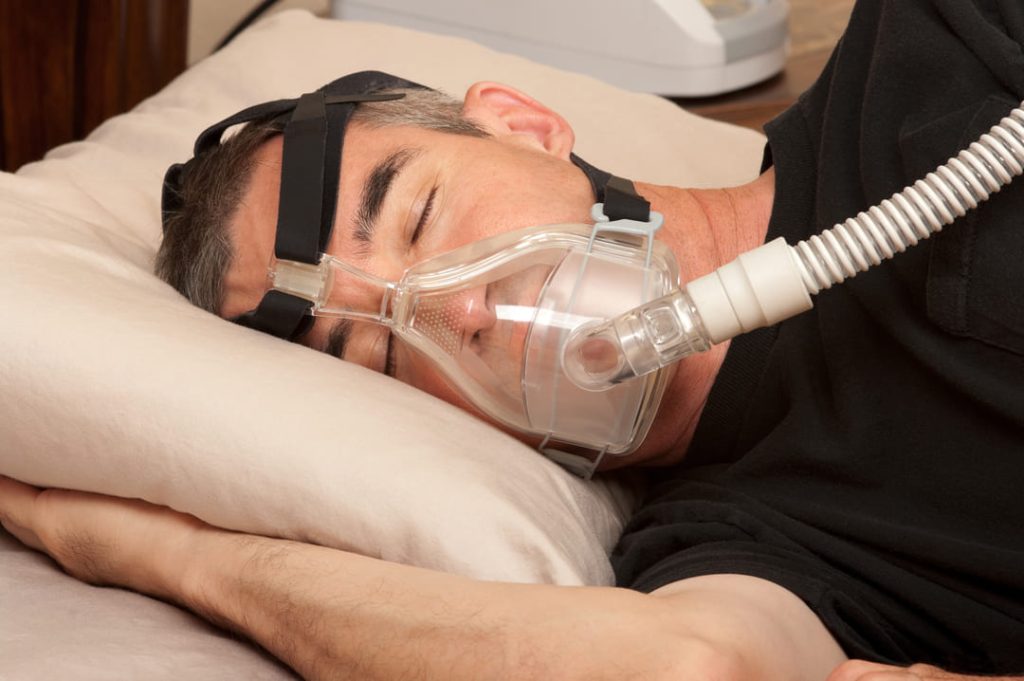
    If you receive a 50% or greater VA rating for sleep apnea, you’ll require one of the following qualifying breathing assistance devices:

    • Continuous positive airway pressure (CPAP) machine
    • Automatic airway pressure device (APAP)
    • Bilevel-positive airway pressure device (BiPAP, also known as NIPPV or NIV)
    • Nasopharyngeal appliances (Nasal dilators; nasopharyngeal stents)
    • Oral appliances (mandibular advancement devices (MAD); tongue-retaining mouthpieces)
    • Implanted genioglossal nerve stimulation devices

    Sleep Apnea Secondary to Sinusitis: Do I Need a DBQ?

    You don’t need a DBQ for sleep apnea secondary to sinusitis; however, it can help strengthen your claim. Adding a DBQ to your claim can make it a fully developed claim, where all of the evidence needed to decide a claim is present, and the VA rater can choose to decide your claim without sending you to a C&P exam.

    Is Sleep Apnea Secondary to Chronic Sinusitis and Rhinitis?

    Yes, if you have a primary service-connected diagnosis of chronic sinusitis or rhinitis, you may be eligible for a secondary sleep apnea connection. 

    If your chronic sinusitis causes congestion and inflammation, blocking your nasal passages, you will likely develop or worsen a previously diagnosed case of sleep apnea. 

    How Telemedica Can Help With Your Nexus Letter
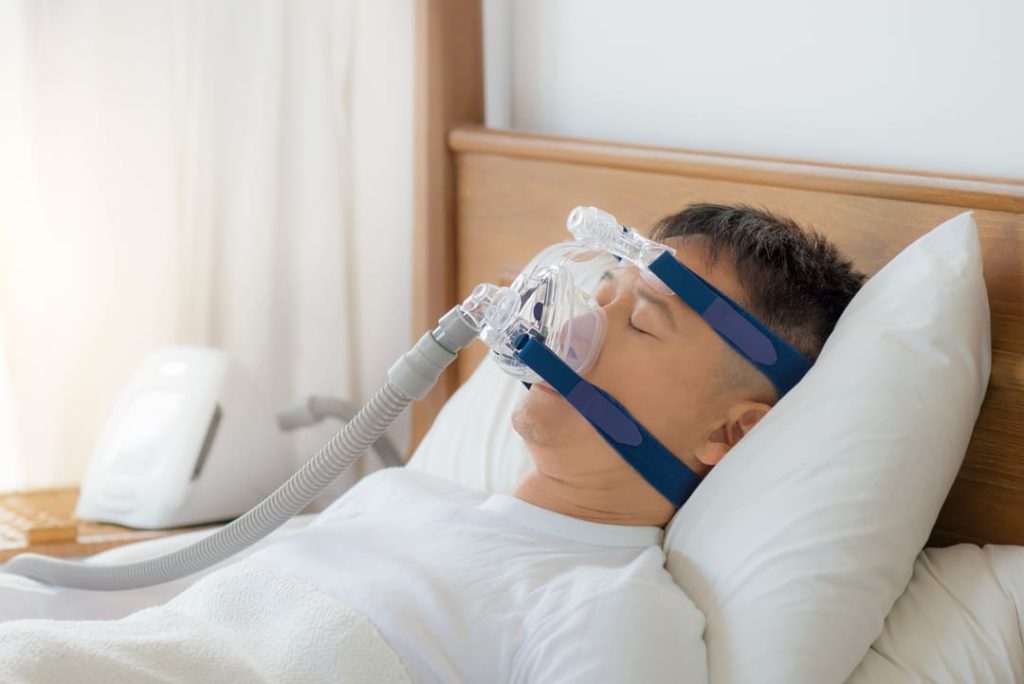
    Understanding the need for a nexus letter for sleep apnea secondary to sinusitis may help secure a winning claim. The licensed, trusted professionals at Telemedica can help with your nexus letter, paving the way to the benefits you deserve. 

    You can contact us with any questions; we will gladly assist you.
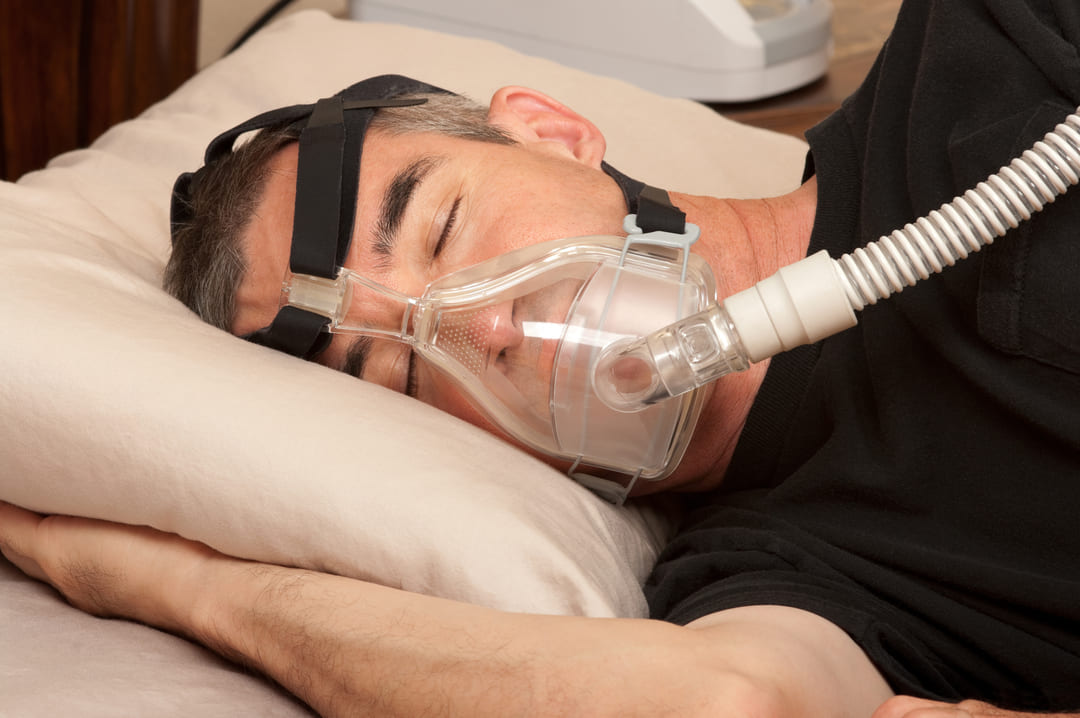
  • Nexus Letter for Sleep Apnea Secondary to PTSD

    Nexus Letter for Sleep Apnea Secondary to PTSD

    Was your sleep apnea VA disability claim denied? 

    Or maybe you’ve received multiple denied VA disability claims. 

    Do you need a medical professional to draft a sleep apnea nexus letter to help you establish a service connection to claim sleep apnea secondary to your PTSD?

    Don’t worry. You’ve come to the right place.

    In this post, we’ll uncover the significance of a nexus letter for sleep apnea secondary to PTSD.

    Table of Contents

    Nexus Letter for sleep apnea secondary to PTSD

    Nexus Letter for Sleep Apnea Secondary to PTSD

    While the VA doesn’t require a nexus letter to submit a sleep apnea claim, a nexus letter can be an essential piece of evidence to help establish a service connection between rateable mental health conditions like Posttraumatic stress disorder (PTSD) and a sleep disorder like sleep apnea.

    Note: The VA only accepts nexus letters written by licensed providers.

    Winning a VA claim for sleep apnea secondary to PTSD will require a secondary service connection for sleep apnea.

    Secondary Service Connections

    As opposed to a direct service connection, a secondary service connection refers to when a service-connected disability causes another disability—also known as a secondary condition.

    Service connection occurs when you can demonstrate, using medical evidence, lay statements, or military records, that an event, injury, or illness during your military service caused or aggravated your disability.

    You can only receive VA disability benefits for sleep apnea if you can connect your sleep apnea to your military service.

    A secondary service connection occurs when you can prove through similar evidence that an already service-connected disability caused or aggravated another disability.

    sleep apnea secondary to PTSD Nexus Letter

    Sleep Apnea Secondary to PTSD: Nexus Letters

    Not all VA claims need a nexus letter to approve the claim and receive a VA rating. 

    The strength of your sleep apnea VA claim depends on how the evidence establishes a service connection between your documented sleep disorder (sleep apnea) and your PTSD symptoms.

    Asking yourself these three questions can help you decide if you need a nexus letter for sleep apnea secondary to PTSD:

    1. Do you have a current sleep apnea diagnosis that was initially diagnosed while you were in service and is supported by medical evidence in your military medical records? If so, you may not need sleep apnea nexus letters to get VA benefits. 
    2. Are you filing for sleep apnea as a secondary or previously denied claim based on not being service-connected? If yes, consider getting a nexus letter.  
    3. Are you filing for a sleep apnea VA disability rating increase? If so, you don’t need a nexus letter since your claim was approved, and you currently have a sleep apnea rating (and receive VA disability benefits). 

    Sleep Apnea Secondary to PTSD VA Disability Ratings

    The VA rates sleep apnea secondary to PTSD at 0%, 30%, 50%, or 100%, depending on the severity, frequency, and duration of symptoms. 

    The highest VA rating for sleep apnea secondary to PTSD is 100%. 

    DBQ for sleep apnea secondary to PTSD

    Types of Sleep Apnea Secondary to PTSD

    According to Mayo Clinic, there are three types of sleep apnea:

    1. Obstructive Sleep Apnea (OSA) is the most common type of sleep apnea and occurs when the throat muscles relax and block airflow to the lungs. 
    2. Central Sleep Apnea (CSA) occurs when the brain fails to send the correct signals to the muscles that control breathing.
    3. Complex Sleep Apnea or Treatment-emergent central sleep apnea occurs when obstructive sleep apnea turns into central sleep apnea after receiving treatment.

    Over time, sleep apnea can lead to a host of symptoms caused by sleep disturbances, such as:

    • sleep deprivation
    • chronic stress
    • weight gain
    • excessive daytime sleepiness, and
    • overall poor sleep health
    VA Nexus Letter for sleep apnea secondary to PTSD

    VA Disability Nexus Letters for Secondary Conditions

    A nexus letter for a secondary condition is an evidence-based written document from a qualified medical provider stating that an already service-connected disability caused or aggravated another disability.

    Nexus letters for secondary conditions should include the following:

    1. A discussion of supporting evidence. The provider should reference any medical or personal record they’ve reviewed that supports your sleep apnea claim.
    2. An evidence-based rationale. The provider must explain why they believe your service-connected disability caused or aggravated the sleep apnea disability you are now seeking benefits. Referencing a sleep study, sleep test, sleep medicine, CPAP machine, VA sleep lab, case laws, or research journals will help show their evidence-based opinion. 
    3. A nexus opinion. The provider’s opinion that your disability was caused or aggravated by an already service-connected disability should be expressed in terms of likelihood.
      To best adhere to VA guidelines concerning how the VA rates sleep apnea, nexus letters should use language like:
      1. “Is due to” = 100% certain
      2. “More likely than not” = greater than 50% certain
      3. “At least as likely as not” = equal to 50% certain
      4. “Not likely due to” = less than 50% certain
      5. “Is not due to” = 0% chance
      6. List of credentials. The provider must sign and date the letter and list their title, specialty, and other credentials that emphasize their expertise. 

    Note: Preferably, the provider will use “is due to” or “more likely than not,” as these are the strongest. However, the strength of their opinion will depend on the evidence. a Nexus Letter must clearly detail how the current condition was caused by the original.

    Is sleep apnea secondary to PTSD

    Nexus Letter for Sleep Apnea Secondary to PTSD (FAQs) Frequently Asked Questions

    Is sleep apnea secondary to PTSD a VA disability?

    Yes, frequently, veterans can get service connected for sleep apnea secondary to PTSD. 

    However, it’s crucial to note PTSD doesn’t cause sleep apnea. Instead, many veterans can prove PTSD aggravates their sleep apnea. 

    How do I get a VA nexus letter for sleep apnea secondary to PTSD?

    You can receive a sleep apnea secondary to PTSD nexus letter from a licensed medical professional, including one of our Telehealth professionals at Telemedicia. 

    We specialize in nexus letters for:

    • Direct Service Connections
    • Secondary Service Connections
    • Presumptive Service Connections 

    A nexus letter with a high probative value can make your statement stronger.

    Do I need a DBQ for sleep apnea secondary to PTSD?

    A DBQ isn’t required for service-connecting sleep apnea secondary to PTSD; however, it may help secure your claim. Adding a DBQ to your claim makes it a fully developed claim and may benefit you in two ways. It may help streamline your claim through the review and decision process, and it may allow the VA rater to decide the case without sending you to a C&P exam.  

    As with other secondary conditions to PTSD, the more relevant, strong evidence you provide, the better your chances are of winning your VA disability claim. 

    Medical Evidence Wins VA Claims

    Whether you need a Nexus Letter for sleep apnea secondary to PTSD or something else, we make it EASY for veterans to connect with a licensed provider through our HIPAA-compliant telemedicine platform—anytime, anywhere!

    From DBQs and Nexus Letters to Psych Evals and Telemedicine Evaluations, the Telemedica team is standing by to serve you. Get the evidence you need to win your VA claim today.

  • Nexus Letter for GERD and IBS

    Nexus Letter for GERD and IBS

    In this post, we’ll explore the Nexus Letter for GERD, including its significance and role in helping you get the VA rating for GERD that you deserve. We’ll also take a look at IBS Nexus Letters and how they can increase your chances of service connection.

    Gastroesophageal reflux disease (GERD) and Irritable Bowel Syndrome (IBS) is a condition that affects millions of individuals, including veterans.

    For veterans seeking VA benefits related to GERD or IBS, understanding the value of a quality Nexus Letter is crucial.

    Table of Contents

    NEXUS LETTER FOR GERD

    Nexus Letter for GERD

    A Nexus Letter for GERD serves as a vital piece of evidence when applying for VA benefits related to GERD. 

    A Nexus Letter establishes a connection between a veteran’s service-connected disability, such as PTSD, and the development or worsening of GERD. 

    It outlines the medical reasoning and professional opinion of a healthcare provider, clearly stating that the veteran’s GERD is a result of their PTSD, making them eligible for benefits.

    Having a comprehensive Nexus Letter can be valuable for veterans looking to service connect their GERD and get the VA rating and benefits for their condition. It serves as a persuasive tool, substantiating the link between PTSD and GERD, ensuring that veterans receive the recognition and assistance they need and deserve. 

    Consulting a qualified medical professional who understands the nuances of these conditions is essential in drafting a compelling Nexus Letter.

    How Do I Get a GERD VA Rating?

    Obtaining a GERD (Gastroesophageal Reflux Disease) VA rating involves a systematic process within the VA.

    To secure a VA rating for GERD, you must provide comprehensive medical evidence supporting the link between your service-connected disability and the development or worsening of GERD symptoms.

    Here is the process of establishing service connection involves three essential elements:

    • A Current Diagnosis: A documented medical condition diagnosed by a qualified healthcare professional.
    • Evidence of an In-Service Event: Proof of an incident, injury, illness, or aggravation that occurred during military service, substantiated by relevant records or testimonies.
    • A Nexus or Link: The presence of a connection, supported by credible medical evidence, between the current diagnosis and the documented in-service event, establishing the cause-and-effect relationship between the two.
    GERD NEXUS LETTER

    A crucial step is obtaining a Nexus Letter for GERD from a qualified medical professional. 

    A GERD Nexus Letter establishes a connection between the veteran’s military service (or an already service-connected disability) and their GERD condition, outlining how it has led to the gastrointestinal issues. 

    Additionally, thorough medical records, diagnostic reports, and evidence of ongoing treatments significantly strengthen the case. 

    It’s essential for you to work closely with healthcare providers experienced in VA claims to ensure that your application is well-documented and compelling, increasing your chances of receiving the appropriate GERD VA rating.

    GERD Secondary to PTSD VA Disability Ratings

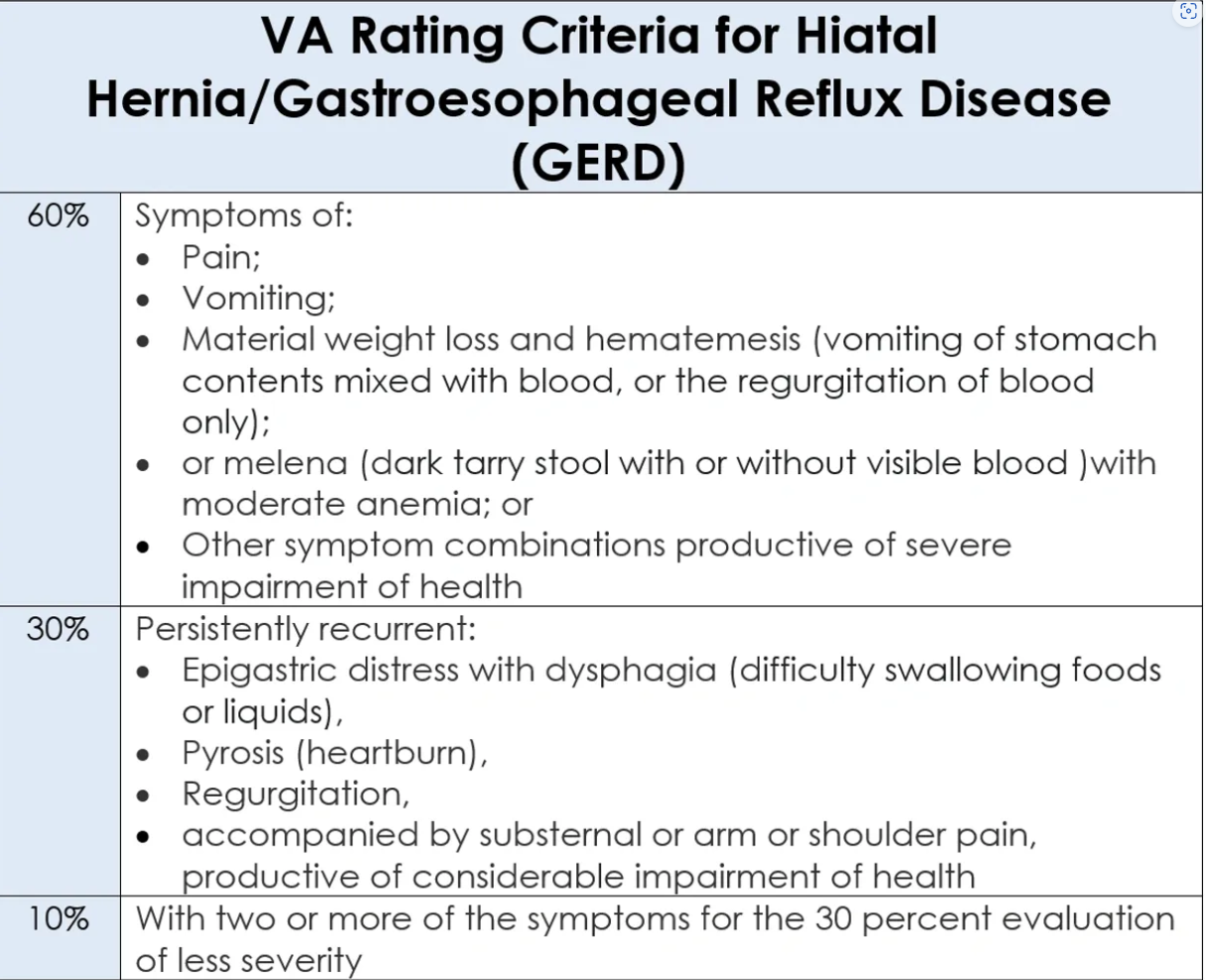
    The VA rates GERD secondary to PTSD at 10%, 30%, or 60% depending on severity of symptoms. The highest VA rating for GERD secondary to PTSD is 60%.

    In cases where GERD is secondary to PTSD, veterans often wonder about the possibility of obtaining a VA Rating. 

    The answer is yes—it is indeed possible. 

    GERD Secondary to PTSD Nexus Letter

    By obtaining a Nexus Letter that explicitly states the link between PTSD and GERD, veterans significantly enhance their chances of receiving the benefits they rightfully deserve. 

    The letter should provide detailed information about the PTSD symptoms and how they have led to the development or aggravation of GERD.

    Can PTSD Cause GERD?

    Yes, research has indicated a strong correlation between psychological stressors, such as PTSD, and gastrointestinal issues, including GERD. Stress can affect the functioning of the esophagus and stomach, leading to symptoms like acid reflux, heartburn, and regurgitation. 

    Understanding this connection is pivotal when seeking VA benefits for GERD secondary to PTSD.

    VA Rating Criteria for Hiatal Hernia and GERD (Gastroesophageal Reflux Disease) at 60%, 30%, or 10%

    VA rating criteria for Hiatal Hernia/Gastroesophageal Reflux Disease GERD chart.
    VA Rating Criteria for Hiatal Hernia/GERD Chart

    IBS Nexus Letters

    Irritable Bowel Syndrome (IBS) is a debilitating condition that affects numerous veterans, often as a result of their military service.

    For veterans seeking benefits related to IBS, obtaining an IBS Nexus Letter can help service connection. 

    This document acts as a crucial link between a veteran’s service-connected disability and their IBS, providing essential medical evidence required for VA benefit claims. 

    To secure an IBS Nexus Letter, veterans should consult a knowledgeable healthcare provider, preferably a specialist well-versed in gastrointestinal disorders.

    The significance of this letter cannot be overstated, it provides a professional medical opinion, detailing the connection between the veteran’s military service and the development or worsening of IBS symptoms. 

    With a compelling IBS Nexus Letter in hand, veterans significantly enhance their chances of receiving the benefits they rightfully deserve, ensuring they receive the necessary support and recognition for their service-related health challenges.

    Conclusion

    Obtaining a GERD VA rating is a meticulous process that requires thorough documentation and expert medical support.

    Veterans should focus on acquiring a compelling Nexus Letter, backed by detailed medical records and diagnostic reports, to establish the connection between their service-connected disability and GERD. 

    Collaborating with experienced healthcare professionals and understanding the nuances of VA claims will go a long way to helping you get the VA rating, benefits, and monthly compensation you deserve for your service-connected conditions.

    NEXUS LETTER DOCTORS

    Medical Evidence Wins VA Claims

    Whether you’re needing a Nexus Letter for GERD secondary to PTSD, a Nexus Letter for IBS, or something else, we make it EASY for veterans to connect with a licensed provider through our HIPAA compliant telemedicine platform—anytime, anywhere!

    From DBQs and Nexus Letters to Psych Evals and Telemedicine Evaluations, the team at Telemedica is standing by to serve you. Get the evidence you need to WIN your VA claim today.

  • VA Claim Denied With Nexus Letter? 

    VA Claim Denied With Nexus Letter? 

    Table of Contents

    If you had a VA claim denied with nexus letter, you may wonder what went wrong. 

    While nexus letters aren’t required, they frequently help bridge the gap between an award and denial on your VA disability claim. However, they aren’t always the golden ticket to a winning claim. 

    Receiving a VA claim denial can be discouraging, but we’re here to help.

    Today, we’re covering reasons why your VA claim was denied with a nexus letter and your next steps. 

    VA CLAIM DENIED WITH NEXUS LETTER

    Why Was My VA Claim Denied With Nexus Letter?

    A Nexus Letter is a powerful tool in supporting a VA disability claim; however, not all nexus letters are created equally, and having one doesn’t guarantee an approved claim. 

    If you received a VA claim denied with a nexus letter, you should review the decision and ensure your nexus letter is listed in the evidence section. 

    Next, review the “Reasons for Decision” section to determine the VA’s rationale and reason(s) for the denial. 

    In addition, certain disabilities are more challenging to service connect than others, regardless of the amount of medical evidence you provide. 

    For example, many veterans have difficulty service connecting sleep apnea because it’s not always easy to prove your military service caused the condition. 

    Let’s examine why your VA claim was denied despite providing a nexus letter. 

    VA CLAIM DENIED WITH NEXUS LETTER 6 REASONS WHY

    VA Claim Denied With Nexus Letter: 6 Reasons Why

    1. Lack of credibility
    2. Conflicting evidence 
    3. Service connection not specified 
    4. Lack of specificity in nexus letter 
    5. Lack of current diagnosis 
    6. Human error on the VA’s side 

    Three Things Needed to Win a VA Claim

    When reviewing your claim, the VA will look for the following three key aspects:

    1. A Current diagnosis
    2. Evidence of an in-service event, injury, illness, or aggravation
    3. A nexus, or link, between the first two via competent medical evidence

    If one or more of these aspects are missing from your VA claim, you may end up with a denied claim, despite providing a nexus letter. 

    VA CLAIM DENIED WITH NEXUS LETTER NEXT STEPS

    What You Can Do Next

    You don’t have to think of a denied claim as a closed door, especially if you believe you are entitled to benefits and compensation. 

    The following are potential next steps to getting the benefits you deserve. 

    File an Appeal

    You have three decision review options If you disagree with the VA and the decision was dated on or after February 19, 2019. 

    1. File a Supplemental Claim if you have new and relevant information the VA didn’t consider before. 
    2. Request a Higher-Level Review if you believe there’s an error with the VA’s decision on your claim. 
    3. Request a Board Appeal if you want a Veterans Law Judge at the Board of Veterans’ Appeals to review your case. 

    Gather Additional Evidence

    You may need additional evidence to back your claim and bolster your case. When filing a VA claim, it’s always best to provide medical evidence with high probative value. 

    According to M21-1, Adjudication Procedures Manual, evidence has a high probative value if it:

    • Makes a matter material to the determination more or less likely, AND 
    • Has sufficient weight, either by itself or in combination with other evidence, to persuade the decision-maker about a fact. 

    It’s always best to find doctors who write nexus letters with a background in treating veterans and are familiar with the unique situations they bring. 

    VA NEXUS LETTER DOCTORS

    Seek Additional Help

    Our team at Telemedica offers Nexus Letters based on previous disability conditions related to:

    • Direct Service Connections
    • Secondary Service Connections 
    • Presumptive Service Connections 

    To help write you a winning nexus letter, we’ll need the following pieces of information:

    • DD214
    • Benefits Summary
    • Current diagnosis of medical condition 

    We also recommend providing the following:

    • Blue Button Report
    • Personal Statements
    • Buddy Letters
    • Medical Records 

    To Wrap Up

    While nexus letters can prove vital in winning a VA disability claim, they don’t always secure approval. If you feel stuck, we can help. 

    You can start the process of winning your VA claim by booking an appointment with one of the licensed providers at Telemedica. Contact us today! 

  • Nexus Letters for Veterans with Skin Conditions

    Nexus Letters for Veterans with Skin Conditions

    How to Get a Nexus Letter for VA-ratable skin conditions like Rosacea, Psoriasis, and Vitiligo

    When you think of getting help for service-related issues, your thoughts may immediately turn to PTSD or muscle pain. But the breadth of service-related issues reaches further than these commonalities. Even chronic skin conditions can be attributed to your service.

    If you think your chronic skin condition may result from your time in the military, let’s talk about how to get help with a VA Nexus letter.

    Table of Contents

    Get a Nexus Letter for your skin conditions

    Nexus Letter for Skin Conditions

    Certain events during your service may have led to your current chronic skin condition. Chemical exposure can lead your skin to absorb the toxin into your body, causing health hazards, including chronic skin conditions. 

    Meanwhile, chronic stress from service-related anxiety or PTSD can also exacerbate skin ailments.

    Nexus Letter for Skin Conditions.

    There are several skin conditions common among Veterans, including:

    • Rosacea: Characterized by a large collection of small red bumps on your cheeks and around your face. It may also create small, pus-filled blisters. Rosacea tends to flare up for a few weeks to a few months and can disappear on its own, though it often returns.
    • Psoriasis: An immune-mediated disease that produces a scaly rash anywhere on your body. This happens when your immune system accelerates skin cell growth without telling your body to shed your existing skin, leading to a build-up of excess skin.
    • Vitiligo: A pigmentation disorder where patients see small or large patches of skin slowly lose color. While vitiligo may be triggered by genetics or an autoimmune disorder, intense stress or trauma to your skin can also cause the condition.

    Getting a Skin Condition Diagnosis Can Help

    Many people with these types of skin conditions may not feel compelled to seek a diagnosis or treatment. However, a diagnosis for your chronic skin condition is the first step toward living more comfortably within your own skin. A doctor can reveal what treatment options are available to you and what you can do in your day-to-day life to better manage the symptoms.

    Diagnosing skin conditions is a relatively simple process. Most doctors only need to look at the affected area to get a good idea of what the condition is. They’ll also ask for your medical history, possible allergic reactions that might be causing the condition, and other skin-affecting problems.

    In some cases, your doctor may have to perform a skin biopsy or culture test to diagnose more complicated or nuanced conditions. You are then educated on next steps and optional treatments.

    Why You Should Get a Nexus Letter for Your Skin Condition

    Nexus Letter

    A Nexus Letter is a document that makes the case that your condition is related to either direct, secondary, or presumptive service connections.

    The Nexus letter can then be added to your VA claims file, which makes it much easier for Veterans to win their claim for medical compensation from your VA disabilty benefits. 

    Benefits of Connecting with Veteran-Friendly Doctors

    Mental Health

    Every doctor should be sympathetic toward Veterans and the medical conditions they carry from their service. However, connecting with medical providers who have experience working with Veterans can help clients obtain a timely, professional, and positive resolution.

    Telemedica’s network of medical professionals all have extensive experience helping Veterans obtain accurate and professional medical evidence. And with doctors licensed all across the US, you’re able to connect with a Veteran-friendly doctor near you, via telehealth appointment.

    Take Back Control of Your Skin Condition

    If you’re dealing with skin conditions as a result of your service, contact us today to talk to a member of our Customer Service team about getting started on your path to wellbeing.

    To get help with your VA Nexus letter, Telemedica will match you with a medical professional qualified to diagnose your skin condition (or any other service-related condition). Once the provider has conducted a thorough review of your medical documents and related evidence (through what we call a chart review), they can draft a Nexus letter asserting the service connection to your condition, if warranted.

  • Is There a Link Between PTSD and Migraines?

    Is There a Link Between PTSD and Migraines?

    Living with PTSD can be stressful enough on its own, but when recurring migraines start showing up as well, it can make navigating day to day life even more difficult and challenging. Few people discuss the link between these two frequently occurring afflictions, but there is reason to believe there’s a strong connection. A 2015 study found that individuals with both PTSD and migraines “may be particularly prone to adverse financial, health, and interpersonal burdens.” 

    Table of Contents

    PTSD and Migraines

    PTSD & Migraines

    Though headaches don’t receive the same kind of attention in terms of mental health, when daily migraines plague you, it’s important to identify the cause, which could be related to your overall mental health. 

    Having PTSD means being at a higher risk of developing different health issues. Pain is one of those, and headaches or migraines are a significant source of intense pain for many individuals. In this blog, we will analyze the link between PTSD and migraines and provide information that can help Veterans –  just like you – take the next step towards healing.

    What is Post-Traumatic Stress Disorder (PTSD)?

    Mental Health

    Post-traumatic stress disorder (PTSD) develops when an individual witnesses a shocking, dangerous, or frightening event.

    While it’s normal to feel afraid during traumatic situations, those who feel affected for a long time afterward may be diagnosed with PTSD.

    PTSD is characterized by people who feel stressed or frightened, even when they aren’t in danger. This is a common affliction for Veterans who saw combat. Ongoing, chronic PTSD is when someone regularly experiences symptoms for years after the event.

    What is a Migraine?

    Mental Health

    A migraine is an intense headache that causes severe, throbbing pain (typically on one side of the head).

    It can also be accompanied by nausea, vomiting, and sensitivity to light and sound. These attacks often last longer than your average headache, anywhere from hours to multiple days. 

    Migraine pain can be severe to the point of disability. It can be extremely frustrating when you experience them frequently enough to interfere with your daily activities.

    Can PTSD Cause Migraines?

    Mental Health

    Having PTSD can be linked to an increased risk for migraines.

    The stress of an PTSD episode can push your body to develop different types of headaches, which may escalate into migraines. While daily headaches can be a nuisance and hinderance to your daily life, migraines are more likely to stop you in your tracks.

    PTSD Headaches.

    People are typically prone to migraines before developing PTSD, meaning that it is not the underlying cause. Healthcare experts still haven’t figured out the exact cause of migraines, but they believe a genetic component is involved. So while it is not the direct cause, it is a possibility that PTSD triggers migraines.

    Is that possibility enough? There is precedence for the VA ruling that migraines can be secondary to service-connected PTSD.

    The intensity of your migraines could also be linked to the severity of your PTSD. These painful occurrences could provide healthcare professionals with additional information to better treat your other symptoms in a best-case scenario.

    How to Manage Your Migraines

    Mental Health

    Managing your migraines can feel overwhelming. If your daily life is continually put on hold due to persistent headaches, there are ways to manage your pain levels.

    Managing migraines secondary to PTSD can help reduce triggers in the long run. Options like cognitive behavioral therapy can be helpful to reduce stress. Diagnosing PTSD can also go a long way toward significantly reducing migraines. Receiving a diagnosis means that you’re one step closer to understanding what is going on internally and how you can move forward with treatment.

    Treating both PTSD and migraines is the best way to reach a solution. Getting a diagnosis is the first step, and from there you can reach out to a healthcare professional for recurring treatment.

    In the meantime, here are a few ways to manage your migraines naturally: 

    • Water. Drinking enough water is a natural way to reduce migraines. Dehydration can lead to flare-ups, so be sure to keep up on your water intake. 
    • Cold compress. While cold and warm compresses can be used, a cold compress is usually the best option. Be sure to place a cloth between your skin and the ice pack for protection. 
    • Ginger tea. This herbal tea has been shown to have a similar effect to traditional medication when treating migraines. 

    Schedule an Appointment with Telemedica

    What else can you do for your PTSD and migraines?

    The first step to getting help is a diagnosis. Telemedica offers services to assess your symptoms and provide you with an accurate diagnosis from trusted professionals. Book an appointment today to start on the road to recovery. Additionally, if you have a diagnosis for a headache condition and feel it may be connected to service or a service connected condition, you may consider a Nexus Letter from Telemedica as well. 

    If you are a Veteran in need of recurring therapy tailored to your specific needs, you can book a recurring therapy session with us today!

    Untitled design 38 e1658520481699

    This blog has been verified by Telemedica’s lead Nexus Team provider Tara Thompson (PA-C; MPAS). The information provided here is factual, up to date, and approved by our professionals.

    To learn more about our team of providers, click here.