Category: Nexus Letter

  • How a Nexus Letter for Depression Secondary to Tinnitus Can Strengthen Your VA Claim

    How a Nexus Letter for Depression Secondary to Tinnitus Can Strengthen Your VA Claim

    A nexus letter for depression secondary to tinnitus is powerful evidence when applying for VA benefits. 

    Tinnitus is one of the most common service-connected conditions, and while many think of it as “just ringing in the ears,” research shows it can have a serious impact on mental health.  

    For some, the constant noise leads to anxiety, irritability, and trouble focusing, which may develop into or worsen depression. 

    In this blog, we’ll cover the role of a nexus letter, how the VA rates depression secondary to tinnitus, how to obtain and submit your letter, and why strong medical evidence is crucial, especially for secondary service connection. 

    Key Takeaways

    • Tinnitus can lead to depression by causing stress, poor sleep, and reduced quality of life that gradually wears down your mental health. 
    • The VA rating for depression secondary to tinnitus depends on the severity of the symptoms and how much they impair daily life, including work, social activities, and overall functioning. 
    • A nexus letter for depression secondary to tinnitus provides a professional medical opinion linking your depression directly to your service-connected tinnitus.

    Table of Contents

    Nexus Letter for Depression Secondary to Tinnitus

    Nexus Letter for Depression Secondary to Tinnitus.

    If you’re filing a VA disability claim for depression secondary to tinnitus, a strong nexus letter can significantly strengthen your case. 

    A nexus letter links your service-connected tinnitus to the onset or worsening of depression, providing a healthcare provider’s professional opinion and medical rationale to your claim. 

    While the VA doesn’t require nexus letters, they are often crucial for secondary conditions, denied claims, or cases with limited medical evidence. 

    A strong nexus letter should:  

    • Clearly state your current diagnosis  
    • Explain how your condition is linked to military service (direct, secondary, or aggravated connection)  
    • Utilize medical evidence, research, and rationale to support the provider’s opinion  
    • Include the doctor’s credentials and signature 

    >>View Our Main Guide on Nexus Letters for Secondary Conditions

    Many people consider tinnitus solely an ear condition, but it also has a significant impact on mental health. 

    A 2019 systematic review showed that about 33% of people with tinnitus also have depression.  

    The constant ringing or buzzing in the ears can cause distress and impairment in quality of life, which makes depression more likely.  

    As a result, doctors are encouraged to screen patients with tinnitus for signs of depression. 

    Learn More: Why & How to Get Evaluated for Depression 

    How the VA Rates Depression Secondary to Tinnitus

    The VA rates depression secondary to tinnitus under the General Rating Formula for Mental Disorders.  

    You may receive a VA rating for depression under one of the following diagnostic codes (DC): 

    • DC 9433: Persistent Depressive Disorder (Dysthymia) 
    • DC 9434: Major Depressive Disorder 
    • DC 9435: Unspecified Depressive Disorder 

    The VA rates depression secondary to tinnitus based on your level of occupational and social impairment, with potential ratings of 0%, 10%, 30%, 50%, 70%, or 100%. 

    >>View Our Main Guide on Qualifying for a VA Rating for Depression 

    Establishing Service Connection

    You must prove service connection when filing a VA disability claim for depression secondary to tinnitus. 

    Service connection requires: 

    • A current medical diagnosis of depression AND 
    • A current service-connected primary disability (Tinnitus) AND 
    • Medical nexus evidence establishing a connection between the service-connected primary condition (Tinnitus) AND the secondary condition (Depression) you’re claiming.

    How to Submit a Nexus Letter to the VA

    After you obtain your nexus letter, include it with your VA claim or appeal.  

    While it can be submitted at any point, it’s best to provide it with your initial claim, Supplemental Claim, or Board Appeal. 

    Submission options: 

    • Upload it to your VA.gov account under your disability claim. 

    Proper submission is essential for the VA to consider it during the review and to secure the benefits you deserve. 

    Did you know? Working with a VA-accredited representative can ensure your nexus letter is submitted correctly. 

    Medical Evidence Wins VA Claims

    Did you know that a lack of medical evidence is the #1 reason VA disability claims are denied?  

    Medical evidence is a crucial piece of the puzzle that VA raters consider when reviewing a disability claim. Telemedica provides solutions for veterans looking to bolster their claims through high-quality medical evidence that wins claims!  

    Schedule your 20-minute consultation call and learn how to get the supporting medical evidence you need to strengthen your claim.

    Conclusion

    Depression secondary to tinnitus is a serious condition that can impact nearly every part of your life.  

    If you’re struggling, know that you may qualify for VA disability benefits, and that proper medical evidence, including a strong nexus letter, can make a significant difference in your claim.  

    Don’t wait to take action, both for your mental health and for the benefits you rightfully deserve.


    (FAQs) Frequently Asked Questions

    What is a nexus letter for depression secondary to tinnitus?

    A nexus letter for depression secondary to tinnitus is a medical document written by a qualified healthcare provider. It explains the connection between your service-connected tinnitus and your depression, giving medical reasoning for why your depression developed or worsened because of the constant ringing in your ears. 

    Can you get VA disability for depression secondary to tinnitus?

    Yes. If you have a current medical diagnosis of depression, a service-connected tinnitus rating, and evidence linking the two conditions, you may qualify for VA disability benefits for depression secondary to tinnitus. Your rating will depend on how severe your depression symptoms are and how much they affect your work and daily life, including the level of social and occupational impairment. 

    How does tinnitus cause depression?

    Tinnitus can cause depression because the constant ringing or buzzing in the ears often disrupts sleep, concentration, and overall quality of life. Over time, this ongoing stress and frustration can lead to feelings of hopelessness, sadness, and social withdrawal, which are common signs of depression. Related Post: Top 4 Secondary Conditions to Tinnitus 

    How do you prove depression secondary to tinnitus?

    You’ll need three key pieces of evidence: a current diagnosis of depression, primary service-connected tinnitus, and a medical nexus linking the two conditions. Although not required by the VA, it is highly recommended to obtain a nexus letter for secondary service connection.

    Do I need a C&P exam for depression secondary to tinnitus? 

    Most likely, yes. The VA will usually schedule a compensation and pension (C&P) exam to evaluate the severity of your depression and its link to tinnitus before deciding on your claim. Learn More: How Much Weight Does a C&P Exam Have? 


  • Rhinitis VA Rating Guide for Veterans

    Rhinitis VA Rating Guide for Veterans

    Getting the proper rhinitis VA rating can make a significant difference in your monthly compensation and access to VA benefits. 

    Whether you suffer from allergic, bacterial, or granulomatous rhinitis, understanding how the VA assigns ratings based on severity, obstruction, and related complications is essential to securing the benefits you rightfully deserve. 

    This post explains the types of rhinitis, how VA ratings are determined, what you must show to establish service connection, and why a nexus letter may be crucial for approval.

    Table of Contents

    Key Takeaways

    • The VA rates rhinitis under diagnostic codes 6522, 6523, and 6524, with ratings ranging from 10% to 100%, depending on the type of rhinitis and severity of symptoms.
    • Chronic rhinitis is considered a presumptive condition under the PACT Act for veterans exposed to burn pits and airborne hazards. 
    • To be eligible for a rhinitis VA rating, you must have a current diagnosis, evidence of an in-service injury or illness, and a medical nexus connecting your condition to your military service. 

    What is Rhinitis?

    Rhinitis VA Rating.

    Rhinitis happens when your body reacts in a way that leads to nasal congestion, sneezing, a runny nose, and itching.  

    In many cases, it’s caused by inflammation and can also bring on symptoms in your eyes, ears, or throat. 

    There are a few different types of rhinitis, including: 

    • Acute rhinitis: Often linked to viral illnesses like the common cold 
    • Allergic or seasonal rhinitis: Triggered by allergens such as pollen 
    • Nonallergic (year-round) rhinitis: Caused by irritants not related to allergies 

    With allergic rhinitis, allergens in the air trigger your immune system to release histamine. Histamine is what causes the itching, swelling, and fluid buildup in the nasal passages, sinuses, and even the eyelids. 

    Did you know? Chronic rhinitis means your symptoms last longer than 12 weeks, and it can apply to any type of rhinitis. 

    How the VA Rates Rhinitis

    If you’re dealing with rhinitis, the VA assigns disability ratings based on the type and severity of your condition.  

    Each form of rhinitis has its own diagnostic code in the VA’s rating schedule, which determines how your symptoms translate into a percentage rating and monthly compensation. 

    If eligible, you may receive a rhinitis VA rating for one of the following conditions: 

    Allergic Rhinitis VA Ratings

    Allergic rhinitis occurs when your immune system overreacts to allergens such as pollen, dust, or pet dander, resulting in symptoms like sneezing, a runny nose, congestion, and itchy eyes. It’s one of the most common types of rhinitis and can affect you seasonally or year-round. 

    An allergic rhinitis VA rating is based on the presence of polyps and the degree of obstruction in your nasal passages. 

    • 30% VA Rating: With polyps 
    • 10% VA Rating: Without polyps, but with greater than 50-percent obstruction of nasal passage on both sides or complete obstruction on one side 

    Bacterial Rhinitis VA Ratings

    Bacterial rhinitis is a type of rhinitis caused by a bacterial infection in the nasal passages.  

    It’s much less common than viral or allergic rhinitis, but when it does occur, it usually develops as a complication after a viral upper respiratory infection (like a cold). 

    You may get a VA rating for bacterial rhinitis if your turbinates (nasal passage bones) are permanently enlarged and block your nose. A higher rating may apply if you have a current diagnosis of rhinoscleroma. 

    • 50% VA Rating: Rhinoscleroma 
    • 10% VA Rating: With permanent hypertrophy of turbinates and with greater than 50-percent obstruction of nasal passage on both sides or complete obstruction on one side 

    Granulomatous Rhinitis VA Ratings

    Granulomatous rhinitis is a chronic condition where inflammation in the nasal passages leads to the formation of granulomas (small lumps of immune cells).  

    It’s often linked to infections, autoimmune disorders, or long-term irritation and can cause persistent congestion, discharge, and tissue damage in the nose. 

    A granulomatous rhinitis VA rating is highest if you have serious conditions like Wegener’s granulomatosis or lethal midline granuloma. Milder types of granulomatous infections are rated lower. 

    • 100% VA Rating: Wegener’s granulomatosis, lethal midline granuloma 
    • 20% VA Rating: Other types of granulomatous infection 

    Note: The VA rating system lists “Wegener’s granulomatosis,” but it’s now referred to as granulomatosis with polyangiitis (GPA). 

    Establishing Service Connection

    To prove service connection, you must provide evidence of the following: 

    • A current medical diagnosis of rhinitis 
    • An in-service event, injury, aggravation, or illness 
    • A medical nexus (link) between your current diagnosis and the in-service event, injury, aggravation, or illness (e.g., a nexus letter)

    How a Nexus Letter Can Strengthen Your VA Claim

    A nexus letter is a medical document connecting your current diagnosis to a specific event, injury, or exposure during your military service. 

    For rhinitis, a nexus letter can be crucial in establishing service connection, especially if your initial claim was denied or your condition is secondary to another service-connected disability. 

    While the VA doesn’t require a nexus letter, it may significantly strengthen your case by providing solid medical evidence and a clear link to your service. 

    The experienced professionals at Telemedica can provide a well-crafted nexus letter for rhinitis.

    How to File a VA Claim for Rhinitis

    You must file a VA claim using VA Form 21-526EZ to be eligible for a rhinitis VA rating. 

    You can file a VA claim:   

    • By mail   
    • Via fax  

    If you’re filing a paper VA disability claim, it’s smart to submit an Intent to File first. This protects your effective date while you gather evidence, which may result in back pay.  

    Filing online? You don’t need an intent to file; the system automatically locks in your effective date once you start your application.

    C&P Exam for Rhinitis

    To be eligible for a rhinitis VA rating, you may be required to attend a Compensation & Pension (C&P) exam. 

    At your rhinitis C&P exam, the examiner’s job is to confirm your current diagnosis, decide if it’s connected to your military service, and evaluate how severe your symptoms are.  

    You can expect them to review your medical records, ask questions about your symptoms and triggers, and perform a physical exam of your nose, throat, and eyes.  

    They may also assess how your condition affects your daily life and work, and in some cases, order breathing or allergy tests.  

    The examiner will record all findings in the VA Disability Benefits Questionnaire (DBQ) for rhinitis. 

    Chronic Rhinitis PACT Act Benefits

    If you were exposed to burn pits or other airborne hazards during service and now live with chronic rhinitis, the PACT Act may be your path to VA disability benefits. 

    The PACT Act added chronic rhinitis to the list of presumptive conditions for eligible veterans. 

    This means the VA automatically assumes your chronic rhinitis is connected to your service if you meet the criteria below. 

    Qualifications

    To be eligible for benefits under the PACT Act for chronic rhinitis, you must have: 

    1. A current diagnosis of chronic rhinitis from a licensed healthcare provider 

    2. Service in one of the following qualifying locations and timeframes (below): 

    On or after September 11, 2001, in any of these locations: 

    • Afghanistan 
    • Djibouti 
    • Egypt 
    • Jordan 
    • Lebanon 
    • Syria 
    • Uzbekistan 
    • Yemen
    • The airspace above any of these locations 

    On or after August 2, 1990, in any of these locations: 

    • Bahrain 
    • Iraq 
    • Kuwait 
    • Oman 
    • Qatar 
    • Saudi Arabia 
    • Somalia 
    • The United Arab Emirates (UAE) 
    • The airspace above any of these locations 

    3. An honorable or other qualifying discharge from active-duty service.

    VA Secondary Conditions to Rhinitis

    Rhinitis can do more than cause congestion; it may also lead to secondary conditions.  

    If your rhinitis contributes to another disability, you may qualify for a secondary service connection and a higher VA rating. 

    Examples of secondary conditions to rhinitis include, but aren’t limited to: 

    • Allergic Conjunctivitis 
    • Asthma 
    • Major Depressive Disorder 
    • Eczema 
    • Sinusitis 

    >>View Our Main Guide on Secondary Conditions to Allergic Rhinitis 

    Conclusion 

    Rhinitis can cause long-term symptoms that interfere with sleep, work, and daily life.  

    The VA offers disability ratings for different types of rhinitis, but your chances of approval generally depend on solid evidence. 

    By carefully documenting your symptoms, treatments, and their impact over time, you provide the VA with a clearer picture of your condition, which in turn strengthens your case for the rating and compensation you rightfully deserve. 

    Medical Evidence Wins VA Claims

    Did you know that a lack of medical evidence is the #1 reason VA disability claims are denied? 

    Medical evidence is a crucial piece of the puzzle that VA raters consider when reviewing a disability claim. Telemedica provides solutions for veterans looking to bolster their claims through high-quality medical evidence that wins claims! 

    Schedule your 20-minute consultation, get answers for your service-connected disability, and start on your path to well-being. 


    (FAQs) Frequently Asked Questions

    What is the VA rating for rhinitis?

    Rhinitis is rated under diagnostic codes 6522–6524, depending on whether it’s allergic, bacterial, or granulomatous. Rhinitis ratings range from 10% to 100%.

    What is the chronic rhinitis VA rating?

    Chronic rhinitis refers to rhinitis that has lasted for 12 weeks or more. Chronic rhinitis isn’t listed as its own code. Instead, the VA assigns a rating based on the specific type of chronic rhinitis you have, such as allergic, bacterial, or granulomatous. Generally, ratings for rhinitis range from 10% to 100%. 

    Is rhinitis part of the PACT Act?

    Yes. Chronic rhinitis is now recognized as a VA presumptive condition under the PACT Act for veterans exposed to burn pits and other airborne hazards. 

    Can you receive a 100% VA disability rating for rhinitis?

    Possibly. The highest VA rating for Granulomatous rhinitis is 100% when the condition involves serious diseases such as Wegener’s granulomatosis (granulomatosis with polyangiitis) or lethal midline granuloma.  

    If eligible, you may also qualify for Total Disability Based on Individual Unemployability (TDIU), which pays at the 100% rate, even if your combined rating is less than 100%. 

    Can rhinitis be a secondary condition?

    Yes. Rhinitis can be considered a secondary condition if it develops or worsens because of another service-connected disability, such as sinusitis or asthma. Secondary service connections may increase your overall VA rating. 

    Do I need a nexus letter for rhinitis?

    Although not required by the VA, a nexus letter may strengthen your claim by clearly linking your current diagnosis to your military service. Additionally, a nexus letter for service connecting rhinitis as a secondary condition is highly recommended.


  • 7 VA Secondary Conditions to Lower Back Pain

    7 VA Secondary Conditions to Lower Back Pain

    Living with lower back pain doesn’t just affect your spine; it can also trigger or exacerbate other health issues throughout your body. 

    The VA recognizes these as secondary service-connected conditions, which means you may be entitled to additional disability compensation. 

    In this post, we’ll examine how the VA rates lower back pain, highlight 7 VA secondary conditions linked to back pain, and walk through how to prove service connection—including why a strong nexus letter is so important.

    Table of Contents

    Key Takeaways

    • The VA rates lower back pain under the General Rating Formula for Diseases and Injuries of the Spine, with possible ratings from 10% to 100%, depending on range of motion, ankylosis, painful motion, and functional loss. 
    • Secondary conditions like radiculopathy, hip pain, arthritis, plantar fasciitis, erectile dysfunction, mental health conditions, and shoulder pain may qualify you for additional VA disability benefits. 
    • Proving secondary service connection requires a current diagnosis and medical evidence, often in the form of a nexus letter, showing that your secondary condition was caused or aggravated by your service-connected lower back pain. 

    How the VA Rates Lower Back Pain

    Heavy lifting, repetitive physical strain, injuries, and prolonged periods of awkward posture or sedentary activity during service often cause lower back pain in veterans. 

    A 2024 systematic review of over 360,000 service members found that low back pain affects up to 82% of Army, 48% of Air Force, and 5% of Marines each year, showing it’s a common problem across military branches. 

    The VA rates lower back pain under the General Rating Formula for Diseases and Injuries of the Spine, with potential ratings ranging from 10% to 100%. 

    A low back pain VA rating is based on factors such as painful motion, limitation of range of motion (ROM), ankylosis and functional loss or impairment. For intervertebral disc syndrome (IVDS), ratings may also be based on incapacitating episodes.

    7 VA Secondary Conditions to Lower Back Pain

    VA Secondary Conditions to Lower Back Pain.

    Radiculopathy

    Lower back pain can compress or irritate the spinal nerves, leading to radiculopathy. This often causes shooting pain, numbness, tingling, or weakness that radiates from the lower back into the legs. 

    The VA frequently rates radiculopathy secondary to lower back pain under the Schedule of ratings for Neurological Conditions and Convulsive Disorders, using diagnostic codes (DC) 8520, 8620, or 8720. 

    A VA disability rating for radiculopathy can range from 0% to 80%, depending upon the severity of symptoms and level of paralysis. 

    Shoulder Pain

    Chronic back pain can change posture or the way veterans move, leading to stress on the shoulders. Over time, this may cause arthritis, tendonitis, or reduced mobility. 

    The VA rates shoulder pain secondary to lower back pain under the Schedule of Ratings for the Musculoskeletal System, such as for arthritis or limitation of motion.  

    If the medical evidence shows an actual shoulder muscle injury, ratings may instead be assigned under the Schedule of Ratings for Muscle Injuries. 

    Most shoulder conditions are rated between 0% and 40%, but severe impairments such as flail shoulder may be rated as high as 80%. 

    Hip Pain

    When back pain alters gait or weight distribution, it can put strain on the hips. This often leads to chronic pain, arthritis, or even joint degeneration. 

    The VA evaluates hip disabilities under the Schedule of Ratings for the Musculoskeletal System, focusing on factors such as range of motion, pain with movement, joint inflammation, instability, and symptoms of degenerative joint disease.  

    Ratings are based on how well the hip can move in different directions, including flexion (thigh toward the abdomen), extension (thigh backward), adduction (leg inward), and abduction (leg outward). 

    >>View Our Main Guide on Hip Pain Secondary to Back Pain 

    Plantar Fasciitis

    Changes in walking caused by back pain can stress the feet, sometimes leading to plantar fasciitis.  

    You may experience heel pain and difficulty standing or walking for long periods. 

    The VA rates plantar fasciitis secondary to lower back pain under DC 5269, with potential ratings of 10%, 20%, or 30%. If there is actual loss of use of the foot, you may be eligible for a 40% VA rating. 

    VA ratings for plantar fasciitis depend on if one or both feet are affected, whether it responds to treatment, and if arch supports or other shoe modifications are needed. 

    Erectile Dysfunction

    Nerve damage, chronic pain, and medications used to treat back conditions can contribute to erectile dysfunction (ED). 

    Generally, ED is assigned a 0% VA rating under DC 7522, but it can still qualify for Special Monthly Compensation (SMC-K) for “loss of use of a creative organ.”  

    However, several VA schedular codes address conditions of the penis and testicles with varying ratings.  

    These include DC 7520–7521 for partial or total removal or deformity of the penis (20–30%) and DC 7523–7524 for testicular atrophy or removal (0–30%), depending on severity and whether one or both testicles are affected.  

    Each condition can sometimes be rated under the urinary system if it results in a higher evaluation than the schedular percentage. 

    Mental Health Conditions

    Living with chronic back pain can lead to depression, anxiety, or other mental health challenges.  

    Pain impacts sleep, mood, and quality of life, which can intensify these conditions. 

    The VA rates mental health conditions secondary to lower back pain under the General Rating Formula for Mental Disorders, with potential ratings of 0%, 10%, 30%, 50%, 70%, or 100%.  

    VA ratings of mental health conditions depend on your level of social and occupational impairment. 

    Proposed Mental Health Rating Changes 

    To improve accuracy and reflect modern clinical practices, the VA is updating how it evaluates all mental health conditions, including anxiety, PTSD, depression, and eating disorders.  

    Learn more about upcoming mental health rating changes HERE. 

    Arthritis

    Lower back pain can place extra stress on your joints and spine, which may lead to the development or worsening of arthritis. 

    When your back is injured or misaligned, it can change the way you move, putting more strain on your hips, knees, or other joints. 

    The VA rates arthritis secondary to lower back pain under the Schedule of Ratings for the Musculoskeletal System, using DC 5002, 5003, or 5010, as well as several Limitation of Motion diagnostic codes. 

    Proving Secondary Service Connection

    To establish secondary service connection, you’ll need two key elements: 

    1. A current diagnosis – Medical documentation of your secondary condition from a qualified provider. 
    1. A medical nexus – Evidence showing that your secondary condition was caused or aggravated by your service-connected lower back pain. A detailed nexus letter from an independent medical provider is often the most effective way to demonstrate this link.

    The Value of a Nexus Letter for Secondary Conditions

    A nexus letter for secondary conditions is highly recommended. To prove secondary service connection, you must prove your secondary disability is “proximately due to’ or “aggravated by” another service-connected disability.

    A nexus letter provides the VA a detailed medical opinion from a qualified provider that connects your secondary condition to your service-connected back pain. While the VA doesn’t require one, it may be the difference between an approval and a denial.

    A nexus letter for a secondary condition: 

    • Establishes causation: Explains how your lower back pain caused or aggravated your secondary condition. 
    • Adds credibility: Carries weight with VA decision-makers when written by a medical expert. 
    • Strengthens weak claims: If the connection isn’t apparent, a nexus letter may provide the missing link.

    Filing a VA Claim for Secondary Conditions

    To be eligible for a VA rating for secondary conditions to lower back pain, you must file a VA claim.  

    Filing online is generally the fastest option, but you can also download and complete VA Form 21-526EZ and submit it in one of the following ways:  

    • By mail   
    • Via fax 

    Did you know that a lack of medical evidence is the #1 reason VA disability claims are denied?  

    Medical evidence is a crucial piece of the puzzle that VA raters consider when reviewing a disability claim. Telemedica provides solutions for veterans looking to bolster their claims through high-quality medical evidence that wins claims!  

    Schedule your 20-minute consultation call and learn how to get the supporting medical evidence you need to strengthen your claim.


    FAQs | Frequently Asked Questions

    Can you get VA disability secondary to lower back pain?

    Yes, you can receive VA disability for conditions that develop secondary to lower back pain if you have a current diagnosis of a secondary condition and can prove a medical link between the two conditions. 

    What is the VA rating for lower back pain?

    The VA rating for lower back pain ranges from 10% to 100%, with breaks at 20%, 30%, 40%, and 50%. 

    What are the VA secondary conditions to back pain?

    Chronic back pain can lead to other conditions over time, which may qualify as secondary service-connected disabilities.  

    Common secondary conditions include radiculopathy, hip pain, knee pain, shoulder problems, plantar fasciitis, erectile dysfunction, and certain mental health conditions.

    What are the VA secondary conditions to degenerative disc disease?

    Secondary conditions to degenerative disc disease include radiculopathy, sciatica, mental health conditions, sleep disturbances, chronic pain, and orthopedic secondary conditions. >>Explore VA Secondary Conditions to Degenerative Disc Disease 

    How do I prove my secondary condition is linked to my lower back pain?

    You’ll also need a current diagnosis of the condition you’re linking to your lower back pain. You’ll also need medical evidence, such as a nexus letter, showing that your secondary condition was caused or aggravated by your service-connected lower back pain.  

    A nexus letter acts as a professional medical opinion explaining the link between a service-connected disability and a secondary condition, which the VA recognize the validity of your claim.


  • Anxiety VA Rating and Service Connection

    Anxiety VA Rating and Service Connection

    Many veterans experience anxiety after service, whether from combat exposure, stressful environments, or the challenges of transition.  

    The VA recognizes several types of anxiety disorders and rates them based on how much they affect your social and occupational impairment. 

    This Veteran’s Guide explains how the VA rates anxiety, the fastest way to file a claim, and the role medical evidence plays in establishing service connection.

    Table of Contents

    Key Takeaways

    • Common anxiety-related conditions in veterans include generalized anxiety disorder, panic disorder, phobias, and obsessive-compulsive disorder. 
    • The VA rating for anxiety ranges from 0% to 100%, with breaks at 10%, 30%, 50%, and 70%. 
    • The VA rates anxiety according to how your symptoms impact work and social functioning. 
    • A Nexus Letter for an anxiety VA rating may strengthen your claim by providing a clear link between your condition and military service. 

    Types of Anxiety Rated by the VA

    Anxiety VA Rating.

    Generalized Anxiety Disorder

    Generalized anxiety disorder (GAD) causes persistent, excessive worry about everyday events. 

    A 2024 study found that nearly 8% of veterans screened positive for GAD and 22% for mild anxiety symptoms.  

    Higher levels of anxiety in veterans are often linked to younger age, multiple deployments, and serious mental health challenges. 

    The VA rates generalized anxiety disorder under DC 9400. 

    Panic Disorder and/or Agoraphobia

    Panic disorder involves sudden, intense episodes of fear that may cause rapid heartbeat, sweating, or shortness of breath.  

    Many veterans with this condition also experience agoraphobia, where they avoid public places for fear of triggering an attack.  

    These symptoms can make it hard to hold a job, attend appointments, or maintain relationships. 

    Phobias

    Phobias are intense, irrational fears of specific objects or situations, like crowds, flying, or even loud noises.  

    Veterans may develop phobias, sometimes connected to stressful or traumatic experiences during combat or deployment-related experiences, and these fears can severely limit daily functioning. 

    When phobias affect your ability to live and work normally, they may qualify for a VA anxiety rating. 

    Obsessive-Compulsive Disorder (OCD)

    OCD is marked by intrusive thoughts (obsessions) and repetitive behaviors (compulsions) done to reduce distress.  

    Veterans with OCD may feel trapped in cycles of checking, cleaning, or ordering tasks that interfere with work, family life, and social activities.  

    The VA rates OCD under the General Rating Formula for Mental Disorders, depending on the level of occupational and social impairment it causes. 

    How the VA Rates Anxiety

    The VA disability rating for anxiety ranges from 0% to 100%, with breaks at 10%, 30%, 50%, and 70%. Your VA anxiety rating isn’t based only on your current diagnosis; it also considers how your symptoms affect your work and daily life. 

    The VA uses the General Rating Formula for Mental Disorders, which measures how your symptoms affect everyday life. 

    The two areas that matter most are: 

    • Occupational Impairment: Does anxiety lower your productivity, limit your responsibilities, or make it impossible to hold a job? 
    • Social Impairment: Does anxiety strain your relationships, cause isolation, or make social situations overwhelming? 

    Anxiety VA Rating Chart

    The VA uses the Diagnostic and Statistical Manual of Mental Disorders (DSM-5) to define and classify mental health conditions, including anxiety. 

    General Rating Formula for Mental Disorders VA Disability Rating 
    Total occupational and social impairment, due to such symptoms as: gross impairment in thought processes or communication; persistent delusions or hallucinations; grossly inappropriate behavior; persistent danger of hurting self or others; intermittent inability to perform activities of daily living (including maintenance of minimal personal hygiene); disorientation to time or place; memory loss for names of close relatives, own occupation, or own name. 100% 
    Occupational and social impairment, with deficiencies in most areas, such as work, school, family relations, judgment, thinking, or mood, due to such symptoms as: suicidal ideation; obsessional rituals which interfere with routine activities; speech intermittently illogical, obscure, or irrelevant; near-continuous panic or depression affecting the ability to function independently, appropriately and effectively; impaired impulse control (such as unprovoked irritability with periods of violence); spatial disorientation; neglect of personal appearance and hygiene; difficulty in adapting to stressful circumstances (including work or a worklike setting); inability to establish and maintain effective relationships. 70% 
    Occupational and social impairment with reduced reliability and productivity due to such symptoms as: flattened affect; circumstantial, circumlocutory, or stereotyped speech; panic attacks more than once a week; difficulty in understanding complex commands; impairment of short- and long-term memory (e.g., retention of only highly learned material, forgetting to complete tasks); impaired judgment; impaired abstract thinking; disturbances of motivation and mood; difficulty in establishing and maintaining effective work and social relationships. 50% 
    Occupational and social impairment with occasional decrease in work efficiency and intermittent periods of inability to perform occupational tasks (although generally functioning satisfactorily, with routine behavior, self-care, and conversation normal), due to such symptoms as: depressed mood, anxiety, suspiciousness, panic attacks (weekly or less often), chronic sleep impairment, mild memory loss (such as forgetting names, directions, recent events). 30% 
    Occupational and social impairment due to mild or transient symptoms which decrease work efficiency and ability to perform occupational tasks only during periods of significant stress, or symptoms controlled by continuous medication. 10% 
    A mental condition has been formally diagnosed, but symptoms are not severe enough either to interfere with occupational and social functioning or to require continuous medication 0% 

    Upcoming Mental Health Rating Changes

    To improve accuracy and reflect modern clinical practices, the VA is updating how it evaluates all mental health conditions, including anxiety, PTSD, depression, and eating disorders. Learn more about upcoming mental health rating changes HERE.

    VA Diagnostic Codes for Anxiety Disorders

    The VA uses specific diagnostic codes to assign ratings for different types of anxiety disorders; each tied to the General Rating Formula for Mental Disorders. 

    • Generalized Anxiety Disorder: DC 9400 
    • Obsessive Compulsive Disorder: DC 9404 
    • Other Specified Anxiety Disorder: DC 9410 
    • Panic Disorder and/or Agoraphobia: DC 9412 
    • Unspecified Anxiety Disorder: DC 9413 

    Note: Other specified anxiety disorders are anxiety conditions that have been diagnosed but don’t match any specific category. Unspecified anxiety disorders are diagnosed too, but they don’t fully meet the criteria for a named type of anxiety 

    Establishing Service Connection: How to Prove Anxiety for VA Disability

    To secure a VA anxiety rating, you’ll need to show clear evidence that connects your current diagnosis to your military service. This is known as service connection. 

    Direct Service Connection

    To prove direct service connection, you must provide evidence of the following: 

    • A current medical diagnosis of anxiety 
    • An in-service event, injury, aggravation, or illness 
    • A medical nexus (link) between your current diagnosis and the in-service event, injury, aggravation, or illness 

    Tip: Keep copies of all medical records and service documents in one place; organized evidence can make your claim much stronger and easier to process. 

    Anxiety as a Secondary Condition: Anxiety can also develop as a secondary condition linked to an existing service-connected disability, such as PTSD, chronic pain, or physical injuries. 

    Secondary Service Connection

    The VA requires two key pieces of evidence before granting secondary service connection: 

    • A Current Diagnosis: A documented diagnosis of the secondary condition from a qualified medical provider. 
    • A Medical Nexus between the primary and secondary conditions: The nexus is proof that the secondary condition was caused or aggravated by your primary service-connected condition. A detailed Nexus Letter from an independent medical provider is often the strongest evidence. 

    Clear documentation connecting your secondary anxiety to your service-connected condition allows the VA to assign an appropriate rating and potentially increase your overall VA disability compensation.

    Secondary Conditions to Anxiety

    Mental health conditions like anxiety can also cause other secondary conditions, such as migraine headaches, hypertension, or irritable bowel syndrome (IBS).

    Learn more about other common VA secondary conditions to anxiety and depression HERE.

    Filing a Claim

    To receive an anxiety VA rating, you must file a VA claim. While filing online is generally the most efficient option, you can also download and complete VA Form 21-526EZ and submit it in one of the following ways: 

    • By mail   
    • Via fax   

    Remember, filing a VA claim doesn’t guarantee approval; it starts the process needed to prove your condition is connected to your service. 

    Note: If you’re filing a paper claim, it’s smart to submit an intent to file to protect your effective date and potential retroactive pay, but if you file online, your effective date is set automatically. 

    Nexus Letter for Anxiety

    A nexus letter is a medical document that connects your current diagnosis to an event, injury, or experience from your military service. 

    For anxiety, a nexus letter can be critical in proving service connection, especially if your claim was denied before or if your anxiety is secondary to another service-connected condition. 

    While the VA doesn’t require a nexus letter, having one may significantly strengthen your claim by providing clear medical evidence that ties your anxiety to your service. 

    The experienced team at Telemedica can provide a well-crafted nexus letter to strengthen your anxiety VA claim. 

    Learn More: What is a Nexus Letter?


    Understanding the VA C&P Exam for Anxiety Claims

    The VA often requires a compensation & pension (C&P) exam to confirm anxiety and other mental health conditions.  

    This exam carries significant weight in your claim because the examiner’s report directly impacts your rating.  

    For anxiety, you’ll be asked about symptoms such as panic attacks, difficulty concentrating, or social withdrawal; so be ready to explain honestly how these issues affect your work, relationships, and daily life. 

    It’s not always easy to be vulnerable, but it’s your time to share your experiences, so the VA can fully understand your condition. 

    How a DBQ Can Impact Your Anxiety VA Disability Claim

    A disability benefits questionnaire (DBQ) is designed to capture the medical details the VA needs to evaluate your claim.  

    These forms allow your healthcare provider to document your symptoms, diagnosis, and how your condition impacts your daily life.  

    Submitting a completed DBQ strengthens your claim by giving the VA clear, structured medical evidence tied directly to your condition.  

    For anxiety claims, make sure the provider completing your DBQ is thorough and specific, so the VA has an accurate picture of your mental health challenges.

    Medical Evidence Wins VA Claims

    Did you know that a lack of medical evidence is the #1 reason VA disability claims are denied? 

    Medical evidence is a crucial piece of the puzzle that VA raters consider when reviewing a disability claim. 

    Examples of evidence for an anxiety VA claim include: 

    • Nexus Letters
    • DBQs
    • Mental Health Notes 
    • Therapy Notes 
    • Medication History 
    • Medical Records 
    • Military Service Records 
    • Personal Statements 
    • Buddy Statements 

    Telemedica provides solutions for veterans looking to bolster their claims through high-quality medical evidence that wins claims! 

    Schedule your 20-minute consultation and learn how to get the supporting medical evidence you need to strengthen your claim.

    Conclusion

    Anxiety can have a serious impact on your ability to work, maintain relationships, and enjoy daily life. The VA acknowledges this and offers disability benefits to veterans whose anxiety is connected to their service.  

    By understanding the VA rating process, diagnostic codes, and the evidence required, you can take important steps toward securing the compensation you rightfully deserve.


    FAQs | Frequently Asked Questions

    What are the symptoms of anxiety in veterans?

    Common symptoms of anxiety include constant worry, restlessness, fatigue, irritability, sleep problems, difficulty concentrating, and physical issues like rapid heartbeat or shortness of breath. These symptoms can interfere with daily life, relationships, and work. 

    Is anxiety a VA disability?

    Yes. Anxiety is recognized as a ratable mental health condition by the VA, meaning you may qualify for disability compensation if it’s connected to your military service. You must also have a current medical diagnosis and proof of an in-service injury, illness, or event that caused or aggravated your anxiety. 

    What is the VA rating for depression and anxiety?

    The VA uses the General Rating Formula for Mental Disorders to assign a combined rating for depression and anxiety, with possible ratings of 0%, 10%, 30%, 50%, 70%, or 100%.  

    The VA disability rating for anxiety and depression is based on how much your symptoms affect your ability to work, maintain relationships, and handle daily activities. 

    Does the VA rate anxiety and PTSD separately?

    Yes, but you can’t receive two ratings for overlapping symptoms. If you have both PTSD and anxiety, the VA will assign a single rating that reflects your overall level of impairment. 

    How do I get 100% disability for anxiety?

    To qualify for a 100% VA anxiety rating, you must show total occupational and social impairment. This typically means being unable to work or maintain relationships due to severe symptoms like persistent panic, disorientation, or an inability to perform daily tasks. 

    What is the VA rating for generalized anxiety disorder (GAD)?

    A generalized anxiety disorder VA rating depends on how symptoms like restlessness, fatigue, and trouble concentrating affect your work and social life. Ratings range from 0% to 100%, based on the severity of social and occupational impairment. 

    How often does the VA re-evaluate anxiety claims?

    Generally, veterans are scheduled for a reevaluation when there is a likelihood of improvement, unless the condition is considered “static,” meaning permanent and unlikely to improve. The VA decides on the need for these exams based on signs of improvement, significant changes in the condition, or potential errors in the existing rating.


  • Sciatica VA Ratings Guide: Understanding VA Benefits for Sciatic Nerve Conditions

    Sciatica VA Ratings Guide: Understanding VA Benefits for Sciatic Nerve Conditions

    Sciatica isn’t just back pain; for many veterans, it’s a condition that makes walking, standing, or even sitting unbearable.

    The VA does offer disability compensation, but your sciatica VA rating depends on how severe your symptoms are and the strength of evidence you provide.

    In this guide, we’ll explain how the VA rates sciatica, what medical documentation strengthens your claim, and how Telemedica’s DBQs and Nexus Letters may help you secure the benefits you’ve earned.

    Table of Contents

    Key Takeaways

    • The VA rates sciatica based on severity, from 10% for mild incomplete paralysis to 80% for complete paralysis of the sciatic nerve. 
    • Medical evidence such as MRIs, nerve conduction studies, and physician evaluations is important in proving both severity and service connection. 
    • Secondary conditions caused by sciatica, like muscle atrophy or mental health conditions, may increase your total VA disability compensation. 

    What is Sciatica?

    Sciatica VA Rating.

    Sciatica, also called lumbar radiculopathy, describes pain that radiates along the path of the sciatic nerve, from the lower back through the hips and buttocks, and down one or both legs.  

    It’s not a disease by itself, but rather a symptom of an underlying problem such as a herniated disc, spinal stenosis, or degenerative disc disease. 

    According to the Mayo Clinic, sciatica most commonly occurs when a herniated disk, bone spur, or narrowing of the spine compresses part of the nerve. This can cause inflammation, pain, numbness, or weakness in the affected leg. 

    Common Causes

    For veterans, sciatica can be the result of service-related injuries like: 

    • Falls, jumps, or impacts during training or combat 
    • Repeated heavy lifting or carrying heavy gear 
    • Spinal trauma from vehicle accidents or blast injuries 

    Symptoms

    Sciatica symptoms vary from mild discomfort to severe impairment. Common signs include: 

    • Sharp or burning pain radiating down the leg 
    • Numbness or tingling in the leg or foot 
    • Muscle weakness in the affected limb 
    • Difficulty standing, walking, or sitting for extended periods 
    • Worsening pain with sudden movements like coughing or sneezing 
    • In severe cases, paralysis or loss of mobility 

    How the VA Rates Sciatica

    The VA evaluates sciatica under 38 CFR § 4.124a – Schedule of Ratings for Neurological Conditions, using Diagnostic Codes 8520 (Paralysis of the Sciatic Nerve), 8620 (Neuritis), and 8720 (Neuralgia).

    Sciatica VA Rating Chart

    VA Disability Rating Description of Impairment/Symptoms 
    10% Mild incomplete paralysis of the sciatic nerve — primarily sensory symptoms (tingling, numbness, mild pain) with little or no muscle weakness or loss of function. 
    20% Moderate incomplete paralysis — sensory changes plus some motor weakness, reduced reflexes, or intermittent pain affecting mobility. 
    40% Moderately severe incomplete paralysis — significant motor weakness, muscle atrophy may be present, and symptoms interfere with walking, standing, or daily activities. 
    60% Severe incomplete paralysis with marked muscular atrophy — constant pain, significant weakness, and loss of muscle mass impacting functional movement. 
    80% Complete paralysis — foot dangles and drops, no active movement below the knee, severely weakened or lost knee flexion. 
    Neuritis Ranges from 10% (mild) to 60% (severe with marked muscle atrophy) based on constant nerve pain, sensory loss, and motor impairment, but when not characterized by organic changes, the maximum is 40% for the sciatic nerve. 
    Neuralgia Ranges from 10% (mild intermittent nerve pain) to 20% (moderate, more persistent nerve pain with some functional impact). 

    The Importance of Strong Medical Evidence

    The VA’s decision is only as strong as the evidence you provide. Key documentation can include: 

    • Imaging studies (MRI, CT scans) 
    • EMG or nerve conduction studies 
    • Clinical notes documenting symptoms and functional impact
    • C&P exam findings 

    Establishing Service Connection for Sciatica

    To qualify for VA disability benefits for sciatic nerve pain, you must show: 

    • A current diagnosis from a qualified medical provider 
    • An in-service event, injury, or illness that could have caused or aggravated the condition 
    • A medical nexus linking the condition to your service (e.g., a Nexus Letter)

    C&P Exam for Sciatica

    The VA may require a Compensation & Pension exam to confirm your diagnosis, assess severity, and determine service connection. At this exam, be honest and specific about: 

    • When your symptoms began 
    • How they affect your daily activities 
    • Flare-ups and functional limitations 

    Missing a C&P exam can hurt your claim, so attend all scheduled appointments. 

    Secondary Conditions to Sciatica

    Sciatica can lead to or worsen other health issues. Veterans may be entitled to additional compensation for conditions like: 

    • Degenerative Disc Disease 
    • Muscle Atrophy 
    • Urinary or Bowel Incontinence 
    • Mental Health Conditions (such as depression from chronic pain) 
    • Radiculopathy in other nerve distributions 

    Related: When You Need a Nexus Letter for a VA Claim

    Conclusion

    Sciatica can have a serious impact on your quality of life, but with the right medical evidence, you can secure the VA rating you deserve.  

    Telemedica’s independent evaluations, DBQs, and Nexus Letters are designed to meet VA standards and clearly document your symptoms, severity, and service connection. 

    If you’re ready to strengthen your sciatica VA claim, connect with Telemedica today.

    Medical Evidence Wins VA Claims

    Did you know that a lack of medical evidence is the #1 reason VA disability claims are denied? 

    Medical evidence is a crucial piece of the puzzle that VA raters consider when reviewing a disability claim. Telemedica provides solutions for veterans looking to bolster their claims through high-quality medical evidence that wins claims! 

    Schedule your 20-minute consultation call and learn how to get the supporting medical evidence you need to strengthen your claim.


    FAQs | Frequently Asked Questions

    How does the VA rate sciatica?

    The VA rates sciatica under Diagnostic Codes 8520 (paralysis), 8620 (neuritis), and 8720 (neuralgia) of the sciatic nerve. Sciatica VA ratings range from 10% for mild incomplete paralysis (mostly sensory symptoms) to 80% for complete paralysis (no movement below the knee, foot drop, and severely weakened or lost knee flexion). Neuritis can be rated from 10% to 60%, and neuralgia from 10% to 20%, depending on severity. 

    How does the VA rate sciatica radiculopathy?

    Sciatica is the most common type of lumbar radiculopathy. The VA rates it under Diagnostic Codes 8520, 8620, and 8720, with ratings from 10% for mild symptoms to 80% for complete paralysis. Neuritis is rated from 10%–60% and neuralgia from 10%–20%, based on pain, weakness, numbness, and loss of mobility. 

    What is the highest VA rating for sciatica?

    The highest possible VA rating for sciatica is 80% for complete paralysis of the sciatic nerve. This occurs when the foot dangles and drops, no active movement is possible below the knee, and knee flexion is severely weakened or lost. 

    Is there a bilateral sciatica VA rating?

    Yes. If sciatica affects both legs, the VA applies a bilateral factor when calculating your combined disability rating. This factor may increase your overall VA monthly compensation. 

    Can I get TDIU for sciatica?

    Yes. If your sciatica prevents you from maintaining substantially gainful employment, you may qualify for Total Disability based on Individual Unemployability (TDIU). This provides compensation at the 100% rate even if your combined ratings are lower. 

    How does the VA decide between mild, moderate, and severe ratings for sciatica?

    The VA considers factors such as muscle weakness, reflex changes, sensory loss, and muscle atrophy. “Mild” generally means mostly sensory symptoms, while “severe” includes significant motor loss and muscle wasting. 

    Can I get VA disability for sciatica in both legs?

    Yes. If both sciatic nerves are affected, each leg may be rated separately and then combined for your overall VA disability percentage. 

    What if my sciatica gets worse after my VA rating is assigned?

    You can file for a sciatica VA rating increase, supported by updated medical evidence (e.g., a DBQ) showing worsening symptoms, such as new imaging, nerve tests, or specialist evaluations.


  • 5 VA Secondary Conditions to Plantar Fasciitis

    5 VA Secondary Conditions to Plantar Fasciitis

    If you have service-connected plantar fasciitis, you may be entitled to more than just a rating for heel pain.  

    Many veterans develop secondary conditions to plantar fasciitis, such as knee pain, hip pain, or back pain, that can be rated separately by the VA and increase your overall combined disability rating. 

    Understanding which conditions qualify, how the VA rates them, and what medical evidence you need is essential to getting the full benefits you rightfully deserve.

    Table of Contents

    Key Takeaways

    • VA plantar fasciitis ratings typically range from 10% to 40%, depending on severity, whether one or both feet are affected, whether it responds to treatment, and if there’s a loss of use. 
    • The VA won’t approve a secondary claim without a current diagnosis and credible medical evidence showing the connection to your service-connected plantar fasciitis. 
    • A nexus letter from a qualified medical provider can be a powerful tool in proving secondary service connection. 

    How the VA Rates Plantar Fasciitis

    The VA rates plantar fasciitis under diagnostic code (DC) 5269, which considers whether the condition responds to treatment and whether it affects one or both feet.  

    Ratings typically range from 10% for mild cases to 40% for severe cases, causing loss of use of the foot. 

    The VA also considers whether plantar fasciitis is secondary to another service-connected condition, which can affect the overall combined disability rating. 

    >> View our Main Guide on Plantar Fasciitis VA Ratings

    5 VA Secondary Conditions to Plantar Fasciitis

    1. Heel Spurs

    Heel spurs are bony growths on the heel that can form after long-term strain from plantar fasciitis.  

    The repeated inflammation of the plantar fascia can pull on the heel bone, causing calcium deposits to build up. 

    There is no specific diagnostic code for bone spurs; instead, the VA assigns a rating based on the criteria of a comparable condition with similar symptoms.

    Many veterans with bone spurs are rated under DC 5279 for metatarsalgia (Morton’s Disease), which causes pain and swelling in the ball of the foot, if symptoms don’t overlap with plantar fasciitis and separate ratings are assigned. 

    2. Ankle Pain 

    Plantar fasciitis can change the way you walk, placing extra stress on your ankles and leading to pain or instability. Over time, this altered gait can limit ankle motion or cause joint strain.  

    The VA rates ankle pain under various diagnostic codes, depending on the cause, severity, deformity or positioning of the joints, and how much it limits your range of motion or function.  

    For example, the VA rates ankle ankylosis under DC 5270, with symptoms of stiffness, immobility, and abnormal positioning of the joint. 

    3. Knee Pain

    Knee pain often develops when plantar fasciitis forces you to adjust your stance or stride. This extra strain on the knees can cause inflammation, instability, or limited motion.  

    The knee pain secondary to plantar fasciitis VA rating is determined under several diagnostic codes, typically ranging from 10% to 30% for limited motion or instability.  

    Higher ratings may be assigned for more severe impairment, especially if medical evidence shows how plantar fasciitis has caused or worsened your knee problems. 

    4. Hip Pain

    When plantar fasciitis makes walking painful, you may shift your weight or change your posture, which can strain your hips over time.  

    This can cause joint inflammation, reduced mobility, or even chronic pain.  

    The VA rates hip issues under Diagnostic Codes 5250–5255, typically 10%–30% for limited motion, and up to 90% for severe impairments, with the link to plantar fasciitis strengthening a secondary service connection claim. 

    5. Lower Back Pain

    Plantar fasciitis can affect your overall posture and the way you carry your weight, often leading to lower back strain. This can cause stiffness, limited range of motion, or nerve-related pain.  

    The plantar fasciitis secondary to back pain VA rating is based on the General Rating Formula for Diseases and Injuries of the Spine, ranging from 10% for mild limitation to 100% for complete immobility.  

    Proving Secondary Service Connection

    To qualify for VA benefits, you must show that your secondary condition was caused or worsened by your service-connected plantar fasciitis. 

    To prove secondary service connection, you must provide the following: 

    • A current primary service connection for plantar fasciitis 
    • A current medical diagnosis of your VA-ratable secondary condition performed by a qualified healthcare provider   
    • Documentation of supportive evidence, such as in your medical and/or personnel records, is reviewed by your provider.  
    • A medical nexus (link) showing documented evidence that your plantar fasciitis caused or worsened your secondary condition (e.g., a Nexus Letter) 

    Nexus Letter for Secondary Conditions

    While the VA doesn’t require a nexus letter, it is highly recommended to prove secondary service connection.  

    A nexus letter for a secondary condition with a high probative value can strengthen the validity of your VA claim.  

    Unless there is a definitive connection between plantar fasciitis and a secondary condition, a nexus letter is often needed to prove secondary service connection.

    Conclusion

    Secondary conditions to plantar fasciitis can increase your overall rating, but you must prove the connection with clear, credible evidence.  

    A detailed medical nexus, backed by a current diagnosis and treatment records, can be the difference between a denied claim and maximum compensation. 

    Medical Evidence Wins VA Claims

    Did you know that a lack of medical evidence is the #1 reason VA disability claims are denied? 

    Medical evidence is a crucial piece of the puzzle that VA raters consider when reviewing a disability claim. Telemedica provides solutions for veterans looking to bolster their claims through high-quality medical evidence that wins claims! 

    Schedule your 20-minute consultation call and learn how to get the supporting medical evidence you need to strengthen your claim.


    (FAQs) Frequently Asked Questions

    What are the secondary conditions of plantar fasciitis?

    Secondary conditions of plantar fasciitis are health issues that develop or worsen because of chronic heel pain. Common examples include ankle, knee, hip, or lower back pain, as well as heel spurs.  

    What are the VA ratings for secondary conditions of plantar fasciitis?

    VA ratings for secondary conditions to plantar fasciitis vary depending on the specific secondary condition. For example, VA ratings for knee or hip pain secondary to plantar fasciitis usually range from 10%–30% (up to 90% for hip pain), while severe back pain or loss of a foot may warrant even higher ratings. 

    Can back pain be secondary to plantar fasciitis?

    Yes. Back pain can be secondary to plantar fasciitis because chronic heel pain often changes the way you walk or stand, which can strain your posture and place extra stress on your lower back.


  • Plantar Fasciitis VA Ratings and Service Connection

    Plantar Fasciitis VA Ratings and Service Connection

    If heel pain is limiting your mobility or quality of life, understanding how the VA rates plantar fasciitis is key to securing the benefits you rightfully deserve. 

    The VA rates plantar fasciitis based on severity, whether one or both feet are affected, and whether it responds to treatment.  

    With strong medical evidence, a current diagnosis, and proof of service connection, you can strengthen your claim and may increase your chances of approval.

    Table of Contents

    Key Takeaways

    • The VA rates plantar fasciitis at 10%, 20%, 30%, or 40% under diagnostic code (DC) 5269, depending on whether it responds to treatment and if one or both feet are affected. 
    • If you have bilateral plantar fasciitis that doesn’t improve with treatment, you could qualify for a 30% rating (or 40% if you’ve lost use of your foot). 
    • Plantar fasciitis often shows up because of other service-connected conditions like knee, hip, or back pain. If so, it can be rated as secondary. 

    What is Plantar Fasciitis?

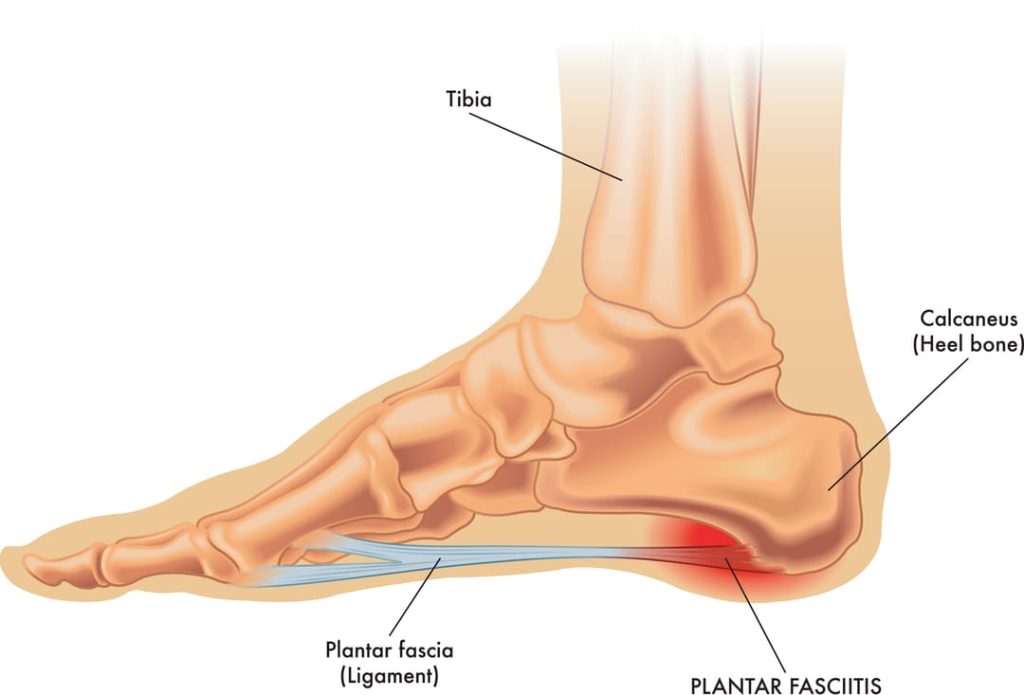
    Plantar Fasciitis Infographic.

    Plantar fasciitis occurs when the plantar fascia (a thick band of tissue running along the bottom of the foot from heel to toes) becomes inflamed or irritated. According to the Mayo Clinic, tension and stress on the fascia can cause small tears. 

    Plantar fasciitis typically causes sharp heel pain, most noticeable with your first steps in the morning or after long periods of rest.

    Plantar Fasciitis in Veterans

    Plantar fasciitis is one of the most common causes of heel pain among service members and veterans, often resulting from: 

    • Repetitive marching or running 
    • Long hours on hard surfaces 
    • Wearing heavy, rigid boots 
    • Foot injuries during training or deployment 

    Pain often flares up after standing, marching, or running and may be accompanied by stiffness, swelling, or tenderness around the heel.

    If left untreated, plantar fasciitis can become chronic, affecting your mobility, job performance, and overall quality of life.

    How the VA Rates Plantar Fasciitis

    Plantar fasciitis VA ratings are 10%, 20%, or 30% under the schedule of ratings for the musculoskeletal system (DC 5269).  

    In addition, the VA assigns a 40% VA rating to eligible veterans who experienced the loss of the use of their foot due to plantar fasciitis. 

    • 40% VA Rating: No relief from both non-surgical and surgical treatment, and the condition is so severe that it results in the loss of use of the foot. 
    • 30% VA Rating: No relief from both non-surgical and surgical treatment, bilateral 
    • 20% VA Rating: No relief from both non-surgical and surgical treatment, unilateral 
    • 10% VA Rating: Otherwise, unilateral or bilateral 

    Your VA disability rating for plantar fasciitis will depend on whether the condition responds to treatment and whether it affects one or both feet. 

    Note: If surgery was suggested but you’re not a surgical candidate, the VA will rate you at either 20% or 30%, depending on your condition. 

    Bilateral Plantar Fasciitis VA Rating

    If plantar fasciitis affects both feet, the VA may give you a bilateral rating that accounts for the impact on both sides.  

    This can increase your overall disability rating since the condition affects your ability to walk and stand more than if only one foot is involved.  

    The maximum schedular rating for bilateral plantar fasciitis is typically 30%, but if you have a loss of use of your foot, the rating can go higher. 

    Establishing Service Connection

    Service connection is the VA’s official recognition that a disability was caused or worsened by military service, making you eligible for disability benefits. 

    You can prove service connection for plantar fasciitis with these three key elements: 

    • A current medical diagnosis of plantar fasciitis 
    • An in-service event, injury, or illness that caused or aggravated your condition    
    • A medical nexus, or link, connecting your military service to your condition (can be a nexus letter) 

    Secondary Conditions to Plantar Fasciitis

    Plantar fasciitis can cause or aggravate other conditions that may also be eligible for VA disability benefits. These are called secondary conditions, and they may increase your overall combined VA rating. 

    Common secondary conditions to plantar fasciitis include: 

    • Heel spurs 
    • Ankle pain 
    • Knee pain 
    • Hip pain 
    • Lower back pain

    Expert Tip: If you are filing a VA claim for secondary service connection OR a claim that was previously denied service connection—a credible Nexus Letter may be the missing link. (related: When Do You Need a Nexus Letter?)

    >> Related Post: VA Secondary Conditions to Plantar Fasciitis

    Filing a VA Disability Claim

    To qualify for a plantar fasciitis VA rating, you must file a VA claim using VA Form 21-526EZ.  

    You can file a VA claim:  

    • By mail  
    • Via fax  

    If you plan to file for disability compensation using paper form, consider submitting an intent to file form first. 

    This allows you to gather evidence while protecting your effective date, which could mean retroactive payments. 

    Did you know? If you’re filing online, you don’t need to submit an intent to file because the effective date is automatically set when you begin completing the form. 

    C&P Exam

    A compensation and pension (C&P) exam for plantar fasciitis may confirm whether you have the condition and determine if it’s connected to your military service or another service-connected disability. 

    It also evaluates the severity of your symptoms, including their frequency, intensity, duration, and impact on your work, daily life, and social activities. 

    See Also: How Much Weight Does a C&P Exam Have? 

    The Value of a Nexus Letter

    A nexus letter is a medical document that links your current diagnosis to a specific event, injury, or exposure during your military service. 

    For plantar fasciitis, a nexus letter can be key to proving service connection, especially if your original claim was denied or if your condition is secondary to another service-connected disability. 

    Although the VA doesn’t require a nexus letter, having one may significantly strengthen your claim by offering clear medical evidence tying your condition to your service. 

    The experienced team at Telemedica can provide a well-crafted nexus letter for plantar fasciitis.

    Conclusion

    Solid medical evidence is the most critical factor in winning VA disability claims. Without it, claims are often denied.  

    Strong documentation, including a current diagnosis, service records, and a nexus letter, can significantly improve your chances of receiving the highest possible rating. 

    Medical Evidence Wins VA Claims

    Did you know that a lack of medical evidence is the #1 reason VA disability claims are denied?  

    Medical evidence is a crucial piece of the puzzle that VA raters consider when reviewing a disability claim. Telemedica provides solutions for veterans looking to bolster their claims through high-quality medical evidence that wins claims!  

    Schedule your 20-minute consultation, get answers for your service-connected disability, and start on your path to well-being.


    (FAQs) Frequently Asked Questions

    Is Plantar Fasciitis a VA Disability?

    Yes. Plantar fasciitis is a VA disability if you can prove it was caused or aggravated due to your service.

    Can I get 100% VA disability for plantar fasciitis?

    Plantar fasciitis alone usually receives a VA disability rating between 0% and 40%, depending on severity. A 100% rating generally requires total loss of use of both feet or other severe conditions. 

    However, if plantar fasciitis is secondary to another service-connected condition, it may increase your overall combined VA rating. 

    What is the plantar fasciitis VA rating?

    The VA rates plantar fasciitis under 38 C.F.R. § 4.71a, Diagnostic Code 5269. Veterans can receive a 10%, 20%, or 30% rating depending on whether the condition affects one or both feet and if it improves with treatment. In severe cases where plantar fasciitis leads to the loss of use of the foot, the VA may assign a 40% rating.

    How do I prove plantar fasciitis for VA disability?

    To prove plantar fasciitis for VA disability, you need medical evidence showing a diagnosis from a qualified healthcare provider. VA claims are stronger when you include documentation of symptoms, treatments, and how the condition affects your daily life or ability to work. If your plantar fasciitis is secondary to another service-connected condition, medical evidence linking the two is also necessary. 

    What is the CFR code for plantar fasciitis?

    Plantar fasciitis is rated under 38 C.F.R. § 4.71a, Diagnostic Code 5269. 

    Is it difficult to get disability for plantar fasciitis?

    Getting VA disability for plantar fasciitis can be challenging without strong medical evidence linking the condition to your service. Claims are easier to approve when you have a current diagnosis, treatment records, and documentation showing how it affects your daily life. 

    What causes plantar fasciitis in the military?

    Plantar fasciitis in the military is often caused by repetitive marching, running, long hours on hard surfaces, or wearing heavy boots. Foot injuries during training or deployment can also trigger or worsen the condition. 

    What is the average VA disability rating for foot pain?

    The average VA disability rating for foot pain, including plantar fasciitis, typically ranges from 10% to 20%. More severe cases, especially bilateral conditions or loss of use, can receive ratings up to 40%.


  • GERD VA Ratings and Service Connection Explained

    GERD VA Ratings and Service Connection Explained

    If you’re a veteran dealing with chronic acid reflux or heartburn tied to your military service, you may qualify for a GERD VA rating.

    Gastroesophageal reflux disease (GERD) is a long-term digestive condition where stomach acid or bile irritates the esophagus, causing symptoms like heartburn, regurgitation, chest pain, and difficulty swallowing. For many veterans, GERD can be linked to service-related factors such as certain medications, PTSD, or service-connected injuries.

    In this guide, we’ll explain how the VA rates GERD, how to prove service connection, and steps you can take to strengthen your claim.

    Table of Contents

    Key Takeaways

    • Common causes of GERD include certain medications, PTSD and stress, diet and lifestyle factors, injuries or surgeries, and sleep disorders like sleep apnea. 
    • The VA rates GERD at 0%, 10%, 30%, 50%, and 80% under diagnostic code 7206. 
    • You can receive a secondary VA rating for GERD if a service-connected condition, like PTSD or chronic pain medications, causes or aggravates it. 
    • A strong nexus letter can significantly increase your chances of obtaining a higher GERD VA rating. 

    What Causes GERD in Veterans?

    GERD VA Rating.

    GERD can significantly impact your quality of life, and for many veterans, it’s a condition that can be traced back to their military service.  

    A 2021 study found that GERD is the most prevalent gastrointestinal condition among veterans, with over 3.4 million diagnosed cases in the Veterans Health Administration (VHA) outpatient setting since 2000.

    Common causes of GERD in veterans include:

    • Medications: Certain medications prescribed for service-connected conditions, such as NSAIDs for pain or antidepressants for PTSD, can irritate the esophagus and increase acid reflux. 
    • Post-Traumatic Stress Disorder (PTSD) and Stress: Chronic stress and PTSD can lead to gastrointestinal issues, including GERD. 
    • Diet and Lifestyle: Military service may contribute to poor diet, smoking, or alcohol use, which are risk factors for GERD. 
    • Injuries or Surgeries: Abdominal or esophageal injuries sustained during service may increase the risk of developing GERD. 
    • Sleep Disorders: Sleep apnea and other sleep disturbances are common among veterans and can exacerbate GERD symptoms. 

    How the VA Rates GERD

    The VA assigns GERD ratings under diagnostic code 7206 at 0%, 10%, 30%, 50%, and 80%. 

    GERD VA ratings are assigned as follows: 

    80% VA Rating

    Documented history of recurrent or refractory esophageal stricture(s) causing dysphagia with at least one of the symptoms present: (1) aspiration, (2) undernutrition, and/or (3) substantial weight loss as defined by § 4.112(a) and treatment with either surgical correction of esophageal stricture(s) or percutaneous esophago-gastrointestinal tube (PEG tube) 

    50% VA Rating

    Documented history of recurrent or refractory esophageal stricture(s) causing dysphagia which requires at least one of the following: (1) dilatation 3 or more times per year, (2) dilatation using steroids at least one time per year, or (3) esophageal stent placement 

    30% VA Rating

    Documented history of recurrent esophageal stricture(s) causing dysphagia which requires dilatation no more than 2 times per year 

    10% VA Rating

    Documented history of esophageal stricture(s) that requires daily medications to control dysphagia otherwise asymptomatic 

    0% VA Rating

    Documented history without daily symptoms or requirement for daily medications 

    Related Post: GERD VA Disability Rating Changes 

    Establishing Service Connection for GERD

    To receive a GERD VA rating, you must show that your military service caused or worsened your condition. 

    This requires establishing a connection between your GERD and your service, whether directly or as a secondary condition linked to another service-connected disability. 

    You can prove service connection for GERD with these three key elements:   

    1. A current medical diagnosis of GERD 
    1. An in-service event, injury, or illness that caused or aggravated your condition   
    1. A medical nexus, or link, connecting your military service to your condition (can be a nexus letter) 

    Filing a VA Claim for GERD

    To qualify for a GERD VA disability rating, you must file a VA claim using VA Form 21-526EZ. 

    You can file a VA claim: 

    • By mail 
    • Via fax 

    If you plan to file for disability compensation using paper form, consider submitting an intent to file form first.  

    This allows you to gather evidence while protecting your effective date, which could mean retroactive payments.  

    Did you know? If you’re filing online, you don’t need to submit an intent to file because the effective date is automatically set when you begin completing the form. 

    TDIU and GERD

    If your GERD symptoms are severe enough to prevent you from maintaining substantially gainful employment, you may qualify for Total Disability Based on Individual Unemployability (TDIU).  

    TDIU provides compensation at the 100% disability rate, even if your GERD rating alone doesn’t reach 100%.  

    To qualify for TDIU, you must have a single service-connected disability rated at 60% or more, or two or more service-connected disabilities with one rated at least 40% and a combined rating of 70% or higher. 

    Calculate Your Combined VA Rating 

    How to Build a Strong VA Claim for GERD

    Although there are no guarantees when filing a VA claim, taking specific steps may boost your chances of approval, including: 

    1. Obtaining a Nexus Letter with high probative value 
    1. Documenting your symptoms thoroughly 
    1. Providing lay statements 
    1. Obtaining a GERD DBQ (Disability Benefits Questionnaire) 
    1. Including a detailed personal statement 

    Nexus Letter for GERD

    A nexus letter is a medical document connecting your current diagnosis to a specific event, injury, or exposure during your military service.  

    For GERD, a nexus letter can be crucial in establishing service connection, especially if your initial claim was denied or your condition is secondary to another service-connected disability. 

    While the VA doesn’t require a nexus letter, it can significantly strengthen your case by providing solid medical evidence and a clear link to your service. 

    The experienced professionals at Telemedica can provide a well-crafted nexus letter for GERD.

    Can GERD be a Secondary Condition?

    Yes, many conditions and medications could be responsible for causing or aggravating GERD.  

    GERD Secondary to Medications

    In some cases, asthma medications such as Elixophyllin, Theo-24, NSAIDs, and Theochron can exacerbate acid reflux.  

    Drugs taken to treat anxiety and depression can also contribute to GERD by causing mucosal damage, reducing lower esophageal sphincter pressure (LESP), or affecting esophagogastric motility.

    NOTE: Don’t stop taking any medications prescribed to you without first talking with your doctor.

    GERD Secondary to Asthma

    According to a study published in The Gastroenterology and Hepatology Journal, acid reflux is connected to asthma. It’s difficult to say why, but acid reflux can make asthma worse and vice versa. 

    GERD Secondary to Anxiety

    GERD can develop when mental health conditions, such as anxiety and panic disorder, lead to an overproduction of stomach acid.  

    GERD Secondary to PTSD

    Like anxiety, GERD can develop when symptoms of Post-traumatic Stress Disorder (PTSD), such as stress and depression, lead to an overproduction of stomach acid.  

    Medications taken to treat PTSD can also lead to GERD as a side effect.  

    GERD Secondary to Migraines

    If migraines are causing your GERD, it’s likely because of the medication you’re taking to treat them.  

    In fact, a study published in The Journal of Headache and Pain recommends that physicians “minimize prescribing NSAIDs or NSAID-containing acute migraine medications in this population” (referring to patients who also have GERD).

    Secondary Conditions to GERD

    It’s also possible to increase your combined VA rating for GERD if you believe your GERD is responsible for a secondary condition.  

    A secondary condition is a medical condition that is caused or made worse by a disability that’s already rated by the VA. For example:  

    >> View our full guide to VA Secondary Conditions to GERD

    Expert Tip: If you are filing a VA claim for secondary service connection OR a claim that was previously denied service connection—a credible Nexus Letter may be the missing link. (see related: When Do You Need a Nexus Letter?)

    Conclusion

    The VA rates GERD from 0% to 80% under diagnostic code 7206, depending on the severity and impact of your symptoms. Whether your GERD began during service or developed secondary to another service-connected condition, the key to winning your claim is solid medical evidence—especially a clear nexus linking your condition to service.

    If your GERD symptoms are affecting your quality of life or ability to work, don’t wait to file your claim. Gather your medical records, consider a detailed nexus letter, and present a strong case for the rating you deserve.

    Medical Evidence Wins VA Claims

    Did you know that a lack of medical evidence is a top reason VA disability claims are denied?  

    Medical evidence is a crucial piece of the puzzle that VA raters consider when reviewing a disability claim. Telemedica provides solutions for veterans looking to bolster their claims through high-quality medical evidence that wins claims!  

    Schedule your 20-minute consultation, get answers for your service-connected disability, and start on your path to well-being.


    FAQs | Frequently Asked Questions

    What is the VA rating for GERD?

    The VA rates GERD under the diagnostic code 7206 for digestive disorders, ranging from 0% to 80% depending on the severity and frequency of symptoms. 

    Is GERD a presumptive condition?

    No, GERD is not considered a presumptive condition. You must provide evidence linking your GERD to your military service or a service-connected disability. 

    Do I need a nexus letter for a VA GERD rating?

    While nexus letters aren’t required, they may significantly strengthen your claim by clearly connecting your GERD to your service or a secondary condition. 

    How do I prove service connection for GERD?

    You can prove service connection by providing medical records, a strong nexus letter, lay statements, and a GERD DBQ outlining how your condition relates to your military service. 

    Can I receive a secondary VA rating for GERD?

    Yes, GERD may qualify as a secondary condition if it’s caused or worsened by a service-connected disability, such as PTSD or certain medications.


    Content Reviewed by: Tara Thompson, PA-C

    Tara Thompson PA-C is a board-certified Physician Assistant. She completed her training through Chatham University, graduating with a Master’s of Physician Assistant Studies Degree in 2007. Her work experience has been diverse and includes first assist in all surgical specialties, Plastic Surgery and ENT clinical work, and Emergency Medicine. She served as a Physician Assistant in the US Army from 2009-2021 and has been an expert in medical evidence for VA disability claims since 2019.

  • Qualifying for a VA Rating for Depression

    Qualifying for a VA Rating for Depression

    If you’re a veteran experiencing depression, you may be eligible for VA disability compensation (even if your symptoms began after service). Depression is a serious medical condition that can significantly impact your daily functioning, relationships, and ability to work. 

    You may qualify for a VA rating for depression from 0% to 100%, depending on symptom severity and the strength of evidence linking it to your service.

    In this guide, we explain how the VA evaluates depression claims, what rating criteria are used, and what medical evidence, such as a nexus letter or DBQ, you’ll need to support a successful claim.

    Table of Contents

    Key Takeaways

    • VA ratings for depression range from 0% to 100%, depending on severity. 
    • Conditions like PTSD, chronic pain, and TBI can cause or worsen depression and thus qualify depression as a secondary service-connected disorder. 
    • The VA requires a clear connection (i.e., nexus) between your current diagnosis and military service. 
    • A nexus letter from a licensed provider serves as proof of a medical nexus and can significantly strengthen your claim. 

    Depression in Veterans

    VA Disability Rating for Depression.

    If you’re struggling with mental health symptoms that began or worsened during your time in the military, you may qualify for VA disability for depression.

    Depression is a serious and often overlooked condition that can significantly affect a veteran’s ability to work, maintain relationships, and manage daily life. 

    Major Depressive Disorder (MDD), commonly referred to as depression, is more than occasional sadness.  

    It can involve symptoms such as persistent fatigue, sleep disturbances, loss of appetite, irritability, difficulty concentrating, and a pervasive sense of hopelessness. These symptoms often interfere with daily functioning and can become disabling. 

    A 2023 study found that among veterans, the prevalence of major depressive symptoms was 31%—two to five times higher than in the general U.S. population.  

    These elevated rates are often linked to the unique stressors and traumatic experiences associated with military service. 

    Common Causes of Depression

    There are several common causes or contributing factors that commonly impact depression, such as chronic pain or illness, substance use, or hormone imbalances.  

    Veterans are often at high risk of depression due to military-related factors that often precipitate or worsen depression in veterans, including: 

    • Separation from loved ones and support network 
    • Extended deployments and time away from family, which often cause feelings of isolation and loneliness (known to increase the risk of depression significantly) 
    • Exposure to combat and other traumatic events 
    • Challenges transitioning to civilian life after military separation (leading to identity loss, purposelessness), which may trigger or worsen depression 
    • Physical injuries (e.g., traumatic brain injury, or other injuries) 
    • Chronic (i.e., long-term) pain, such as from trauma 
    • Substance use disorder (SUD), veterans may use alcohol or drugs to cope with stress, loneliness, lack of social support, and trauma; SUD is a contributing factor in depression.  
    • Other mental health conditions, like post-traumatic stress disorder (PTSD), may cause or contribute to depression. 

    Depression VA Ratings

    VA Rating for Depression.

    The VA disability rating for depression is based on the level of social and occupational impairment caused by its symptoms. Ratings are assigned under Diagnostic Code (DC) 9434 – under § 4.130 Schedule of ratings and range from 0% to 100%. 

    DC 9434, Major depressive disorder VA Rating for Depression 
    Severe impairment, frequent panic attacks, suicidal ideation, inability to maintain relationships. Total occupational and social impairment due to symptoms such as:  Ongoing delusions (a false or paranoid untrue belief) or hallucinations (hearing, smelling, or seeing something that isn’t real) for MDD with psychotic features Persistent danger to self or others Severely inappropriate behavior Intermittent inability to perform daily activities such as bathing, dressing, or cooking.  Disorientation to person, place, or time (not being able to recall one’s name or the name of a close relative, where one lives or works, or a relative notion of the month or year) 100% 
    Severe impairment of occupational and social impairment, with deficiencies in most areas, such as work, school, family relations, judgment, thinking, or mood, due to depression, which impacts the ability to function independently, appropriately, and effectively, and symptoms such as:  Suicidal ideation Neglect of personal appearance and hygiene  Difficulty adapting to stressful circumstances (including work or a work-like setting) Inability to establish and maintain effective relationships 70% 
    Occupational and social impairment with difficulty establishing and maintaining effective work and social relationships, reduced reliability, and work productivity due to symptoms of depression, such as:  Flattened affect (i.e., a significant reduction or absence of emotional expression)  Short or long-term memory impairment (e.g., forgetting to complete tasks, trouble retaining learned material) Impaired judgment; impaired abstract thinking Disturbances of motivation and mood 50% 
    Occupational and social impairment with an occasional decrease in work efficiency and intermittent periods of inability to perform work-related tasks due to symptoms of depression (e.g., chronic sleep problems, depressed mood, etc.) But generally functioning adequately (regarding behavior, self-care, and communication). 30% 
    Occupational and social impairment due to mild or transient symptoms that decrease the ability to work (i.e., perform occupational tasks) efficiently only during periods of significant stress, or symptoms controlled (i.e., reduced to a manageable level) by continuous medication. 10% 
    A mental condition, such as depression, has been formally diagnosed via a current diagnosis (which must be performed by a licensed mental health professional). However, symptoms are not severe enough to interfere with occupational and social functioning or to require continuous medication (such as prescription antidepressants). 0% 

    Note: The VA criteria in the above table reflect a diagnosis of depression. If you have depression and anxiety, or other mental health co-occurring disorders, see the full criteria under the VA’s § 4.130 Schedule of ratings—mental disorders. 

    Upcoming VA Rating for Depression Changes

    To improve accuracy and reflect modern clinical practices, the VA is updating how it evaluates all mental health conditions, including depression. The new system will focus on how your symptoms impact daily life and your ability to work, not just your current diagnosis. 

    View our guide to Upcoming VA Mental Health Rating Changes HERE. 

    How to Prove Service Connection for Depression

    Veterans filing a VA claim for depression must meet a few specific criteria to establish service connection. While it may seem straightforward, this is the step of the claims process in which many veterans are denied benefits simply because they didn’t submit enough of the right kind of evidence. 

    Understanding what the VA looks for and how to present your case is key to getting your VA disability for depression approved. 

    To qualify for a VA rating for depression, you must meet three basic criteria as follows. 

    1. A Current Medical Diagnosis: You must have a documented current diagnosis of depression from a licensed mental health provider. 
    1. Evidence of an In-Service Event, Injury, or Illness: You need to show that something happened during your military service that could have triggered or worsened your condition.  
    1. A Medical Nexus: A medical nexus links your current diagnosis to an in-service incident or event. 

    Did you know? Unlike PTSD and other claims, veterans don’t need to establish a traumatic event (a “stressor”) to qualify for service connection for depression.  

    Primary Service Connection

    Primary service connection means your depression started during your military service or was directly caused by your time in the military.  

    Factors linked to primary service connection might include: 

    • Experiencing trauma during combat 
    • Military sexual trauma (MST) 
    • Physical injury or chronic pain from service 
    • Adjustment difficulties upon returning home 

    The in-service event or incident doesn’t have to be directly related to your military service; instead, it could simply pertain to difficulties you experienced when you served, such as being deployed overseas when a family member becomes ill or other personal problems. 

    You may be eligible for service connection, as long as the factors causing or contributing to your depression occurred during your military service. 

    Secondary Service Connection

    A secondary service connection is when a disability is caused or worsened by another condition that the VA has already recognized as service connected. 

    If you’re already rated for a service-connected condition that contributes to your depression, you can file a VA claim for depression as a secondary condition. 

    Depression as a Secondary Condition

    Depression is commonly caused by or worsened by physical, neurological conditions (e.g., stroke, traumatic brain injury, epilepsy), or other mental health disorders (e.g., anxiety disorder, PTSD, and SUD), many of which affect veterans.  

    Common conditions known to cause or worsen depression include: 

    • PTSD (DC 9411) – Service-related trauma can trigger depression; it is rated at 0–100%. 
    • Chronic Pain (no specific DC code) – Pain disrupts sleep and mood; ratings vary depending on various factors; the VA does not have a specific diagnostic code for chronic pain. Instead, it evaluates the impact of chronic pain on functional capacity and related impairments. 
    • Traumatic Brain Injury (DC 8045) – TBI often adversely impacts mood and brain chemistry, resulting in depression; it is rated at 0–100%. 
    • Parkinson’s Disease (DC 8004) – The neurological impact of Parkinson’s often causes depression; it is rated at 30–100%, depending on complications from the disorder. 
    • Diabetes (DC 7913) – Diabetes is linked to an increased risk of depression; it is rated at 10–100%. 

    Nexus Letter for Depression

    A nexus letter is a professional medical statement linking your depression to your military service or to another condition the VA has already deemed service connected. 

    An effective nexus letter must include: 

    • Your current medical diagnosis 
    • A review of your medical and service records 
    • A professional opinion stating your depression is “at least as likely as not” related to service 

    The licensed, trusted professionals at Telemedica can provide you with a nexus letter, paving the way to the benefits you rightfully deserve.

    VA DBQ for Depression and Anxiety

    A disability benefits questionnaire (DBQ) is a standardized VA form allowing healthcare providers to submit detailed medical evidence for certain disorders.  

    These forms are specific to individual diagnoses, including a mental health DBQ, which is used to evaluate depression, anxiety, and other mental health conditions.  

    DBQs can provide valuable information about the severity and frequency of your depression and anxiety symptoms, how your condition impacts your occupational and social functioning, and other relevant information for demonstrating the connection between your depression/anxiety and your military service.  

    A qualified contracted VA or civilian mental health provider completes the depression/anxiety DBQs, ensuring accurate and relevant information is included in your disability claim.

    Value of a Lay Statement or Buddy Letter for a Depression VA Claim

    A lay statement or buddy letter is a written testimony from someone who knows you, often a family member or fellow service member.  

    This letter describes what your “buddy” has witnessed about your mental health symptoms and how those symptoms have affected your work, social interaction, or daily life. 

    These statements are helpful when medical records are limited or if your depression symptoms started during service but were never formally documented. 

    What a lay statement or buddy letter can do: 

    • Confirm behavioral changes 
    • Describe visible symptoms like isolation, anger, or sadness 
    • Support claims by showing consistent, ongoing impairment 

    What a lay statement or buddy letter cannot do: 

    • Provide a medical diagnosis 
    • Serve as a nexus, formally linking your depression to military service (that’s the purpose of a Nexus Letter) 
    Depression VA Ratings.

    Buddy Letter Example

    “My name is John Smith, and I served with [veteran’s name] in the U.S. Army from 2005 to 2008 at [name of military base]. I remember that after our second deployment, [veteran’s name] became withdrawn and stopped participating in activities he once enjoyed. He had trouble sleeping and seemed increasingly anxious. Over time, [veteran’s name]’s mood worsened. I stayed in touch with him after discharge and noticed the symptoms didn’t get better—they seemed to worsen. It is my observation that [veteran’s name]’s depression started during his military service and has deeply affected his life ever since.” 

    C&P Exam for Depression

    The compensation and pension (C&P) exam is a key part of your depression VA claim. 

    During this exam, a VA provider will: 

    • Review your symptoms 
    • Assess your functional limitations 
    • Ask about your work and social history 
    • Fill out a DBQ or summary for rating purposes

    Conclusion

    Depression is a serious and often misunderstood condition that can deeply impact every part of a veteran’s life.

    Whether your depression began during service or developed later due to PTSD, chronic pain, or another condition, you may qualify for VA disability compensation.

    The key to a successful claim is strong medical evidence, a clear diagnosis, and service connection. With the right documentation and medical evidence, you can build a strong case for the VA rating you deserve.

    Medical Evidence Wins VA Claims

    Did you know that a lack of medical evidence is the #1 reason VA disability claims are denied?  

    Medical evidence is a crucial piece of the puzzle that VA raters consider when reviewing a disability claim. Telemedica provides solutions for veterans looking to bolster their claims through high-quality medical evidence that wins claims!  

    Schedule your 20-minute consultation, get answers for your service-connected disability, and start on your path to well-being.


    FAQs | Frequently Asked Questions

    Can you get VA disability for depression?

    Yes. Veterans can receive a VA disability rating for depression if it is service connected, either as a primary or secondary condition. 

    What is the VA rating for depression and anxiety?

    VA ratings for depression and anxiety range from 0% to 100%, with breaks at 10%, 30%, 50%, and 70%, depending on how much the condition interferes with occupational or social functioning.

    What is the average VA rating for depression?

    The average VA depression rating is 70%.

    Can depression be rated secondary to PTSD?

    Yes, if both are currently diagnosed. However, when it comes to VA ratings for mental health disorders, they are considered together under the general rating table for mental health conditions. In this scenario, the VA will assign a single disability rating that considers the combined impact of each mental health condition. 

    Can I get a higher VA rating if depression worsens my other conditions?

    Yes. Depression that worsens conditions such as chronic pain, insomnia, or other service-connected issues may justify secondary claims and higher VA ratings.


  • Sleep Apnea VA Ratings and Service Connection Explained

    Sleep Apnea VA Ratings and Service Connection Explained

    You may qualify for a sleep apnea VA rating if your condition is connected to your military service—or caused or worsened by another service-connected disability. 

    But getting approved isn’t always easy. Without the proper medical evidence or a strong nexus letter, your claim could be denied. 

    This guide explains how VA rates sleep apnea, the evidence you need, and how Telemedica can help strengthen your claim. 

    Table of Contents

    Key Takeaways

    • Sleep apnea VA ratings are 0%, 30%, 50%, or 100%, under diagnostic code 6847. 
    • A strong nexus letter may significantly improve your chances of receiving a higher sleep apnea disability rating from the VA. 
    • You must have a sleep study confirming your current diagnosis to receive a VA rating for sleep apnea. 
    • Sleep apnea can be rated as a secondary condition if it’s caused or worsened by another service-connected disability. 
    Sleep Apnea VA Rating.

    What is Sleep Apnea?

    Sleep apnea is a sleep disorder that causes your breathing to stop and start repeatedly throughout the night. It can lead to daytime fatigue, and long-term health problems, especially if left untreated.

    Types of Sleep Apnea

    There are three main types of sleep apnea: 

    1. Obstructive sleep apnea (OSA): The most common type, caused by a physical blockage of the airway. This type is often linked to PTSD. 
    1. Central sleep apnea (CSA): Caused by the brain not sending the right signals to the muscles that control breathing. 
    1. Complex sleep apnea: A mix of OSA and CSA, often discovered during treatment for OSA. 

    Sleep Apnea in Veterans

    A 2025 study found that veterans are more than twice as likely to be diagnosed with obstructive sleep apnea (OSA) compared to nonveterans and are typically diagnosed about five years earlier. 

    Deployment and PTSD were linked to even higher odds of developing OSA. 

    Risk factors for sleep apnea include: 

    • Excess weight 
    • Narrowed airways 
    • Hypertension 
    • Smoking 
    • Genetic factors 
    • Chronic nasal obstruction 
    • Neck size 
    • Diabetes 

    Is Sleep Apnea a VA Disability?

    Yes, sleep apnea is a recognized VA disability if it can be connected to your military service. If you can establish service connection, you may be eligible for VA disability for sleep apnea.

    That service connection can be: 

    • Direct (it started during service), 
    • Secondary (caused or worsened by another service-connected condition like PTSD or a traumatic brain injury), or 
    • Aggravated (a pre-existing condition that worsened due to service). 

    How the VA Rates Sleep Apnea

    The VA rates sleep apnea under diagnostic code 6847, which covers all types of sleep apnea (obstructive, central, and mixed).  

    VA ratings for sleep apnea are 0%, 30%, 50%, or 100%, depending on the severity of the condition and whether breathing support, like a CPAP machine, is needed. 

    VA rating criteria for sleep apnea are: 

    • 0%: Asymptomatic but with documented sleep disorder breathing 
    • 50%: Requires use of breathing assistance device such as continuous airway pressure (CPAP) machine 
    • 100%: Chronic respiratory failure with carbon dioxide retention or cor pulmonale, or; requires tracheostomy 

    Note: A sleep study is required for a VA sleep apnea diagnosis.  

    Proving Service Connection

    To receive VA disability benefits for sleep apnea, you must prove the following: 

    1. A current diagnosis of sleep apnea (confirmed by sleep study) 
    1. An in-service event, injury, or illness 
    1. A medical nexus linking your sleep apnea with your service

    The Value of a Nexus Letter for Sleep Apnea

    A nexus letter is one of the most critical pieces of evidence in a VA sleep apnea claim. It provides a medical opinion from a licensed provider that clearly explains how your sleep apnea is connected to your military service or another service-connected condition. 

    While the VA doesn’t require a nexus letter, it’s often the key piece of evidence that tips the scales in your favor—especially in complex claims or secondary conditions. 

    Telemedica specializes in crafting medically sound, VA-focused nexus letters tailored to each veteran’s unique history and conditions. Our nationwide network of licensed providers understand what VA raters look for—and we deliver evidence that’s clear, credible, and accurate. 

    Related: How to Get a Sleep Apnea Nexus Letter

    How a DBQ Can Support Your Claim

    A sleep apnea Disability Benefits Questionnaire (DBQ) may strengthen your VA claim by clearly documenting the severity of your condition using language the VA relies on for evaluation.

    Completed by a licensed medical professional, a DBQ includes your diagnosis, sleep study results, current treatments (like CPAP use), and the impact of your condition on daily life.

    By providing consistent, VA-specific medical evidence, a completed DBQ may help streamline and even expedite the claims process as part of a fully developed claim.

    Related: How a Sleep Apnea DBQ Can Support Your VA Claim 

    Filing a Claim

    To be eligible for a sleep apnea VA rating, you need to file a VA claim with strong medical evidence.  

    You can start by gathering your medical records, including your sleep study results showing a current sleep apnea diagnosis.  

    You’ll also need to provide details about your military service, especially any events, injuries, or conditions, like PTSD, TBI, or exposure to burn pits, that may have contributed to your sleep problems. 

    You can file your claim online through the VA.gov website, by mail, or in person at a VA regional office. 

    Sleep Apnea as a Secondary Condition

    Sleep apnea can also be rated as a secondary service-connected condition, meaning it develops because of another service-connected disability.  

    If you already receive VA benefits for a primary condition, and that condition causes or worsens your sleep apnea, you may be eligible for additional compensation. 

    Conditions that may lead to secondary sleep apnea include: 

    • Anxiety 
    • Asthma 
    • Depression 
    • Deviated septum 
    • GERD 
    • PTSD 
    • Rhinitis 
    • Sinusitis 
    • Weight gain 

    Related: Nexus Letter for Secondary Conditions 

    If You Receive a Denied VA Sleep Apnea Claim

    If the VA denied your sleep apnea claim, don’t give up.  

    Many denials happen due to: 

    • Missing documentation 
    • Unclear service connections 
    • No medical nexus 

    If your VA claim was denied, you can:

    1. File a Supplemental Claim – Submit new and relevant evidence. 
    1. Ask for a Higher-Level Review – Ask for a senior reviewer to re-evaluate your claim (no new evidence allowed). 
    1. Appeal to the Board of Veterans’ Appeals – A Veterans Law Judge will review your case. 

    Proposed Sleep Apnea VA Rating Changes

    See our post on proposed sleep apnea rating changes HERE.

    The VA has proposed changes to sleep apnea ratings, possibly in 2025. These changes would: 

    • Add a 10% rating level and eliminate the 30% sleep apnea VA rating.
    • Focus more on how sleep apnea impacts daily life rather than the treatment used. 
    • Remove the automatic 50% sleep apnea VA rating for CPAP use.

    These changes are not in effect yet. The VA still uses the existing rating system. If you already have a rating, you’ll be grandfathered into that rating regardless of future changes. 

    We recommend filing as soon as possible if you qualify now. 

    Conclusion

    Sleep apnea can seriously impact your daily life—but with the right medical evidence and guidance, it’s possible to get the VA compensation you deserve. 

    Whether you’re just starting your claim or appealing a denial, strong documentation and expert medical evidence can make all the difference. 

    Medical Evidence Wins VA Claims

    Did you know that a lack of medical evidence is the #1 reason VA disability claims are denied?  

    Medical evidence is a crucial piece of the puzzle that VA raters consider when reviewing a disability claim. Telemedica provides solutions for veterans looking to bolster their claims through high-quality medical evidence that wins claims!  

    Schedule your 20-minute consultation and learn how to get the supporting medical evidence you need to strengthen your claim. 


    FAQs | Frequently Asked Questions

    How does the VA rate sleep apnea?

    The VA rates sleep apnea at 0%, 30%, 50%, or 100% under diagnostic code 6847. Your VA sleep apnea rating will depend on the severity of your symptoms and the requirement for breathing assistance. 

    Will the proposed sleep apnea rating changes affect my current sleep apnea rating?

    No. If you already have a VA sleep apnea rating, you’ll be grandfathered into the current criteria. Future updates will only apply to new claims filed after the changes take effect. 

    Can the VA take away my sleep apnea rating?

    Yes, the VA can lower or remove your rating during a review or re-examination if your condition improves significantly or if the original rating was based on incomplete or incorrect information.  

    However, if you’ve had the same rating for over five years and your condition hasn’t improved, the VA will have a harder time reducing it. 

    Is it difficult to get VA disability for sleep apnea?

    It can be challenging, especially if you don’t have strong medical evidence. You’ll need a current diagnosis from a sleep study, proof of an in-service event or secondary condition, and, preferably, a nexus letter linking your sleep apnea to military service. 

    Is sleep apnea a presumptive condition?

    No, sleep apnea isn’t a presumptive condition, meaning you must establish a service connection to be eligible for VA disability benefits. 

    Do I need a CPAP to get a sleep apnea VA rating?

    Not always. A CPAP machine is required for a 50% rating, but veterans may still receive a 30% rating based on symptoms and a current diagnosis.