Category: Mental Health

  • How to Recognize Depression in Yourself

    How to Recognize Depression in Yourself

    Table of Contents

    More than a Downer Mood: How to Recognize Depression in Yourself

    Some people may casually say they’re feeling depressed when they have a rough day or feel down, but clinical depression goes deeper than that. Depression can slowly dampen many aspects of your life, and you might not even notice it yourself. 

    Depression isn’t just a mood; it’s a persistent illness—one that can sneak up on you and overwhelm you before you even realize something is amiss. In fact, it’s common for patients living with depression to minimize or disregard their symptoms, assuming it’s something they can just push through. The truth is that depression can worsen over time if left untreated, and can make everyday tasks and routines more challenging. 

    How to Recognize Depression in Yourself

    Due to the fact that depression is often overlooked by those living with this mental illness, you might be wondering, “Do I have depression?” or even “How do I know if I have depression?”

    Here we cover the five major symptoms of depression so you can know how to recognize depression in yourself, and seek out professional help for this serious condition.

    1. Loss of Interest in Activities

    Mental Health

    Some days, you’re just not in the mood to go out, have guests, or do something strenuous. That’s normal. But if you’ve noticed a significant and sustained decrease in your interest in activities you used to enjoy, that’s often a sign that there’s more going on.

    Should you suddenly find yourself actively avoiding things that used to bring you excitement and satisfaction—be that hobbies, social activities, entertainment, sex, or otherwise—you may be experiencing anhedonia, a sign that your neurochemistry has changed and the pleasure centers of your brain are being hijacked by depression. 

    How to Recognize Depression in Yourself

    2. Changes In Sleep

    slumber

    Everyone enjoys a lazy Sunday afternoon nap now and then, and everyone has to burn the midnight oil from time to time.

    A single incident of unusual sleep patterns is not necessarily a cause for concern. But, just like loss of interest in activities, when uncharacteristic sleep habits persist, it’s not something to be overlooked. 

    Depression can significantly alter your sleep schedule in either direction. You may notice you’re having difficulty sleeping, or that you sleep much longer than before. Or worse, you deal with both: struggling against insomnia during normal rest hours, and struggling to stay awake during your normal active periods.  

    Inconsistent sleep patterns  can be hard to measure over long periods of time, and it’s easy to forget how well you slept over the past several weeks if you don’t write it down. So, if you’re worried you may be dealing with ongoing sleep issues, try tracking it with a sleep log, and be as accurate as possible. 

    How to Recognize Depression in Yourself

    3. Loss of Energy

    medical icon

    Wanting to cuddle up on the couch after a long day of work is not out of the norm, but it’s a different story if you find it increasingly difficult to handle everyday tasks (especially if those tasks are self-care and hygiene related). 

    Even with a perfect sleep schedule and diet, depression can drain your energy levels. Trying to do simple tasks, like bathing, folding laundry, or doing the dishes, will feel like climbing Mt. Everest. A complete lack of energy is a strong sign you could be experiencing a major depressive episode. 

    How to Recognize Depression in Yourself

    4. Sustained Self-loathing

    medical icon

    Some people believe they’re depressed because they feel contrite about a mistake they made. They missed a major deadline at work, forgot an anniversary, or dropped their phone in the toilet. 

    It’s normal to feel like kicking yourself for mistakes like this. Most of the time, however, these feelings fade in short order, and life returns to normal.

    It only becomes a problem when you can’t make these feelings “leave you alone.”

    How to Recognize Depression in Yourself

    Self-loathing is the irrational and sustained harsh criticism of oneself. Even if your entire week went exactly as planned, the story you’re telling yourself is one of low self-esteem and self-worth. When this happens, your internal monologue becomes increasingly negative because of your perceived imperfection. 

    Those feelings aren’t a reflection of your actual worth, but they can feel very real, and they could be a sign of a developing or worsening  depression.

    5. Appetite or Weight Changes

    Weight Change, recognize Depression

    Depression can also change your relationship with food. Some people will turn to food as a way to cope with their depression, eating more than usual, or indulging in comfort foods more than usual. If you’re eating even though you’re not hungry, it could be a sign of depression.

    Depression can also trigger a loss of appetite. In the same way you might lose interest in hobbies and pastimes, you may find that eating just doesn’t appeal to you (and you may even find yourself missing meals by accident). In some cases, you’ll skip meals because the idea of eating is nauseating. 

    recognize Depression

    If it becomes a chore to eat, it might be a sign you’re dealing with depression. More specifically, gaining or losing more than 5% of your body weight in a month unintentionally can be a sign of depression.

    Get Help Today

    Now that you have a better understanding of  how to recognize depression in yourself, it’s important to seek professional help. Awareness is the first step and you don’t have to fight depression alone. 

    Depression will try to convince you that you’re alone in your mental health struggles, but don’t let your mind deceive you.

    Your life matters and there are people waiting to help. Talk to compassionate and trustworthy friends and family members, and seek professional help if these signs and symptoms of depression have been lasting longer than a month. The outlook may look bleak now, but this is a fight you can win, and you don’t have to do it alone. 

    For more information and resources on how to recognize depression in yourself, how to cope with depression, or to seek mental health help from a licensed professional, visit the online resource Mental Health First Aid (from The National Council for Mental Wellbeing). 

    For additional help, veterans can contact Telemedica for a Mental Health Evaluation by clicking here.

    How to Recognize Depression in Yourself

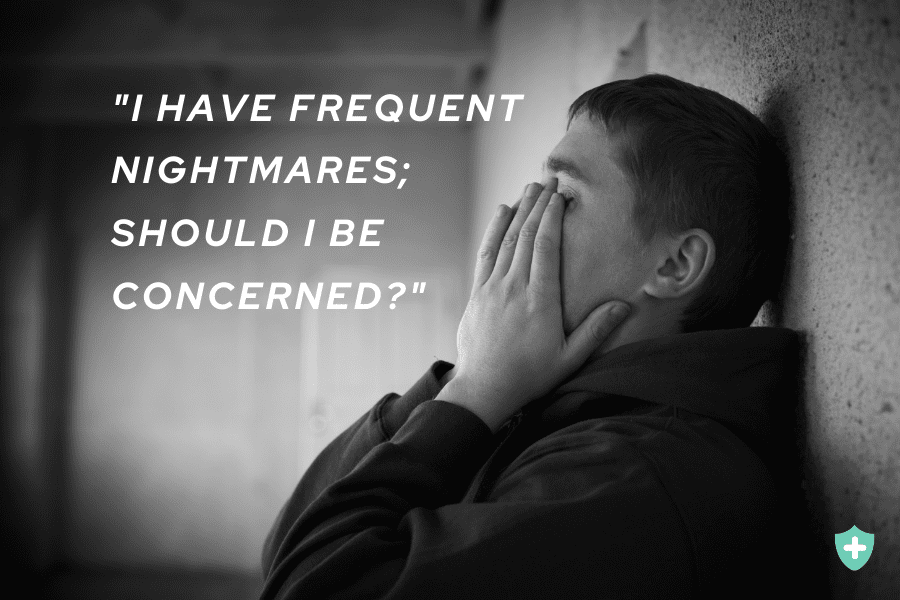
  • “I Have Frequent Nightmares; Should I Be Concerned?”

    “I Have Frequent Nightmares; Should I Be Concerned?”

    Table of Contents

    Dreams and nightmares are a mysterious part of our sleep patterns and the subconscious mind. Scientists are still trying to reach a consensus on why we dream at all. However, some believe that dreams may help us process our emotions that we experience during the day.

    Frequent Nightmares, sleep

    Unfortunately, many veterans who return home with a disability or service related trauma, (especially those who suffer from post-traumatic stress disorder) experience frequent nightmares which can negatively affect their sleep cycles. Poor sleep can even contribute to changes in a veteran’s behavior in the workplace and their relationships with friends, family, and loved ones.

    In this article, we’ll go over the common causes of frequent nightmares, how they can affect your health, and what you can do about them.

    What Causes Frequent Nightmares?

    Mental Health

    Some people wonder what their recurring nightmares mean and many believe that their nightmares are symbolic of something happening in their lives.

    While this may seem to be the case at times, more often than not your dreams are just your brain processing your experiences and emotions from earlier in the day. 

    Alarm Clock, Frequent Nightmares

    Although we may not know the exact cause of dreams and nightmares, some findings suggest the following factors are common causes of frequent nightmares:

    Anxiety and stress: Research suggests nightmares are simply one of your brain’s coping mechanisms for dealing with its daily stressors, and the more severe, pervasive, or persistent the stress or trauma, the more likely the nightmares are to occur. As a result, those who suffer from chronic stress or anxiety disorders may experience frequent or recurring nightmares as one of their symptoms.

    Mental health conditions and disorders: Due in large part to the reason above, patients with conditions like PTSD, bipolar disorder, schizophrenia, and depression can suffer from nightmares. PTSD in particular can significantly increase one’s risk of recurring nightmares—one study found that 71-96% of those who suffer from the disorder have frequent nightmares.

    Insomnia, nightmares

    Sleep deprivation: Insomnia, sleep apnea, narcolepsy, sleep-related movement disorders (like restless leg syndrome), and other conditions that disrupt sleep can make it difficult to get adequate rest. When these problems persist or go untreated, the subsequent sleep deprivation may result in frightening or stressful dreams, exacerbating sleep deprivation.

    Medications and substance use: Some medications like antidepressants and blood thinners come with nightmares as a potential side effect, even when taken as prescribed. Additionally, abusing substances such as narcotics, amphetamines, or alcohol can also lead to nightmares. Worse still, withdrawal symptoms from these drugs and medications can cause them, too.

    Eating too close to bedtime: While there isn’t much empirical evidence behind this idea, there is a fair amount of anecdotal evidence, including one study that surveyed students to analyze the perceived effects of eating right before bed. Surveyed students did notice a relationship between their nighttime diet and an increase in nightmares, most often blaming dairy products, junk food, and sugary foods as the culprit.

    Can Frequent Nightmares Affect My Health?

    brain

    What do recurring nightmares mean for your health? If your frequent nightmares persist for a long time, you may develop a nightmare disorder. If it gets to that point, these disorders can have adverse effects on your health. Some symptoms of a nightmare disorder include:

    • Daytime and bedtime anxiety
    • Daytime fatigue
    • Memory and concentration problems

    At the simplest level, though, nightmares typically result in sleeping less, and reduce the quality of restful sleep overall. The effects of sleep deprivation are well documented, and they include increased risks for obesity, dementia, heart disease, and diabetes. 

    What Can I Do to Manage My Frequent Nightmares?

    medical icon

    The solution to your nightmares may not always be cut-and-dry—veterans who return home from active duty with PTSD, for example, may need a professional’s help to assist in reducing their nightmares. However, some home remedies that may help you manage your recurring nightmares are as follows:

    Reduce your stressors: If you have reason to believe your nightmares are bred from your daily stress levels, do what you can to eliminate stressors, and practice healthy coping techniques to properly handle the ones you can’t. These techniques include relaxation methods such as deep breathing or meditation. 

    Create a sleep schedule and stick to it. The best way to ensure an adequate amount of sleep each night is to go to bed and wake up at the same time every day—even on the weekends. Choose times that work for you and stick to them.

    Watch what you eat and drink: Using stimulants like cigarettes, coffee, and caffeinated drinks too late in the evening can make it difficult to get restful sleep. Additionally, drinking alcohol too close to bedtime can negatively affect sleep cycles and lead to restless sleep.

    Sleep, Blue Light, Frequent Nightmares

    Stay off of your phone before bed: While the effect of “blue light” on sleep rhythms are mostly inconclusive , using a phone, tablet, or laptop does keep the brain active, and the constant stimulation can keep a person engaged and awake well into the night. 

    Talk to someone about your worrisome thoughts: As studies suggest that dreams and nightmares are a way to process information and emotions, it may help to talk about your worrisome thoughts with a licensed therapist, or someone you trust, and try to process those complicated feelings more actively during waking hours.

    When Should I See a Doctor?

    You should see a doctor about your frequent nightmares if they impact your ability to get restful sleep. You should also see a doctor if your nightmares start to affect your personal or professional life, especially if it makes you feel less productive at work, more anxious or depressed, or more distant from friends and loved ones.

    If you suffer from PTSD, chronic depression, or another mental health disorder that may contribute to your frequent nightmares, seek help from a professional. A mental health professional will help you talk through your anxieties and thoughts and get you the treatment you need to better control your disorder.

    How Can Telemedica Help?

    For veterans suffering recurring nightmares due to service-connected mental illness, Telemedica can provide a one-time mental health evaluation which can identify how your mental illness may be affecting your daily life. This medical evidence can help you obtain the VA benefits you deserve and the support and resources you need. 

  • How to Help a Family Member with Mental Illness

    How to Help a Family Member with Mental Illness

    Table of Contents

    In the past, if someone was living with a mental illness, they probably didn’t talk about it, and might have had trouble seeking out proper mental health care. More than likely, they kept it buried deep inside, didn’t confide in anyone, and did their best to suffer through it without help. Thankfully, that’s not the world we live in today. 

    Now, discussions about mental health are more open, honest, and liberating than they’ve ever been before. The world is coming to realize that many people deal with anxiety, depression, and other similar conditions, and we’re learning how to talk about mental health, how to help one another through our struggles, and how to live with mental illness.

    How to Help a Family Member with Mental Illness

    But, that’s the key factor: we’re learning. When it comes to the mental health conversation, there’s still a lot of room for improvement, but the first step in figuring out how to talk about new things is to just start talking. 

    So, if you’re wondering how to help a family member with mental illness, you’re in the right place. This post will help prepare you for candid discussions about mental illness, and how to support those who struggle with mental health (even if that person is you).  

    How to Talk about Mental Health

    How to Help a Family Member with Mental Illness

    Mental Health

    Mental health care is essential to living a balanced life, so finding the time to talk about it is important.

    If you need to talk about your mental health struggles with someone, make sure to carve out some time to do so. These conversations need to be heartfelt, genuine, and unrushed. Set aside an appropriate amount of time. We recommend at least 30 to 60 minutes. 

    How to Help a Family Member with Mental Illness

    Be as open and honest as you can be. Whether you’re the one listening, the one sharing, or a combination of both, one of the best ways to discuss topics you’re unfamiliar with is simply to be transparent about the things you don’t currently understand. Then, if you’re the one listening to a loved one’s struggles, be clear about how you want to understand it as best you can.

    Keep the conversation open. Talking about mental health doesn’t have to end when your time’s up—you can always continue the conversation at another time. These discussions should be an open-ended opportunity to continue to learn about these difficult (and often painful) mental health challenges. 

    How to Help a Family Member with Mental Illness

    brain

    Mental illness is real. Don’t try to ignore it or easily accept someone’s claims that they’re “just fine.” If you know they’ve been diagnosed with a mental health condition, or if you think that their mental health is at risk, there are specific things you can do to help and ways to develop better support habits. Those support habits include the following:

    Encourage Them to Seek Help: If it seems that your loved one is dealing with something related to mental health, try to have a conversation about it that encourages them to seek help and find out if something is going on. 

    Accept the Emotions You and They Are Feeling: Being diagnosed with a mental illness can be a trying time for those who are coping with the diagnosis and the loved ones of the diagnosed individual—accept that you’re both likely feeling a lot of different emotions and will need time and patience to sort through them. 

    Discuss Finding Peer Support Groups: You can’t take on caring for your family member all by yourself, and it’s likely you don’t know exactly how to empathize with their experiences. Suggest support groups with peers who’ve experienced the same thing they’re going through.

    Be a Balanced Support: Support them in any way you can. This can be anything from giving them sincere compliments, to taking them out to lunch, to helping them tidy up their home. This will get easier as time goes on and as you both learn about which areas they’re struggling in most. 

    How to Help a Family Member with Mental Illness

    Avoid trying to be the hero or savior to a family member with mental illness. It’s important not to try to fix them, ask them to pretend to be ok, or downplay how serious their problems are. It’s also important to not give false “encouragement” by telling them it will be over soon, or that a given remedy will solve their problem.

    It can be difficult to show support without using toxic positivity or downplaying the severity of their condition. When in doubt, though, you can always validate their feelings, and remind them how much you care about them. 

    How to Tell Someone About Your Mental Health

    medical icon

    There’s no hard or fast rule about who you can talk to about your mental health, but you do want to be careful who you choose to be open with. Not everyone is prepared to treat your condition as a real illness, and many will suggest overly reductive “solutions” (and often aggressively advocate for them). 

    Start by choosing people who genuinely care for you—such as people who have supported you through other hardships. If they’ve been understanding of other difficulties you’ve suffered through (especially if they were emotional difficulties, such as grief), that’s a good sign that they’ll be willing to learn about your struggles.

    Next, consider how open-minded and willing they are when it comes to understanding another’s perspective. Typically, people who have /dealt with painful emotions or mental struggles of their own tend to be more empathetic to the emotional needs of others. Be direct about your need to confide in them. Ask them for a dedicated time where you can explain what you’re feeling and, if necessary, ask them to reserve judgment and just listen to your story. 

    How to Help a Family Member with Mental Illness

    It may take time to find those people who will show you the support you need, and some may take a little coaching to recognize what’s helpful and what’s not, but as we all open up in healthy ways and begin the discussion, it will become easier and easier to talk about mental illness, and easier for those friends to help us. 

    Below are some suggestions to help you figure out how to tell someone about your mental health:

    Write it Down: Write down a list of what you want to tell the person. 

    Find Sources: Research articles and informative websites that can help explain what you’re going to talk about. 

    Plan It: Try to set up a scheduled time where you can sit down and discuss it without distractions.

    There are many ways to talk about mental health, whether you’re trying to figure out how to talk about mental health in general, learning how to tell someone about your mental health, or searching for ways to help a family member with mental illness. Each of these topics is interrelated, and the more you practice one, the better you’ll become at all of them. Engaging through active listening, empathy, and understanding can help when learning how to help a family member with mental illness.

    *If you or a loved one is struggling with mental health contact the Substance Abuse and Mental Health Services Association (800-662-4357) or the National Suicide Prevention Lifeline (800-273-8255) today.

  • The Importance of Veteran Mental Health

    The Importance of Veteran Mental Health

    Table of Contents

    It’s hard to ignore physical injuries like a compound fracture, bullet wound, or a torn muscle. If you were physically injured, you’d go to the hospital, have surgery, and go through recovery and physical therapy. Unfortunately, for many veterans, mental health isn’t treated with the same level of care. 

    Your mental health is just as important as your physical health, but sadly, most veterans don’t get the mental health help they deserve. 

    Veteran Mental Health

    In the same way that physical illnesses, such as a dislocated shoulder or a hernia, will not heal without medical attention, most chronic mental health conditions aren’t likely to get better on their own; they only begin to heal after first acknowledging the condition, then seeking out the help of a therapist or psychologist.

    Choosing not to get treatment, or avoiding treatment for your mental health altogether, can create lasting damage. 

    So, why are veterans at higher risk for mental illness, and what can they do to cope with their mental health condition?

    This post covers some of the most common mental health conditions vets are faced with and resources available to veterans and their families for their mental health concerns.  

    Why Is Veteran Mental Health at a Higher Risk?

    medical insurance

    The cause of mental health conditions for our nation’s heroes.

    When it comes to veterans’ mental health statistics, one out of every four active-duty members show signs of a mental health condition. That’s more than the national average, which is only one out of every five civilians.

    But what causes this higher risk for veterans?

    While veterans can come from a wide range of duties and roles within the armed forces, one thing is constant – stress and pressure. The decisions you make while serving and the orders you follow are often, quite literally, life-and-death choices.

    Veteran Mental Health

    Related to this life-and-death pressure felt by those who serve is the sense of structure and camaraderie from fellow soldiers. The people you fight and serve alongside become a second family who you trust with your life. While it’s powerful to have a community and support group you trust and understand, it can be traumatic to lose those family members. 

    Between the grave choices, the life-threatening situations, and the loss of dear friends along the way, veterans are at a higher risk of experiencing emotional trauma—and that’s just during their service. Afterward, the transition back to civilian life carries its own difficulties and struggles, ones that frequently trigger or exacerbate mental health concerns. 

    The two most significant issues in veteran’s mental health are:

    1) that veterans have a high rate of exposure to trauma and traumatic events, and

    2) that they’re often the least likely to receive treatment.

    As a result, many of our former servicemen and women are “walking wounded,”  and the pain that these veterans experience is often only visible to those closest to them. 

    What Are Some of the Most Common Mental Health Conditions for Veterans?

    1. Post Traumatic Stress Disorder (PTSD)

    brain

    Post-traumatic stress disorder (PTSD) is one of the most common mental health conditions veterans have to face.

    Two common misconceptions about PTSD are that:

    1. to have PTSD, you have to have been in the traumatic event yourself, and
    2. it requires a single, earth-shattering event.

    The truth is that veterans can develop PTSD through:

    • Direct exposure to a single traumatic event
    • Long-term exposure to high-stress situations
    • Witnessing the traumatic experience of another
    • Learning that a relative or close friend was exposed to trauma 
    Soldier with gun

    Finally, PTSD can even be the result of indirect exposure to the aversive details of the trauma. This means that although you weren’t there for the trauma, you saw direct, visceral effects of the trauma. This usually affects first responders, medics, and front-line servicemen and women.

    2. Anxiety Disorders

    clipboard resized

    Anxiety disorders are part of a larger category that encompasses a few smaller areas of diagnosis.

    Having an anxiety disorder can include having:

    • Generalized anxiety disorder 
    • Panic disorder
    • Phobias
    • Agoraphobia (a specific phobia tied to fears of being trapped in stressful or dangerous situations)
    • Obsessive-compulsive disorder
    • Social anxiety disorder (anxiety about being embarrassed, humiliated, rejected, or looked down on in social interactions)
    • Separation anxiety disorder (fear and anxiety around being separated from those you are attached to)
    Woman patient having consultation with telemedica telehealth telemedicine doctor psychiatrist examining and writing nexus letters for veterans health in medical gynecological clinic or hospital mental health service center

    3. Depression

    Depression causes persistent feelings of sadness, hopelessness, and loss of interest. It is more than just feeling a little sad; it is an emotional weight that makes it hard to move, think, function, and fight against. 

    Dr. Mike Salvatore, one of Telemedica’s network providers and Quality Assurance team members, describes depression in the following way:

    Dr. Mike Salvatore

    “Depression is usually experienced as a flattening of your thoughts, feelings, and body. With severe depression, one may not get out of bed and stop caring about basic things like changing their clothes, showering, and brushing their teeth. This causes many people to isolate themselves from others, lose interest in activities and hobbies they used to love, and become frustrated easily.”

    – Dr. Mike Salvatore

    Where Can Veterans Go for Veteran Mental Health Resources?

    First and foremost, don’t let suicidal ideation go unaddressed. If you have suicidal thoughts, contact the National Suicide Prevention Lifeline (800-273-8255) or the Veterans Crisis Line (800-273-8255 and then press 1) today. You are not alone—people are ready and waiting to help you. The world would be all the poorer for your absence.

    If you are a veteran who needs help with your mental health, or you are worried about a loved one, seek professional help. Everyone needs someone to “watch their six,” and few battles are as important as this one. 

    Think of your mental health just like your physical health. You would never willingly walk around with a broken hip or an infected wound, so don’t subject yourself to an untreated mental health condition. 

    Talking to a friend, pastor, family member, or fellow service member can be a good start. Think of it as first aid and triage for your mental health. Your support network is critical to your recovery, but it shouldn’t be the only steps you take to heal.

    Instead, seek the help of competent medical and mental health professionals who can work with you to help you manage your condition. Often, receiving a mental health evaluation is the first step. Don’t give up hope. This isn’t an unwinnable battle, and you don’t have to fight it alone.

    Blonde woman female veteran relaxes for her mental health after appointment with Telemedica telemedicine services