
In this post, we’ll explore the Nexus Letter for GERD, including its significance and role in helping you get the VA rating for GERD that you deserve. We’ll also take a look at IBS Nexus Letters and how they can increase your chances of service connection.
Gastroesophageal reflux disease (GERD) and Irritable Bowel Syndrome (IBS) is a condition that affects millions of individuals, including veterans.
For veterans seeking VA benefits related to GERD or IBS, understanding the value of a quality Nexus Letter is crucial.
Table of Contents
- Nexus Letter for GERD
- GERD Nexus Letter: The Missing Link?
- How Do I Get a GERD VA Rating?
- GERD Secondary to PTSD VA Disability Ratings
- Can PTSD Cause GERD?
- IBS Nexus Letters
- Conclusion
- Medical Evidence Wins VA Claims

Nexus Letter for GERD
A Nexus Letter for GERD serves as a vital piece of evidence when applying for VA benefits related to GERD.
A Nexus Letter establishes a connection between a veteran’s service-connected disability, such as PTSD, and the development or worsening of GERD.
It outlines the medical reasoning and professional opinion of a healthcare provider, clearly stating that the veteran’s GERD is a result of their PTSD, making them eligible for benefits.
GERD Nexus Letter: The Missing Link?
Having a comprehensive Nexus Letter can be valuable for veterans looking to service connect their GERD and get the VA rating and benefits for their condition. It serves as a persuasive tool, substantiating the link between PTSD and GERD, ensuring that veterans receive the recognition and assistance they need and deserve.
Consulting a qualified medical professional who understands the nuances of these conditions is essential in drafting a compelling Nexus Letter.
How Do I Get a GERD VA Rating?
Obtaining a GERD (Gastroesophageal Reflux Disease) VA rating involves a systematic process within the VA.
To secure a VA rating for GERD, you must provide comprehensive medical evidence supporting the link between your service-connected disability and the development or worsening of GERD symptoms.
Here is the process of establishing service connection involves three essential elements:
- A Current Diagnosis: A documented medical condition diagnosed by a qualified healthcare professional.
- Evidence of an In-Service Event: Proof of an incident, injury, illness, or aggravation that occurred during military service, substantiated by relevant records or testimonies.
- A Nexus or Link: The presence of a connection, supported by credible medical evidence, between the current diagnosis and the documented in-service event, establishing the cause-and-effect relationship between the two.

A crucial step is obtaining a Nexus Letter for GERD from a qualified medical professional.
A GERD Nexus Letter establishes a connection between the veteran’s military service (or an already service-connected disability) and their GERD condition, outlining how it has led to the gastrointestinal issues.
Additionally, thorough medical records, diagnostic reports, and evidence of ongoing treatments significantly strengthen the case.
It’s essential for you to work closely with healthcare providers experienced in VA claims to ensure that your application is well-documented and compelling, increasing your chances of receiving the appropriate GERD VA rating.
GERD Secondary to PTSD VA Disability Ratings
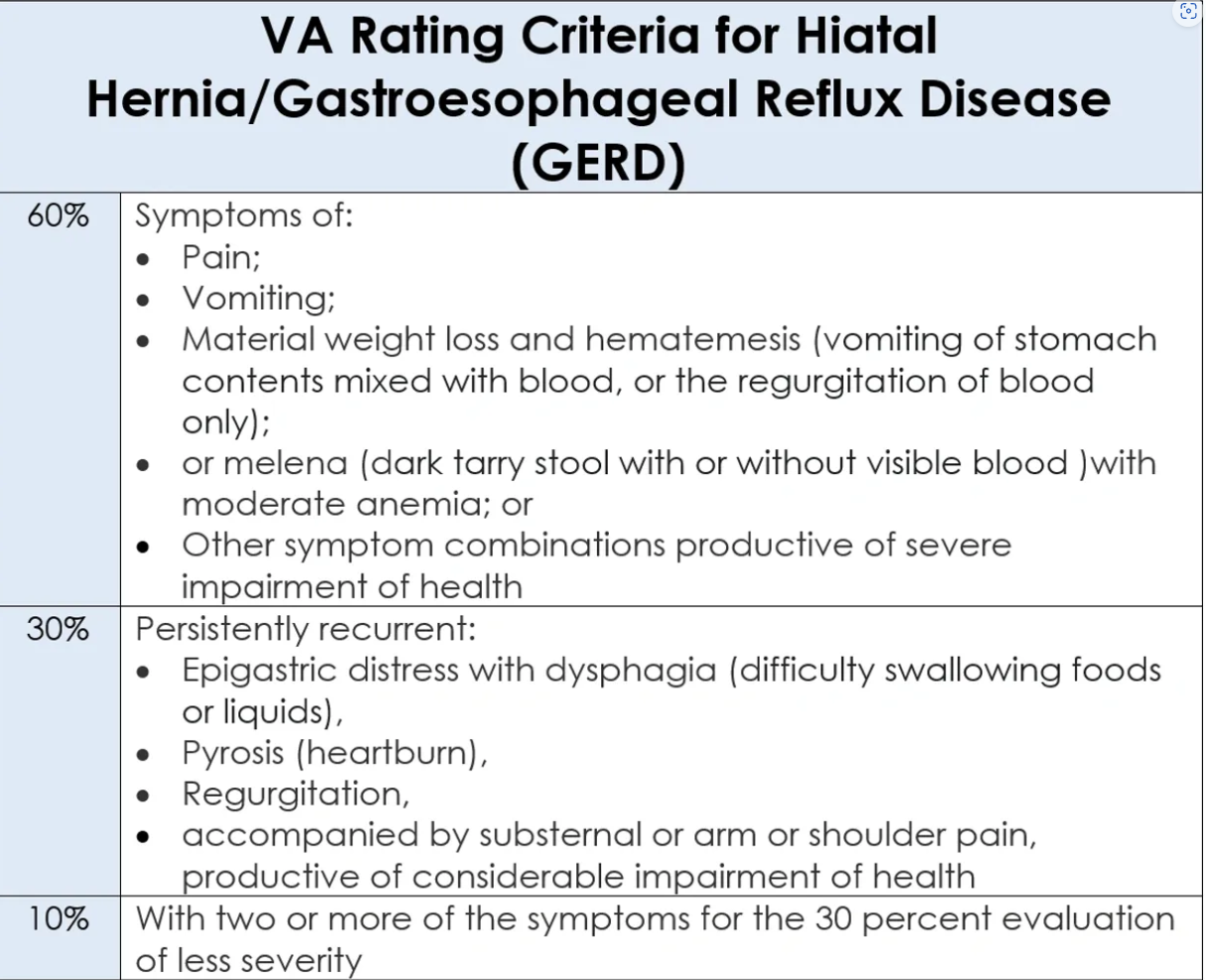
The VA rates GERD secondary to PTSD at 10%, 30%, or 60% depending on severity of symptoms. The highest VA rating for GERD secondary to PTSD is 60%.
In cases where GERD is secondary to PTSD, veterans often wonder about the possibility of obtaining a VA Rating.
The answer is yes—it is indeed possible.
GERD Secondary to PTSD Nexus Letter
By obtaining a Nexus Letter that explicitly states the link between PTSD and GERD, veterans significantly enhance their chances of receiving the benefits they rightfully deserve.
The letter should provide detailed information about the PTSD symptoms and how they have led to the development or aggravation of GERD.
Can PTSD Cause GERD?
Yes, research has indicated a strong correlation between psychological stressors, such as PTSD, and gastrointestinal issues, including GERD. Stress can affect the functioning of the esophagus and stomach, leading to symptoms like acid reflux, heartburn, and regurgitation.
Understanding this connection is pivotal when seeking VA benefits for GERD secondary to PTSD.
VA Rating Criteria for Hiatal Hernia and GERD (Gastroesophageal Reflux Disease) at 60%, 30%, or 10%
IBS Nexus Letters
Irritable Bowel Syndrome (IBS) is a debilitating condition that affects numerous veterans, often as a result of their military service.
For veterans seeking benefits related to IBS, obtaining an IBS Nexus Letter can help service connection.
This document acts as a crucial link between a veteran’s service-connected disability and their IBS, providing essential medical evidence required for VA benefit claims.
To secure an IBS Nexus Letter, veterans should consult a knowledgeable healthcare provider, preferably a specialist well-versed in gastrointestinal disorders.
The significance of this letter cannot be overstated, it provides a professional medical opinion, detailing the connection between the veteran’s military service and the development or worsening of IBS symptoms.
With a compelling IBS Nexus Letter in hand, veterans significantly enhance their chances of receiving the benefits they rightfully deserve, ensuring they receive the necessary support and recognition for their service-related health challenges.
Conclusion
Obtaining a GERD VA rating is a meticulous process that requires thorough documentation and expert medical support.
Veterans should focus on acquiring a compelling Nexus Letter, backed by detailed medical records and diagnostic reports, to establish the connection between their service-connected disability and GERD.
Collaborating with experienced healthcare professionals and understanding the nuances of VA claims will go a long way to helping you get the VA rating, benefits, and monthly compensation you deserve for your service-connected conditions.

Medical Evidence Wins VA Claims
Whether you’re needing a Nexus Letter for GERD secondary to PTSD, a Nexus Letter for IBS, or something else, we make it EASY for veterans to connect with a licensed provider through our HIPAA compliant telemedicine platform—anytime, anywhere!
From DBQs and Nexus Letters to Psych Evals and Telemedicine Evaluations, the team at Telemedica is standing by to serve you. Get the evidence you need to WIN your VA claim today.