If you are a veteran seeking health benefits, obtaining a diagnosis through telehealth services can be the first step on your path to living a happier and healthier life.
At Telemedica, we understand the challenges involved in getting the care and treatment you need, and the VA benefits and compensation you deserve.
The first item on our agenda? Educating you on the advantages that veterans telehealth services can offer. Let’s dive into how a telehealth visit can help you receive medical evidence needed to file for your VA benefits.
Working with the VA: A Long & Complicated Process
How to Help a Family Member with Mental Illness
To obtain VA benefits for a mental or physical health condition, you must have medical evidence. While going directly to a VA facility might seem like the reasonable thing to do, working with the VA may turn into a long and challenging process.
Because the VA is a government entity, it adheres to stringent regulations—regulations that do not necessarily make the process of seeing a provider quick and easy. There are several hoops Veterans typically have to jump through to accomplish things like obtaining a diagnosis, obtaining medical evidence, or obtaining their benefits.
The most common roadblock? Long wait times. Receiving a diagnosis usually requires going to a VA clinic or hospital where the wait times tend to be much longer than civilian providers. According to one source, “the average wait time for a mental health appointment at the VA was 50 days.”
Moreover, if you live in a rural area, the scarcity of providers only makes it more challenging to receive prompt care.
The Solution: Getting Assistance via Veterans Telehealth Services
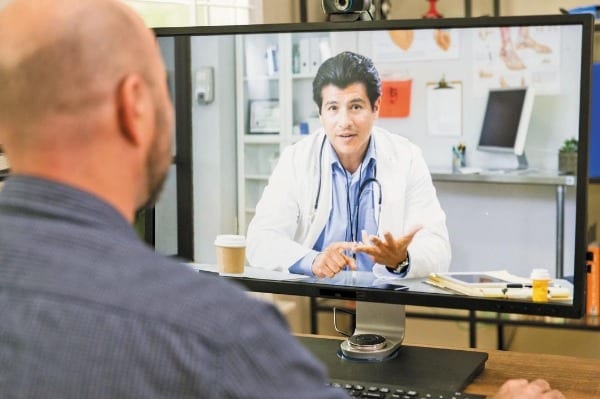
Fortunately, there is a solution to some of these barriers—telehealth services for veterans. Telehealth services can dramatically simplify and quicken the process of obtaining the treatment and benefits you deserve.
Here are four advantages that come with telehealth visits:
1. Prompt Quality Care
Telehealth offers access and convenience. Veterans can see medical specialists without leaving their homes and without having to endure long wait periods. Because of prompt care, the number of Veteran telehealth visits has been consistently increasing every year.
Take a look at the number of veterans who sought telehealth visits during the past few years:
2016: Approximately 700,000
2018: Approximately 2.3 million
2019: Approximately 2.6 million
With prompt care, Veterans can attain the benefits and care they need sooner rather than later—-in 2016 alone, Telehealth visits brought down VA hospital admissions by 31 percent.
2. Better Access
Do you live in a rural area? No problem. Approximately “45 percent of Veteran telehealth patients live in rural areas.” Telehealth provides quick and easy access to providers who can punctually get you what you need, no matter your geographic location.
For example, the Psypact enactment enables mental health providers to practice across twenty-two states (and this number is constantly growing). This can help veterans by giving them access to a broader range of providers.
Moreover, when veterans are seeking mental health care via telehealth, speaking with a provider in the comfort of your own home can help you feel more comfortable and lead to better quality care. Everyone’s experience is unique, so it’s important to gain access to customized care that works for you.
3. Veteran-Specific Services
Some telehealth visits entail veteran-specific telehealth services. These providers carry the expertise and experience to provide strong medical evidence that meets the VA’s rules and regulations. As they understand the needs of U.S. Military Veterans, telehealth providers can offer the compassion and care you need to confidently navigate through your journey to obtaining medical evidence.
4. Cost Savings
Let’s not forget the costs. Veterans can save roughly 60 to 70 percent when switching to telehealth services from traditional in-person appointments.
Co-pays for virtual appointments generally cost less. This does depend on your insurance and provider, so we recommend first speaking with your insurance company about virtual visit costs.
What We Offer
At Telemedica, we are proud to help open the door to high-quality telehealth services for Veterans. We understand time is of the essence and waiting around for required medical evidence should not be the norm.
As we know, to acquire VA benefits, you must have medical evidence or a diagnosis. Telemedica can connect you with our network of independently contracted providers who can provide telehealth examinations you might need. These assessments may result in a medical diagnosis of a mental health condition or 19 applicable medical conditions (ED, GERD, IBS, and more).
Schedule Your Telehealth Visit Today
Telemedica is a telehealth company by veterans for veterans. If you’d like to receive a medical/mental health assessment to boost your VA claim, reach out to our team today. We proudly connect veterans with our network of independently contracted providers and look forward to doing the same for you.
Telehealth is one of the fastest-growing healthcare services in the world today.
Thanks to modern technological development, the telehealth industry now offers a wide variety of medical services, appointments, and previously inaccessible resources to the public. Today, patients can receive care for checkups, assessments, mental health evaluations, and more through telehealth platforms and telehealth-specific companies. Accessibility, convenience, and efficiency are just a few benefits that telehealth brings to the table for those who use telehealth services. But perhaps the most apparent benefit of telehealth is the cost-saving advantage.
When reliable care is accessible from the comfort of your own home, overall medical costs can be dramatically reduced.
People love to save money. People especially love to save money on the goods and services they already pay for anyway. If you asked around, you might be hard-pressed to find someone who wouldn’t be interested in saving money, no matter the product.
Patients who experience higher ticket prices for medical services are less likely to seek the needed medical care they deserve. Many would agree that a significant reduction in medical costs could positively impact their financial situation.
The blog below will reveal how veterans can genuinely benefit from using a virtual HIPAA compliant platform and save money through telehealth technologies.
Veterans already face many obstacles in their daily lives, and receiving affordable and convenient health care shouldn’t be one of them. Telehealth eliminates the need for high medical costs and lengthy wait times and allows veterans to get back to living a happy and healthy life.
So, can telehealth reduce overall costs for veterans?
Let’s find out!
How Telehealth Lowers Healthcare Costs
1. In-Person Appointments vs. Virtual Appointments
Comparing the cost-saving benefits of telehealth to traditional appointments.
In a study conducted by Red Quill Consulting, Inc., evidence showed that telehealth could indeed reduce overall costs for patients. For example, while the average price of an in-person appointment is between $136 and $176 per visit, the cost of a virtual telehealth appointment is approximately $50 on average.
That’s a total of 60% to 70% in savings!
One significant difference in the cost of an in-person appointment versus a telehealth appointment is the potential co-pay cost. Co-pays for virtual appointments are often lower in price than the co-pays for in-office visits.
It is important to note that the co-pay costs difference depends on both the insurance used and the healthcare provider. Before booking a telehealth appointment, please be sure to call your insurance company and your provider and ask about costs for your virtual healthcare visit.
This means that less than 1 in 5 patients needed subsequent appointments after the initial visit.
Fewer follow-up visits can mean lower appointment costs, which equals more money in your pocket!
2. Receiving Care Promptly
Obtaining medical evidence is faster and easier than ever.
Some providers who treat veterans may not have the availability to take on new patients for several months or may not accept new patients for extended periods of time.
The demand for veteran-focused health care outweighs the current number of specialized health care providers that offer in-person appointments.
When there is a shortage of specialists available for veterans, telehealth can provide relief.
In some cases, telehealth appointments can be booked the same day or within just a few days of needing the appointment. When veterans receive prompt medical care, they can often solve their medical needs sooner. Once the veteran obtains the medical evidence they need, they can then file their disability claim with the VA.
Telehealth empowers veterans by providing them with timely access to health care services.
Instead of having to wait months for an available provider, the veteran can proactively move one step closer to a potential disability claim increase on their terms.
3. Faster Turnaround Times for Obtaining Medical Evidence
Current telehealth technologies allow veterans to gain near-instant access to the help they need.
Connecting with a licensed provider or medical professional has never been easier. Many aspects of in-person appointments (from traveling to the appointment to receiving medical evidence or lab results) can significantly delay clinical outcomes. But with the rapid advancement of telehealth services, the time between the appointment and those clinical outcomes can be reduced considerably.
Some veterans need a quick solution for obtaining medical evidence for their disability claim submission. Many veterans’ disability claims are denied due to a lack of medical evidence.
Many veteran-focused telehealth companies understand that there may be time constraints for a client’s VA disability claim.
Because of this, they will often offer faster turnaround times than a traditional or private provider could provide. Additionally, some companies provide expedited medical evidence (for an additional fee).
The companies that focus solely on veteran clients, and specialize in veterans’ needs, can provide independent medical opinions in as little as 48 hours. Some of the companies that offer fast turnaround times for medical evidence include Telemedica LLC and American Medical Experts.
4. Fewer Work Days Missed – Time Is Money
Convenient and accessible medical appointments.
Telehealth also can save patients money over time by reducing the number of workdays missed for scheduled appointments. In-person medical appointments can sometimes take several hours. Attending a doctor’s appointment may mean having to take a partial or full-day off work, depending on the appointment type. For hourly or contracted workers, this can result in money lost and be detrimental to the patient’s financial situation.
However, through telehealth, these missed workdays are being significantly reduced.
Telehealth allows patients to quickly log on to a HIPAA compliant platform for an appointment at the touch of a button with convenience and instant access. This accessibility gives the patient flexibility for their appointment time and location.
For example, the patient could schedule their appointment just before or after their work shift and meet with the provider via video conference in their car, home, or a designated private location.
Traveling to and from a doctor’s office, sitting in a waiting room, and waiting for prescriptions all takes time. Telehealth eliminates the wait and commute and gets right down to what’s important – you, your time, and your money.
As the saying goes, time is money, and by saving you time, telehealth can undoubtedly save you money.
5. Telemedicine Saves Travel Distance & Time
Virtual appointments help veterans save on travel costs.
In this study, researchers examined all telemedicine visits conducted from the Veterans Affairs hospital in White River Junction, VT, between 2005 and 2013. Their objective was to calculate the cost-saving benefits in VA telemedicine volumes over time. All telemedicine visits based at the White River hospital were reviewed (5,695 visits). Travel distance and time saved were calculated in this study.
The study concluded that telehealth visits resulted in an average travel savings of 145 miles and 142 min per visit. This data equaled a total of 824,724 miles saved in travel and 13,400 hours of driving for all veterans who participated in the study.
This reduction in driving time and distance translated into an average of $28.86 in savings per telemedicine visit, or $18,555 savings per year.
According to a 2015 article published by the RAND Corporation, veterans travel an average of 14.5 miles one way to access veteran-specific medical care. For 14.5 miles traveled, at an average speed of 45 mph, it would take the veteran approximately half an hour to arrive at their destination. Factor in traffic, time of day, and varying speed limits, and the time spent traveling can add up quickly.
By the time the veteran arrives back home, it can take them well over an hour just to travel to and from their appointment.
A separate study conducted by various international universities outlines the impact that telemedicine programs have on the well-being of the planet and all telehealth patients’ financial health. The research gathered from 2015 to 2019 shows that the patient saved a considerable amount of travel time and reduced fuel consumption while still receiving quality care.
Several benefits outlined in the study include: + A total of 1,928 hours of travel time saved in 2016 + 15.2 tons of CO2 emissions reduced in 2016 + An average of $622 saved annually in overall fuel costs and parking fees + An average savings of $86.13 per appointment
6. Telehealth & Clinical Outcomes
Telehealth can connect providers with veterans who live in rural or remote areas.
Outside of a city’s metropolitan area, there may not be many specialists available to veterans. However, with remote services, veterans can receive care that is comparable to an in-person appointment. The goal is not to save the health care system money but to improve patient care. A study by The Agency for Healthcare Research and Quality concluded that telehealth’s clinical outcomes were either equal to or better than those of patients who received in-person care.
As we begin to look at the specific benefits of telehealth across all types of care, there is evidence that telehealth produces better clinical outcomes for veterans with certain mental health conditions. Veterans living in rural areas are less likely to receive mental health care than those living in the city.
Still, telehealth gives veterans easy access to mental health care professionals no matter where they live.
Telehealth can also eliminate the stressors of travel for patients with situational and social anxiety.
It may be difficult for some veterans to describe their symptoms adequately if they feel uncomfortable. But through telehealth, the veteran can attend the appointment on their terms and decide when and where they feel most comfortable talking with a provider. A comfortable client means a successful and productive evaluation, which leads to better clinical outcomes over time.
When the provider can identify the veteran’s needs and ailments through open and honest communication, fewer follow-up visits and, therefore, fewer co-pays and appointment fees are incurred.
The Bottom Line
In the past several years, many American Veterans have begun to use virtual health care for a wide variety of medical needs. The US Department of Veterans Affairs (VA) found that in 2019, 2.6 million virtual health care episodes were conducted, and 900,000 veterans used telehealth platforms in the same year. These numbers show us that telehealth is quickly becoming a valuable and highly sought-after choice for veterans.
Telehealth creates ease and accessibility for veterans and can facilitate a relaxed and productive appointment.
When patients can receive health care without leaving their homes, the savings start to add up in significant ways. Technological advancements have certainly opened the doors to a brighter and healthier future – one where potentially all veterans can receive the medical care they deserve without sacrificing time, quality, or money.
**It is important to note that telehealth should be used as a substitution rather than a replacement for veterans with physical or mental health concerns. It is recommended that patients who use telehealth services should still schedule an in-person appointment at least once a year for a physical check-up. If you have a serious health concern, call your doctor or visit the nearest health care facility.