Tag: nexus letter for sleep apnea

  • Nexus Letter for Sleep Apnea

    Nexus Letter for Sleep Apnea

    Establishing service connection for sleep apnea can be challenging, especially when symptoms weren’t formally diagnosed during service.

    In many cases, the VA denies claims because the medical link between your condition and service isn’t clearly established.

    A well-written nexus letter for sleep apnea can close that gap by providing a professional medical opinion that directly connects your current diagnosis to military service or to another service-connected condition. 

    Key Takeaways

    • A sleep apnea nexus letter is a medical opinion that explains how your condition is connected to military service or a service-connected disability. 
    • Strong nexus letters use VA-recognized language, reference relevant records, and include a clear medical rationale. 
    • While not required, a properly written nexus letter often plays a decisive role in whether a sleep apnea claim is approved. 

    Table of Contents

    What is a Nexus Letter for Sleep Apnea?
    Nexus Letter for Sleep Apnea.

    A nexus letter for sleep apnea is a medical opinion from a licensed healthcare provider that proves how your sleep apnea is connected to your military service. It’s commonly used when there’s no obvious documentation linking your sleep apnea to service. 

    The letter must state whether your sleep apnea is “at least as likely as not” caused by service or caused or permanently worsened by another service-connected condition, with a clear medical explanation. 

    When properly written, a nexus letter is often one of the most important pieces of evidence the VA considers in deciding a sleep apnea claim. 

    Learn More: What is a Nexus Letter? 

    When a Nexus Letter for Sleep Apnea is Most Valuable

    How to Get a Nexus Letter for Sleep Apnea.

    A nexus letter for sleep apnea is most important when the connection to military service isn’t clearly documented in your records. While the VA doesn’t require a nexus letter, certain situations strongly benefit from one. 

    You should consider a nexus letter if: 

    • Your service treatment records don’t clearly document complaints, symptoms, or a diagnosis of sleep apnea during active duty. 
    • Your obstructive sleep apnea was formally diagnosed after separation, even though symptoms may have started while you were still in service. 
    • Your VA disability claim for sleep apnea was denied due to a lack of medical evidence establishing service connection. 
    • You are filing a sleep apnea claim years after discharge and need medical evidence linking the condition to your time in service. 
    • You are claiming sleep apnea as secondary to another service-connected condition, such as PTSD, rhinitis, sinusitis, or a deviated septum. 

    Here’s a simple litmus test to help determine if you should pursue a nexus letter:

    • If your disability was not diagnosed while in service or if it is not in your military medical records, then a nexus letter could benefit your VA claim.
    • Are you re-filing for a previously denied claim or filing for a secondary condition? Nexus letters can strengthen these types of claims.

    Related: How do I prove my sleep apnea is connected to service?

    How to Get a Nexus Letter for Sleep Apnea

    To get a nexus letter for sleep apnea, you must work directly with a licensed healthcare provider.  

    The VA doesn’t assign doctors or arrange appointments for nexus letters as it does for compensation & pension (C&P) exams. 

    You can start by identifying a licensed provider who is qualified to evaluate sleep apnea, such as a physician, pulmonologist, ENT, or sleep specialist. 

    With Telemedica, you can work with licensed providers who draft custom nexus letters, complete VA-ready DBQs, and write medical opinions that align with VA standards. 

    What Makes a Strong Nexus Letter for Sleep Apnea

    A nexus letter can look different depending on who writes it, but strong nexus letters all include the same core elements: 

    1. Supporting Evidence: A clear reference to the medical and or service records reviewed. 
    1. Evidence-Based Rationale: A medical explanation showing how an in-service event, injury, or disease caused or permanently worsened the condition, supported by clinical reasoning or medical literature when appropriate. 
    1. Clear Nexus Opinion: A medical opinion stating the likelihood of service connection using VA-recognized language such as “at least as likely as not,” “more likely than not,” or “is due to.” 
    1. Provider Credentials: The letter must be signed and dated and include the provider’s title, specialty, and credentials to establish medical expertise. 

    Medical Evidence Wins VA Claims

    Did you know that a lack of medical evidence is the #1 reason VA disability claims are denied? 

    Medical evidence is a crucial piece of the puzzle that VA raters consider when reviewing a disability claim. Telemedica provides solutions for veterans looking to bolster their claims through high-quality medical evidence that wins claims! 

    Schedule your 20-minute consultation call and learn how to get the supporting medical evidence you need to strengthen your claim. 

    Conclusion

    A nexus letter can be one of the most important pieces of evidence in a sleep apnea claim, especially when service connection isn’t obvious from your records alone.  

    It provides the VA with a clear medical explanation tying your condition to service or to an already service-connected disability. 

    If your claim has been denied, delayed, or lacks a clear medical link, a well-written nexus letter may be the difference between another denial and approval. 

    FAQs | Frequently Asked Questions

    How does the VA rate sleep apnea?

    The VA rates sleep apnea under diagnostic code 6847, with potential ratings of 0%, 30%, 50%, or 100%. >> View Our Full Guide on Sleep Apnea VA Ratings 

    How do I get a nexus letter for sleep apnea?

    Reach out the Telemedica directly. It’s your responsibility to find and request a nexus letter, since the VA doesn’t identify providers or schedule appointments for nexus letters the way it does for C&P exams. You must work directly with a licensed medical professional, ideally one experienced in evaluating sleep apnea and VA service connection requirements. >> Are There Nexus Letter Doctors Near Me? 

    Do I need a nexus letter for sleep apnea?

    The VA doesn’t require a nexus letter, and service connection may be established through existing medical records. However, a medical opinion linking your condition to service can strengthen your claim, since the VA gives significant weight to professional medical statements. 

    Who can write a nexus letter for sleep apnea?

    The VA only accepts nexus letters written by licensed medical providers, whether they are VA, VA-contracted, or private physicians qualified to evaluate your condition. 

    How much is a nexus letter for sleep apnea?

    The cost of a nexus letter depends on factors such as the provider’s credentials, the complexity of your sleep apnea claim, and the time required to review your medical and service records. 


  • Sleep Apnea Secondary to Allergic Rhinitis Nexus Letter  

    Sleep Apnea Secondary to Allergic Rhinitis Nexus Letter  

    If your VA claim was denied or you didn’t receive the disability rating you deserve, you may be missing crucial information like a nexus letter.  

    A nexus letter frequently proves to be the missing link when service-connecting your condition to your military service.  

    In this post, we’ll discuss how a sleep apnea secondary to allergic rhinitis nexus letter can be the key to winning your VA claim and how the team at Telemedica can help.  

    Let’s get started.  

    Table of Contents

    Veteran suffering from allergic rhinitis sitting on his couch blowing his nose.

    Sleep Apnea Secondary to Allergic Rhinitis Nexus Letter

    It’s highly recommended to obtain a nexus letter if you have sleep apnea that may have been caused or aggravated by a service-connected condition like allergic rhinitis. While nexus letters aren’t required, they can help strengthen your claim and offer the credibility you need to win your VA disability claim.  


    A nexus letter with high-probative value should include: 

    1. The physician’s credentials, particularly ones that make them a trustworthy source for the following opinion (i.e., a cardiologist talking about a heart condition, etc.). 
    1. A reference indicating that the physician composing the letter has thoroughly reviewed the veteran’s medical records and military records that pertain to the claim. 
    1. The physician’s opinion regarding the cause of the current diagnosed condition and its relation to the veteran’s military service. 
    1. Medical rationale that fully supports the physician’s opinion. 

    The Connection Between Sleep Apnea and Allergic Rhinitis

    Allergic rhinitis, or hay fever, causes inflammation and congestion in your nasal passages and airway. While allergic rhinitis has similar symptoms to the common cold, it is caused by allergens instead of a virus.  

    If you have existing obstructive sleep apnea (OSA), your condition may be aggravated by symptoms of allergic rhinitis.  

    Allergic rhinitis increases your risk of OSA by two primary mechanisms: 

    1. An increase in airway resistance due to higher nasal resistance; and  
    1. Reduction in pharyngeal diameter from mouth breathing that moves the jaw insufficiently 
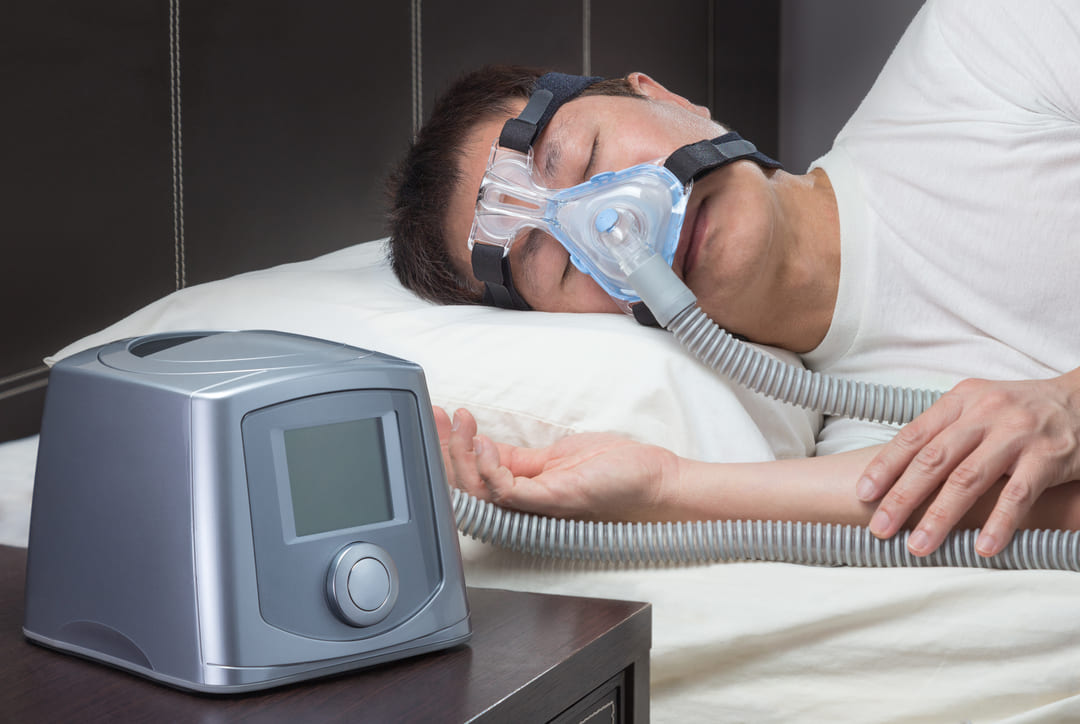
    Man sleeping on bed while hooked up to a CPAP machine.

    Service-Connecting Sleep Apnea Secondary to Allergic Rhinitis

    As part of your VA disability claim for sleep apnea secondary to allergic rhinitis, you must be able to prove service connection. Service connection requires: 

    • A current medical diagnosis (documented in a medical record) of the secondary VA disability you’re attempting to link (Sleep Apnea) to the current service-connected disability (Allergic Rhinitis) AND 
    • A current service-connected primary disability (Allergic Rhinitis) AND 
    • Medical nexus evidence (can be a Nexus Letter) establishing a connection between the service-connected primary condition (Allergic Rhinitis) AND the current disability you’re trying to connect secondary (Sleep Apnea) 


    The VA requires you to attend a sleep study to receive an accurate sleep apnea diagnosis. A sleep study is crucial in finding evidence of irregular breathing, gasping, and other common signs of sleep apnea. 

    With with sleep apnea and rhinitis laying in bed.

    VA Ratings for Sleep Apnea Secondary to Allergic Rhinitis

    The VA rates sleep apnea at 0%, 30%, 50%, and 100%, depending on the severity, frequency, and duration of symptoms.  

    The highest VA rating for sleep apnea secondary to allergic rhinitis is 100%, with most veterans receiving a 50% rating for obstructive sleep apnea.  

    You can find the VA rating for sleep apnea under 38 CFR § 4.97, Diagnostic Code 6847 Schedule of Ratings – Sleep Apnea Syndromes (Obstructive, Central, Mixed).  

    Medical Evidence Wins VA Claims

    Whether you need a nexus letter for sleep apnea secondary to rhinitis or something else, we make it EASY for veterans to connect with a licensed provider through our HIPAA-compliant telemedicine platform—anytime, anywhere! 
     
    From DBQs and Nexus Letters to Psych Evals and Telemedicine Evaluations, the Telemedica team is standing by to serve you. Get the evidence you need to win your VA claim today. 

  • Nexus Letter for Sleep Apnea Secondary to Sinusitis

    Nexus Letter for Sleep Apnea Secondary to Sinusitis

    Is a nexus letter for sleep apnea secondary to sinusitis your missing link? If you’ve received a denied claim, you’ll want to understand the significant impact a nexus letter can make. 

    In this guide, we’ll cover how a nexus letter impacts your VA disability claim, the steps to get service connected for sleep apnea secondary to sinusitis, and what VA rating you deserve. 

    The VA claims process can be challenging, but we’re here to help guide you. 

    Table of Contents

    NEXUS LETTER FOR SLEEP APNEA SECONDARY TO SINUSITIS

    Nexus Letter for Sleep Apnea Secondary to Sinusitis

    A nexus letter for sleep apnea secondary to sinusitis is vital evidence when applying for VA benefits. 

    Sinusitis can contribute to sleep apnea by causing sinus congestion and inflammation that blocks the nasal passages. But is your military service the culprit?

    Many veterans are susceptible to sinusitis due to burn pit exposure and other hazards. Obtaining a nexus letter is highly recommended if you want a better chance of winning your claim. 

    A Nexus Letter establishes a connection between your service-connected sinusitis and the development or worsening of sleep apnea. 

    It outlines a healthcare provider’s medical reasoning and professional opinion, clearly stating that sleep apnea results from sinusitis and makes you eligible for benefits.

    How Sleep Apnea and Sinusitis Are Connected

    SLEEP APNEA SECONDARY TO CHRONIC SINUSITIS AND RHINITIS

    Sleep apnea and sinusitis can be connected in several ways, so it’s essential to understand what is causing your condition. 

    Here’s a look at common reasons why sleep apnea can be secondary to sinusitis:

    1. Nasal congestion – When nasal passages are blocked due to mucus buildup or inflammation, it can contribute to obstructive sleep apnea. 
    2. Airway obstruction – Sinusitis can worsen the obstruction of your airways while sleeping, making it difficult for air to flow freely. 
    3. Inflammation – Inflammation caused by sinusitis can affect the soft tissues of your throat and airway, increasing the chances of sleep apnea. 
    4. Disrupted sleep – Sinusitis frequently leads to disrupted sleep, which can exacerbate sleep apnea symptoms and may contribute to the development or worsening of the condition long term. 

    Managing sinusitis and addressing nasal congestion can be important components of sleep apnea treatment, as improving nasal airflow may help reduce the severity of sleep apnea symptoms and improve overall sleep quality.

    >> Related: 5 Secondary Conditions to Sinusitis Veterans Should Know

    SLEEP APNEA SECONDARY TO SINUSITIS

    How to Get Service-Connected for Sleep Apnea Secondary to Sinusitis

    In order to win a VA disability claim for sleep apnea secondary to sinusitis you must be able to prove service connection. Service connection requires:

    • A current medical diagnosis (documented in a medical record) of the secondary VA disability you’re attempting to link (Sleep Apnea) to the current service-connected disability (Sinusitis) AND
    • A current service-connected primary disability (Sinusitis) AND
    • Medical nexus evidence establishing a connection between the service-connected primary condition (Sinusitis) AND the current disability you’re trying to connect secondary (Sleep Apnea)

    You will likely be required to attend a sleep study to receive an accurate sleep apnea diagnosis. A sleep study is vital in finding evidence of irregular breathing, gasping, and other obvious signs of sleep apnea. 

    VA Ratings for Sleep Apnea Secondary to Sinusitis

    The VA rates sleep apnea secondary to sinusitis at 0%, 30%, 50%, and 100%, depending on the severity, frequency, and duration of symptoms. 

    The highest VA rating for sleep apnea secondary to sinusitis is 100%, with most veterans receiving a 50% rating for obstructive sleep apnea. 

    The VA rating for sleep apnea is under 38 CFR § 4.97, Diagnostic Code 6847 Schedule of Ratings – Sleep Apnea Syndromes (Obstructive, Central, Mixed). 

    If you receive a 50% or greater VA rating for sleep apnea, you’ll require one of the following qualifying breathing assistance devices:

    • Continuous positive airway pressure (CPAP) machine
    • Automatic airway pressure device (APAP)
    • Bilevel-positive airway pressure device (BiPAP, also known as NIPPV or NIV)
    • Nasopharyngeal appliances (Nasal dilators; nasopharyngeal stents)
    • Oral appliances (mandibular advancement devices (MAD); tongue-retaining mouthpieces)
    • Implanted genioglossal nerve stimulation devices

    Sleep Apnea Secondary to Sinusitis: Do I Need a DBQ?

    You don’t need a DBQ for sleep apnea secondary to sinusitis; however, it can help strengthen your claim. Adding a DBQ to your claim can make it a fully developed claim, where all of the evidence needed to decide a claim is present, and the VA rater can choose to decide your claim without sending you to a C&P exam.

    Is Sleep Apnea Secondary to Chronic Sinusitis and Rhinitis?

    Yes, if you have a primary service-connected diagnosis of chronic sinusitis or rhinitis, you may be eligible for a secondary sleep apnea connection. 

    If your chronic sinusitis causes congestion and inflammation, blocking your nasal passages, you will likely develop or worsen a previously diagnosed case of sleep apnea. 

    How Telemedica Can Help With Your Nexus Letter

    Understanding the need for a nexus letter for sleep apnea secondary to sinusitis may help secure a winning claim. The licensed, trusted professionals at Telemedica can help with your nexus letter, paving the way to the benefits you deserve. 

    You can contact us with any questions; we will gladly assist you.