Post-traumatic stress disorder (PTSD) is a condition that affects both combat and non-combat veterans.
PTSD often comes with symptoms that cause occupational and social impairment. But PTSD can also cause other health problems called PTSD secondary conditions.
If you are a veteran with PTSD, it is possible to develop PTSD secondary conditions like sleep apnea, migraines, GERD (acid reflux), hypertension (high blood pressure), or erectile dysfunction because of your PTSD.
If you can prove your service-connected PTSD caused your secondary medical condition, you may qualify for additional VA disability benefits for your secondary condition(s).
This guide will explore some of the most common medical conditions secondary to PTSD, emphasizing VA ratings, how to file secondary claims to PTSD, and requirements for secondary service connections.
Table of Contents
- Key Takeaways
- Understanding VA Secondary Conditions to PTSD
- Medical Conditions Secondary to PTSD
- Frequently Asked Questions (FAQs)
- Conclusion
- Medical Evidence Wins VA Claims
Key Takeaways
- PTSD can cause a range of secondary conditions which may qualify you for additional VA disability benefits.
- When filing a secondary claim to PTSD, veterans must prove three things: a current diagnosis of your secondary condition, a service-connected PTSD condition, and a medical nexus linking the two.
- A credible Nexus Letter from a qualified healthcare provider can significantly strengthen your VA disability claim for secondary conditions.
- Understanding the VA rating criteria for these secondary conditions is crucial to maximizing your benefits.
Understanding VA Secondary Conditions to PTSD
PTSD secondary conditions are disabilities that are proximately due to or aggravated by service-connected post-traumatic stress disorder.
Under 38 CFR § 3.310, a veteran with a current disability condition that is caused or worsened by a service-connected condition can receive secondary service connection.
Proving Service Connection for PTSD Secondary Conditions
To establish service connection when filing secondary claims to PTSD, three key elements must be demonstrated:
- A current medical diagnosis of the secondary condition
- A current service-connected primary disability (e.g., service-connected PTSD)
- A medical nexus linking the secondary condition to the service-connected PTSD (can be a Nexus Letter)

Medical Conditions Secondary to PTSD
Below we will examine in detail six common VA secondary conditions to PTSD, including ways to support secondary claims to PTSD.
- Migraine headaches
- Sleep Apnea
- Gastroesophageal Reflux Disease (GERD)
- Irritable Bowel Syndrome (IBS)
- Erectile Dysfunction (ED)
- Hypertension (high blood pressure)
Migraines Secondary to PTSD
Migraine headaches, tension headaches, and post-traumatic headaches are common among veterans with PTSD. In 2011, studies show correlation between PTSD and various types of headaches.
Migraines VA Rating Criteria
The VA rates migraines secondary to PTSD at 0%, 10%, 30%, or 50%, under 38 CFR 4.124a, Diagnostic Code 8100, with the following criteria:
50% VA Rating: Very frequent prostrating and prolonged attacks productive of severe economic inadaptability.
30% VA Rating: Characteristic prostrating attacks occurring on average once a month over the last several months.
10% VA Rating: Characteristic prostrating attacks averaging one in 2 months over the last several months.
0% VA Rating: Less frequent attacks.
| VA Rating Criteria for Migraine Headaches (DC 8100) | VA Disability Rating |
| Migraines with very frequent completely prostrating and prolonged attacks productive of severe economic inadaptability | 50% |
| Migraines with characteristic prostrating attacks occurring on an average once a month over last several months | 30% |
| Migraines with characteristic prostrating attacks averaging one in 2 months over last several months | 10% |
| Migraines with less frequent attacks | 0% |

VA Claim for Migraines Secondary To PTSD
To support your VA claim for migraines secondary to your PTSD, you will want to include relevant medical evidence. This can include:
- Documentation: Documentation of your migraine diagnosis and any relevant treatment records.
- Nexus Letter: An independent medical opinion linking your migraines to PTSD.
- Medication Side Effects: Note that some PTSD medications, like SSRIs, may also contribute to headaches. Documenting your side effects, including keeping a record of your migraines, can help to strengthen your claim.
Related: See our post on migraines secondary to service-connected PTSD here.
Sleep Apnea Secondary to PTSD
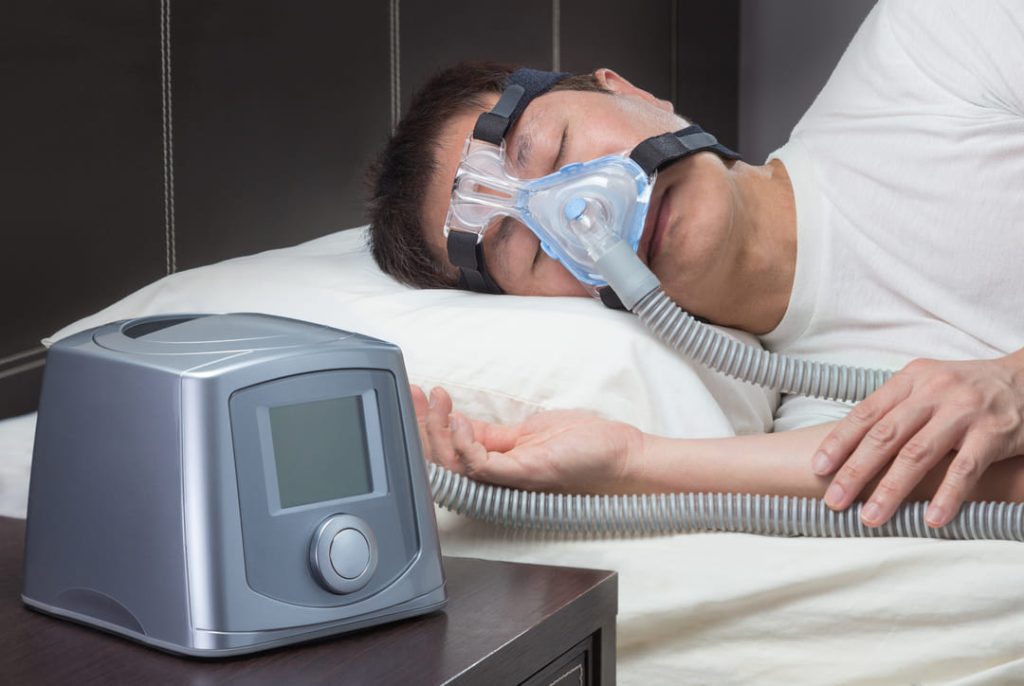
Sleep apnea is notably prevalent among veterans with PTSD.
While PTSD may not directly cause sleep apnea, research from 2015 shows that veterans with severe PTSD symptoms are at a higher risk of developing obstructive sleep apnea (OSA). The connection may be linked to factors like obesity, which can be exacerbated by PTSD.
Sleep Apnea VA Rating Criteria
Sleep apnea secondary to PTSD can be 0%, 30%, 50%, or 100%, and is rated under Diagnostic Code 6847:
100% VA Rating: Chronic respiratory failure with carbon dioxide retention or cor pulmonale or requires tracheostomy.
50% VA Rating: Requires use of a breathing assistance device such as a CPAP (Continuous Positive Airway Pressure) machine.
30% VA Rating: Persistent daytime hypersomnolence.
0%: VA Rating: Asymptomatic but with documented sleep disorder breathing.
| VA Rating Scale: Sleep Apnea | VA Disability Rating |
| Chronic respiratory failure with carbon dioxide retention or cor pulmonale, or requires tracheostomy | 100% |
| Requires use of breathing assistance device such as a CPAP machine | 50% |
| Persistent daytime hypersomnolence | 30% |
| Asymptomatic but with documented sleep disorder breathing | 0% |

VA Claim for Sleep Apnea Secondary to PTSD
Valid VA disability claims for sleep apnea secondary to PTSD typically include:
- Medical Evidence: Documentation of your sleep apnea diagnosis confirmed by a sleep study.
- Nexus Letter: A medical opinion connecting your obstructive sleep apnea to PTSD, possibly through an intermediary condition like obesity.
- CPAP Use: If you use a CPAP machine, this can help support your claim.
Gastroesophageal Reflux Disease (GERD) Secondary to PTSD
Gastroesophageal Reflux Disease (GERD) is often seen in veterans with PTSD, especially those on continuous medication for PTSD symptoms. The stress and side effects of PTSD treatment can contribute to digestive issues.
GERD VA Rating Criteria
The new VA rating criteria for GERD became effective May 19, 2024. GERD is now rated under Diagnostic Code 7206 for Esophageal Stricture, with VA ratings of 0%, 10%, 30%, 50%, or 80%.
New VA Rating Criteria for GERD
| GERD VA Rating Criteria Under DC 7206, Esophagus, Stricture of: | VA Disability Rating |
| Documented history of recurrent or refractory esophageal stricture(s) causing dysphagia with at least one of the symptoms present: (1) Aspiration, (2) undernutrition, and/or (3) substantial weight loss as defined by § 4.112(a) and treatment with either surgical correction or percutaneous esophago-gastrointestinal tube (PEG tube) | 80% |
| Documented history of recurrent or refractory esophageal stricture(s) causing dysphagia which requires at least one of the following (1) dilation 3 or more times per year, (2) dilation using steroids at least one time per year, or (3) esophageal stent placement | 50% |
| Documented history of recurrent or refractory esophageal stricture(s) causing dysphagia which requires dilatation no more than 2 times per year | 30% |
| Documented history of esophageal stricture(s) that requires daily medications to control dysphagia otherwise asymptomatic | 10% |
| Documented history without daily symptoms or requirement for daily medications | 0% |
| Note (#1): Findings must be documented by barium swallow, computerized tomography, or esophagogastroduodenoscopy | |
| Note (#2): Non-gastrointestinal complications of procedures should be rated under the appropriate system | |
| Note (#3): This diagnostic code applies, but is not limited to, esophagitis, mechanical or chemical; Mallory Weiss syndrome (bleeding at junction of esophagus and stomach due to tears) due to caustic ingestion of alkali or acid; drug-induced or infectious esophagitis due to Candida, virus, or other organism; idiopathic eosinophilic, or lymphocytic esophagitis; esophagitis due to radiation therapy; esophagitis due to peptic stricture; and any esophageal condition that requires treatment with sclerotherapy | |
| Note (#4): Recurrent esophageal stricture is defined as the inability to maintain target esophageal diameter beyond 4 weeks after the target diameter has been achieved | |
| Note (#5): Refractory esophageal stricture is defined as the inability to achieve target esophageal diameter despite receiving at least 5 dilation sessions performed at 2-week intervals |
VA Claim for GERD Secondary to PTSD
Valid VA disability claims for GERD secondary to PTSD typically include:
- Medical Evidence: Provide records showing GERD diagnosis and its symptoms (can be from a primary care physician).
- Nexus Letter: Obtain a GERD nexus letter linking your GERD to PTSD or its treatment.
- Medication Side Effects (if any): Highlight how medications for PTSD might contribute to GERD.
IBS Secondary to PTSD
Irritable Bowel Syndrome (IBS) is another condition commonly linked to PTSD. Research indicates a high prevalence of IBS among individuals with PTSD. Stress from PTSD can exacerbate gastrointestinal symptoms.
NEW IBS VA Rating Criteria
On May 19, 2024, the 0% non-compensable rating for IBS was removed; the new minimum compensable VA rating for IBS is now 10%.
IBS secondary to PTSD is rated at 10%, 20%, or 30%, under Diagnostic Code 7319.
| New IBS VA Rating Criteria (Diagnostic Code 7319) | VA Disability Rating |
| – Abdominal pain related to defecation at least one day per week during the previous three months; and – Two or more of the following: 1. Change in stool frequency 2. Change in stool form 3. Altered stool passage (straining and/or urgency) 4. Mucorrhea 5. Abdominal bloating 6. Subjective distension | 30% |
| – Abdominal pain related to defecation for at least three days per month during the previous three months; and – Two or more of the following: 1. Change in stool frequency 2. Change in stool form 3. Altered stool passage (straining and/or urgency) 4. Mucorrhea 5. Abdominal bloating 6. Subjective distension | 20% |
| – Abdominal pain related to defecation at least once during the previous three months; and – Two or more of the following: 1. Change in stool frequency 2. Change in stool form 3. Altered stool passage (straining and/or urgency) 4. Mucorrhea 5. Abdominal bloating 6. Subjective distension | 10% |
VA Claim for IBS Secondary to PTSD
VA disability claims for IBS secondary to PTSD typically include:
- Medical Evidence: Show documentation of IBS diagnosis.
- Nexus Letter: Establish a connection between PTSD and IBS through a qualified medical professional.
- Service-Connected Disability: Demonstrate how your PTSD or its treatment has led to or aggravated your IBS.
ED Secondary to PTSD
Veterans with PTSD are at an increased risk of sexual dysfunction, including erectile dysfunction (ED). This sexual dysfunction can be due to the psychological impact of PTSD or the side effects of PTSD medications.
ED Secondary to PTSD VA Ratings
ED VA ratings are 0%, and eligible veterans can receive Special Monthly Compensation (SMC) for loss of use of a creative organ. SMC-K is paid out each month in addition to other VA disability compensation.
0% VA Rating: Non-compensable VA rating.
VA Special Monthly Compensation (SMC): SMC-K is available for loss of use of a creative organ.
The 2024 pay rate for SMC-K for Erectile Dysfunction is $132.74 monthly.
VA Claim for ED Secondary to PTSD
VA disability claims for ED secondary to PTSD typically include:
- Medical Evidence: Document your ED diagnosis and symptoms.
- Nexus Letter: Get an independent medical opinion linking ED to PTSD.
- SMC: If applicable, veterans can apply for Special Monthly Compensation (SMC) due to loss of use.
Hypertension Secondary to PTSD
Hypertension, or high blood pressure, is a significant health issue that can be linked to PTSD. Chronic stress from PTSD may elevate blood pressure, increasing the risk of serious health complications.
Hypertension is defined by consistent readings of 140/90 mmHg or higher. Physical symptoms can include headaches, dizziness, and blurred vision, though some people may not experience noticeable symptoms that cause significant concern.
Hypertension Secondary to PTSD VA Ratings
Hypertension is rated under 38 CFR § 4.104, DC 7101. VA disability ratings for hypertension can be 0%, 10%, 20%, 40%, or 60%, based on the severity of your symptoms and the need for continuous medication.
60% VA Rating: Diastolic pressure 130 or more.
40% VA Rating: Diastolic pressure 120 or more.
20% VA Rating: Diastolic pressure 110 or more, or systolic pressure predominantly 200 or more.
10% VA Rating: Diastolic pressure 100 or more.
0% VA Rating: Diastolic pressure below 100 and systolic pressure below 160.
| VA Disability Rating | VA Rating Criteria (Diagnostic Code 7101) |
| 10% | Diastolic pressure predominantly 100 or more, systolic pressure predominantly 160 or more, or requiring continuous medication. |
| 20% | Diastolic pressure predominantly 110 or more, or systolic pressure predominantly 200 or more. |
| 40% | Diastolic pressure predominantly 120 or more. |
| 60% | Diastolic pressure predominantly 130 or more. |
PTSD’s Impact on Hypertension
PTSD can exacerbate hypertension through stress, anxiety, and unhealthy behaviors. Medications for PTSD may also contribute to high blood pressure.
VA Claim for Hypertension Secondary to PTSD
To support your VA claim for hypertension secondary to PTSD and help you to prove service connection:
- Medical Evidence: Show diagnosis and severity of hypertension
- Supporting Documentation: Provide proof of service-connected PTSD and its impact on your hypertension
- Nexus Letter: Obtain an opinion linking hypertension to PTSD

Frequently Asked Questions (FAQs)
What causes PTSD?
Post-Traumatic Stress Disorder (PTSD) is a serious mental health condition triggered by experiencing or witnessing a traumatic event (or multiple traumatic events). It is characterized by symptoms such as flashbacks, nightmares, severe anxiety, and emotional numbness.
What is the average PTSD VA rating?
The average PTSD VA rating is 70%, highlighting its significant impact and severe impairment on veterans’ lives.
What are medical conditions secondary to PTSD?
Medical conditions secondary to PTSD are conditions caused by your service-connected PTSD in some way. For example, if your PTSD causes you to have insomnia or migraines, or if the medication you take for PTSD causes erectile dysfunction (ED), you may have a secondary condition. Veterans suffering from these PTSD secondary conditions may qualify for additional VA disability benefits.
Many veterans don’t realize that there are additional high-value VA disability claims that can be claimed secondary to their service-connected PTSD.
Does a nexus letter for conditions secondary to PTSD help your claim?
Nexus letters are critical for proving secondary service connection, in most cases. A nexus letter is a key document that can improve your VA disability claim and help you increase your VA disability rating. It explains how your secondary condition is caused or worsened by your primary service-connected disability.
Why are nexus letters valuable?
A credible medical nexus letter from a qualified mental health professional helps the VA understand the connection between your conditions and your military service. Independent medical opinions can also help to provide credibility and support to your VA disability claims. This has the potential to help you increase your disability benefits.
Do I need a nexus letter for medical conditions secondary to PTSD?
While a nexus letter is not mandatory, it is highly recommended. It provides a professional medical opinion linking your secondary condition to your primary service-connected disability. This can make a big difference in proving that your secondary condition is related to your existing service-connected condition.
Conclusion
Understanding and claiming medical conditions secondary to PTSD can significantly increase your VA disability rating and benefits.
Six common secondary conditions to PTSD include: Migraine headaches, sleep apnea, GERD, IBS, erectile dysfunction, and hypertension.
Additionally, it is almost always recommended to get a credible nexus letter when trying to service connect a secondary condition.
Medical Evidence Wins VA Claims
Whether you need a nexus letter for secondary conditions or something else, we make it easy for veterans to connect with a licensed provider through our HIPAA-compliant telemedicine platform—anytime, anywhere!
From DBQs and Nexus Letters to Psych Evals and Telemedicine Evaluations, the Telemedica team is standing by to serve you. Get the evidence you need to win your VA claim today.